Cookie Warnung
Für statistische Zwecke und um bestmögliche Funktionalität zu bieten, speichert diese Website Cookies auf Ihrem Gerät. Das Speichern von Cookies kann in den Browser-Einstellungen deaktiviert werden. Wenn Sie die Website weiter nutzen, stimmen Sie der Verwendung von Cookies zu. Akzeptieren

Banner Woche der Kritik CFA Berlin TZK AT PK Banner Woche der Kritik CFA Berlin TZK AT PK
23. Januar 2026

VERSTOFFLICHUNG DES (UN-)WIRKLICHEN Nils Fock über Candice Lin in der Whitechapel Gallery, London

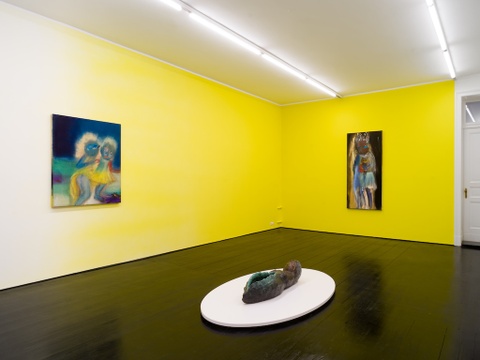
Entgegen der Tendenz, dass künstlerische Praktiken, die ökologische Fragen vor dem Horizont der Klimakrise verhandeln, eine cleane Ästhetik wählen, arbeitet Candice Lin mit organischem Material und heterodoxen Ordnungsprinzipien. Immer wieder greift sie dabei mit dem Anspruch auf Tierdarstellungen zurück, symbolisch zwischen Mensch und Umwelt zu vermitteln – so auch in ihrer aktuellen Einzelausstellung in London. In „g/hosti“ werden die Ausstellungsbesucher*innen von Figuren, Stoffen und Ereignissen heimgesucht, die zumeist aus der westlichen Realität der ökologischen und kapitalistischen planetaren Zerstörung ausgegrenzt werden, so Nils Fock in seiner Rezension.

Lesen

21. Januar 2026

ALLES FÜR DIE FANS Wolfgang Ullrich über KAWS, Kunstmärkte und pyramidale Vermarktungsprinzipien

Als klassisches Veblen-Gut, dessen Nachfrage mit dem Preis steigt, ist Kunst für gewöhnlich gerade dann markterfolgreich, wenn das Angebot stark begrenzt ist – also zum Beispiel nur noch wenige Arbeiten eines künstlerischen Werks zum Verkauf stehen. Seit einiger Zeit gewinnen im Kunstfeld jedoch Akteur*innen an Einfluss, die dem altbekannten Prinzip der Verknappung ein konträr funktionierendes Vermarktungsmodell gegenüberstellen: Ein Paradebeispiel ist KAWS, dessen strategisch aufgefächerte Produktpalette für jeden Fan etwas bietet – und der sich durch ein entsprechend breites Feedback in den Sozialen Medien quasi pyramidensystematisch selbst promoted. Wolfgang Ullrich hat das Phänomen genauer betrachtet – und knüpft mit seinen Überlegungen an unsere aktuelle Ausgabe „System Change“ an, die sich Verschiebungen innerhalb der Kunstökonomie widmet.

Lesen

Dezember 2025

Aktuelle Ausgabe

Heft Nr. 140
Dezember 2025
„System Change: Art Market and Criticism“

Im Kunstfeld scheint aktuell, so die These dieser Ausgabe, ein vergleichbarer Umbruch stattzufinden, wie jener, den Cynthia und Harrison White mit Blick auf die Ablösung des Salonsystems zum dealer-critic system im 19. Jahrhundert ausmachten. Während Kunsthändler*innen und Kritiker*innen damals für wertbildende Prozesse stark an Bedeutung gewannen, scheint die Kritik diese seit den 1990er Jahren sukzessive zu verlieren. Inzwischen haben auch Galerist*innen und Kurator*innen an Einfluss eingebüßt, was zu grundlegenden Verschiebungen der Kräfteverhältnisse innerhalb der Kunstökonomie führt. Die Frage, ob und wie sich die aktuelle Situation von vorherigen Krisen des Kunstmarktes unterscheidet, wird in dem Heft aus den Perspektiven der Kunstgeschichte, des Kunsthandels, des Auktionswesens sowie mit Blick auf politische und technologische Umbrüche analysiert.

Zum Inhaltsverzeichnis

19. Januar 2026

FRANK GEHRY (1929–2025) By Sylvia Lavin

Few individuals have influenced the look of the modern world as strongly as the architect Frank Gehry, who died late last year. Although usually associated with the rise of postmodern architecture, Gehry’s work resists easy categorization, often combining explicitly postmodern elements with more typically modernist concerns regarding a building’s intended purpose or use of materials. And while his aesthetic influence was decisive, Gehry’s idealistic but pragmatic approach to architecture and urban design also helped shape ideas about the role that buildings and architects play within wider society. Sylvia Lavin looks back on Gehry’s life and emphasizes the importance of his legacy.

Lesen

16. Januar 2026

“NOW THERE’S A REAL WORLD BREATHING” Nicole-Ann Lobo on Rashid Johnson at the Solomon R. Guggenheim Museum, New York

Rashid Johnson’s art is often associated with addressing the inextricability of collective social history with personal experience through the deliberate blending of biographical elements with references to Black resistance. As our reviewer Nicole-Ann Lobo observes, the artist’s extensive survey at the Guggenheim succeeds in parading a pantheon of revolutionary Black culture processed through the artist’s individual lens. But while she appreciates the variance of the citations and media the exhibition displays, Lobo notes an absence of analytical components and institutional critique that, as she argues, would be crucial to making Johnson’s creative employment of mostly historical references productive with regard to our present day.

Lesen

Editionen

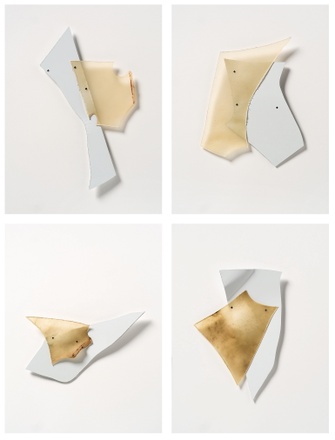
Karla Black, „For Use“, 2025

9. Januar 2026

PARTICIPATORY ART BY PROXY David Homewood on Charlotte Posenenske at Mehdi Chouakri, Berlin

With her minimalist works intended for mass reproduction, Charlotte Posenenske famously questioned not only the cult of uniqueness but also the value logic of the art market in a broader sense. The Archiv Charlotte Posenenske, which has been managed by Mehdi Chouakri for several years, recently exhibited a selection of her sculptures, supplemented by archival material, such as historical photos and plans. David Homewood takes the presentation as an opportunity to explore the extent to which Posenenske’s once-radical ideas have remained, highlighting, among other things, the paradox of pseudo-participation that Posenenske’s sculptures – like many other artworks originally designed to be physically interacted with – are now subject to for conservation reasons.

Lesen

2. Januar 2026

THE STRUCTURE OF AN ERROR Matthew Rana on Lutz Bacher at Astrup Fearnley Museum, Oslo

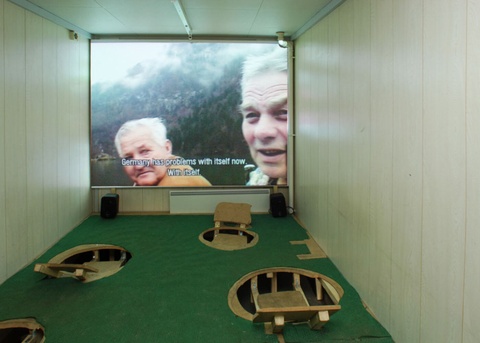
Lutz Bacher’s works draw on strategies of the objet trouvé, appropriation, and pop-cultural references while refusing the stabilizing effects of scholarly or formalist art -historical frameworks. Bacher worked under a male pseudonym throughout her career, and the posthumous retrospective in Oslo, which will travel to Brussels next year, accentuates the open-ended nature of the artist’s practice. As Matthew Rana notes in his review, the exhibition brackets Bacher’s more explicitly political pieces; what comes to the fore instead is the comedic charge of a position that through associative encounters with the viewer prompts questions about one’s own position within this play of signifiers.

Lesen

26. Dezember 2025

AIR CONDITIONS Alex Bennett on Grant Mooney at Chisenhale Gallery, London

In theorizing the climate crisis, Timothy Morton has developed the concept of the “hyperobject” – referring to those objects whose massive distribution across space and time means our experience of them is always a partial one. While this idea stems from a rejection of the Kantian idea that the ontological status of objects is ultimately grounded in human subjectivity, it takes on a far more concrete significance at a time when a warm and pleasant winter day also carries increasingly worrying connotations of impending ecological collapse. A recent exhibition by Grant Mooney gave tangible form to these ideas from object-oriented ontology while also complicating the relational mix, as Alex Bennett writes.

Lesen

19. Dezember 2025

THE PERMANENT FAIR Arnaud Esquerre on the Newly Reopened Fondation Cartier, Paris

The way in which an exhibition is laid out says a lot not only about the collection policies of the responsible institution but also about the broader socioeconomic context in which the show is conceived. In Paris, where a particularly large number of private and corporate collections attract considerable crowds, the Fondation Cartier recently reopened in its new, freshly renovated Haussmann-era premises. With a seemingly random combination of artworks and a spatial configuration reminiscent of major art fairs or crowd-control systems at other commercial events, it seems to pursue its own distinct, decidedly non-museum exhibition model. Not exactly to the benefit of the visitor experience, as Arnaud Esquerre argues.

Lesen

TEXTE ZUR KUNST steht für kontroverse Diskussionen und Beiträge international führender Autor/innen über zeitgenössische Kunst und Kultur. Neben grundlegenden Essays bietet die 1990 in Köln von Stefan Germer (†) und Isabelle Graw gegründete und seit 2000 vierteljährlich in Berlin publizierte Zeitschrift Interviews, Gesprächsrunden und ausführliche Besprechungen zu Kunst, Film, Musik, Markt und Mode ebenso wie zu Kunstgeschichte, Theorie und Kulturpolitik. Seit 2006 erscheinen der umfangreiche, jeweils einem spezifischen Thema gewidmete Hauptteil sowie ausgewählte Besprechungen in Deutsch und Englisch. In jeder Ausgabe wird die Zeitschrift von international renommierten Künstler/innen mit exklusiven Editionen unterstützt.