

PHONING HOME Alissa Bennett on Olimpia and Other Dolls
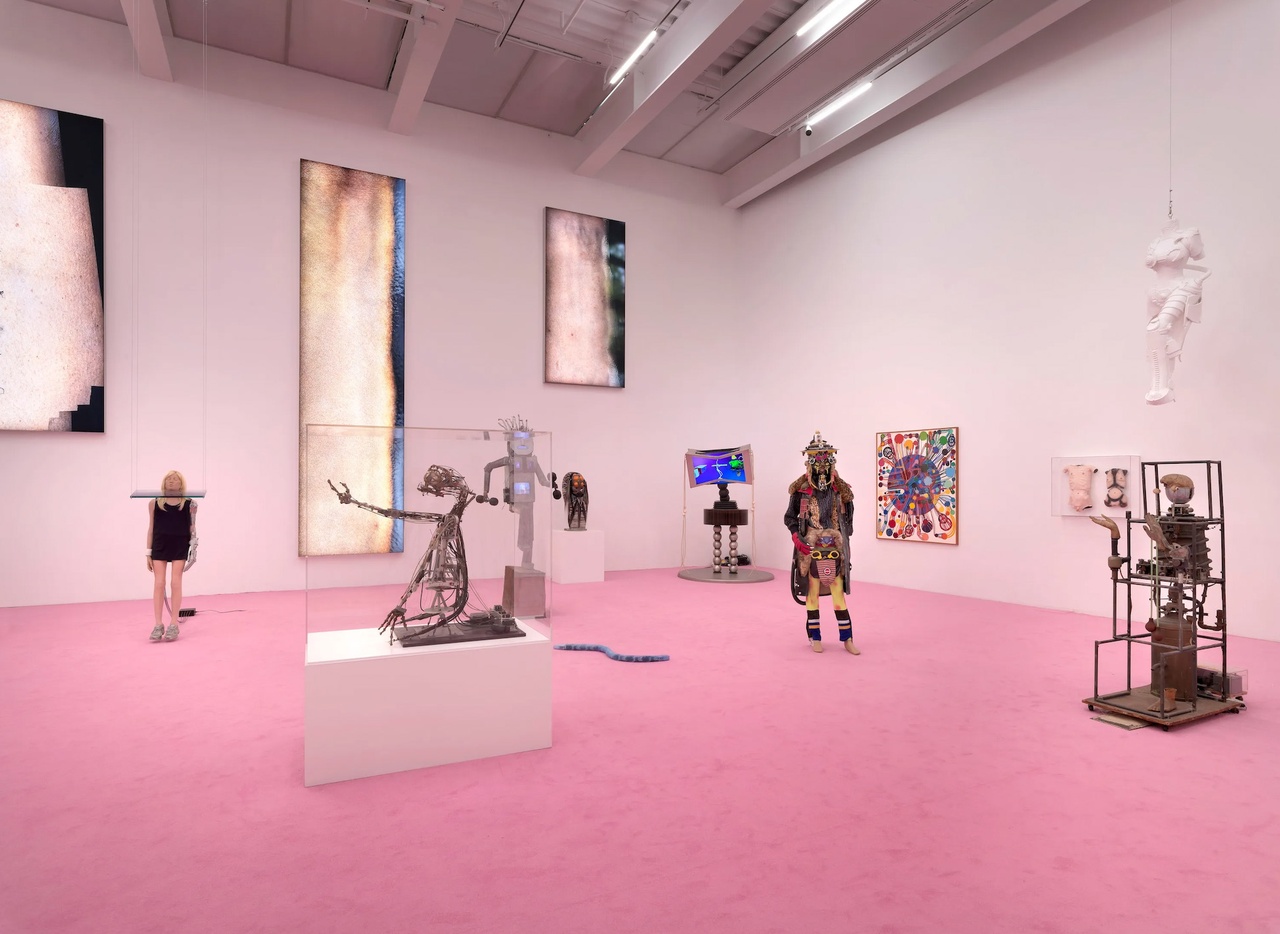
“New Humans: Memories of the Future,” New Museum, New York, 2026
Suzie
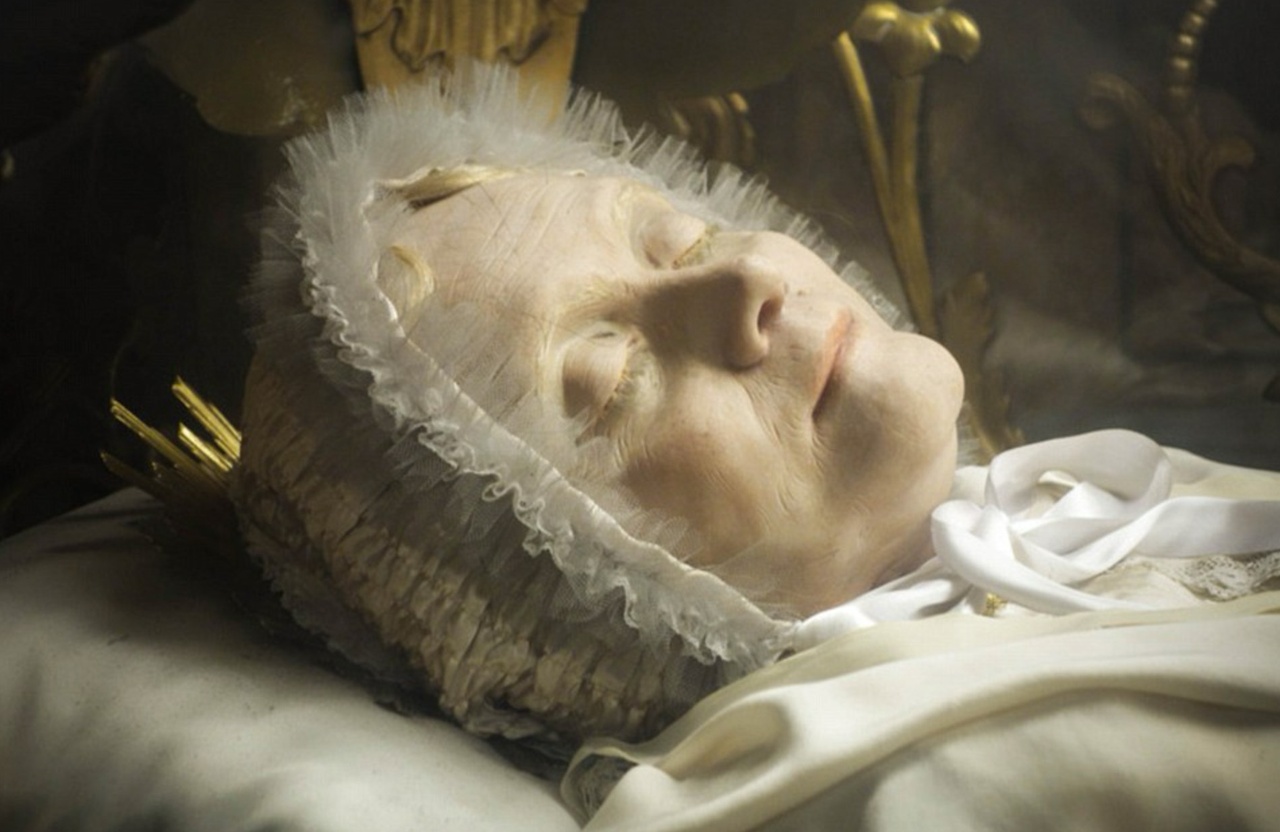
My great aunt Suzie died when I was 11, which I confirmed today after spending some time looking for information about her on the internet. I found a single search result on a website called ancientfaces.com, where I learned that she was an Elizabeth and not a Susan, that she died in August and not April, and that when it happened, I was older by two years than I’d previously thought. These negligible differences between what I remember and what actually occurred do absolutely nothing to mitigate my lasting impression of an event that frightened me so terribly that I can conjure it in detail even now. Returned to my perch at the back of Philbin’s Funeral Home (I remembered this part without any help from ancientfaces.com), I can witness the whole horrible thing unfold once more: There is poor Suzie’s recumbent doll body visible to me only in profile, her hands bound together in prayer by a rosary. I can watch my as grandmother and her sisters weep passionately over this awful waxwork thing, one of them reaching out to touch Suzie’s mannequin shoulder before commenting that she looks beautiful, like she’s sleeping. I don’t see it. All I can register is the strange vacancy of this hollowed-out shell, this abandoned property that seems to demonstrate, with remarkable precision, the exact measure between life and death.
I didn’t know Suzie well enough to love her; I’d only asked to attend the service because I was curious, because it seemed like a good way to passively familiarize myself with the adult rituals of grief. Leaving Philbin’s, it occurred to me that I’d done something unforgivable: I’d invaded Suzie’s privacy and seen something of her that I shouldn’t have, some intimate part more vulnerable than her illness or the frailty that came before it. I imagined an act of transubstantiation that turned her body into a cloud of vapor, a sentient mist both ghoulish and punitive that was suddenly able to identify in me what no one else had seemed to see. I wondered if she was in the car with us as we made our way back to the house, if it made her feel vengeful to know that I was a creep and a liar. It occurred to me that she and I were the only ones aware of the fact that I’d made myself rotten, that I’d become the worst kind of Peeping Tom.
I’ve never told another person this story, which seems odd because it’s exactly the kind of thing I normally like to share. I guess the truth is that I still feel badly, and maybe it still scares me a little, as though the seismic shock of my first encounter with death continues to threaten a residual tremor. I recently read a theory suggesting that most of our ideas as writers emerge when we encounter something that reiterates an event from childhood, as though the scenes or feelings or details we have buttoned up in our unconscious minds can suddenly be shaken loose by a reactivating event in the present. I suppose my compulsion to finally outline the story of seeing poor Suzie in her casket offers at least incidental support of this concept; I think it explains that the irrational intensity of my reaction to a recent encounter was really about her all along.
Not Suzie, but someone else
E.T.
My grandparents gave me a VHS tape of Steven Spielberg’s E.T. the Extra-Terrestrial (1982) the Christmas before Suzie died, though by that time I knew better than to ever watch it. I’d seen it in a theater some years before and had wept so bitterly from climax to conclusion that I ended up vomiting on myself, my clothes stained with a river of Coca-Cola and chocolate that was still damp by the time we got home. The film tells the story of an alien who gets stranded on Earth, becomes the maybe telepathic best friend to a lonesome child, gets sick, dies, miraculously comes back to life, and then rides back to outer space on a bicycle. It is, of course, a lesson about releasing the things we love, about saying goodbye, and about the transcendent nature of friendship, but I couldn’t figure out how anyone could support E.T.’s return to his home planet when all of us wanted so badly for him to stay on ours. Rumors of a sequel churned in those early years, and with them came the promise that we might once again see our old friend; when these plans failed to come to fruition, it became impossible to imagine that E.T. existed anywhere other than a place where we would never be allowed to go.
Much of the emotional power exerted by E.T. resides in how alive he appears in the film. While the sophistication of his movements recalls the most miraculous of Jaquet-Droz’s automata, the mechanical components of the steel skeleton are here disguised by fleshy layers of polyurethane foam and a latex skin that reflects just enough sheen to telegraph life. Special effects coordinator Carlo Rambaldi created three primary models of the character, but only one iteration was equipped with facial mechatronics sensitive enough to mobilize human pathos. Though this most technically sophisticated version of the creature (known as Hero #1) made a handful of public appearances, it seems to have mostly been kept out of sight until 2022, when it resurfaced in a sale at a Los Angeles auction house known for trafficking in often-abject items of film memorabilia.
I haven’t thought about E.T. very much in recent years; I certainly never encouraged my son to watch the movie when he was young, and he never seemed to ask, so I remained unaware of this public foray to market. Had I known about the sale, I might have felt surprised both by the physical condition the object was in and the astounding result it achieved; though it hammered at 2.56 million dollars, published lot details depict a sad, stripped thing, a tangle of metal wires burdened by two gigantic blue eyeballs that bulge mournfully from some unreachable depth. Bereft of that damp-looking flesh and posed with his sinewy arm reaching impotently into the ether, E.T. no longer presents as a friend or even a machine, but rather as a slightly uncanny curiosity, a memento mori that seems to whisper the eternal words “you too shall die.”
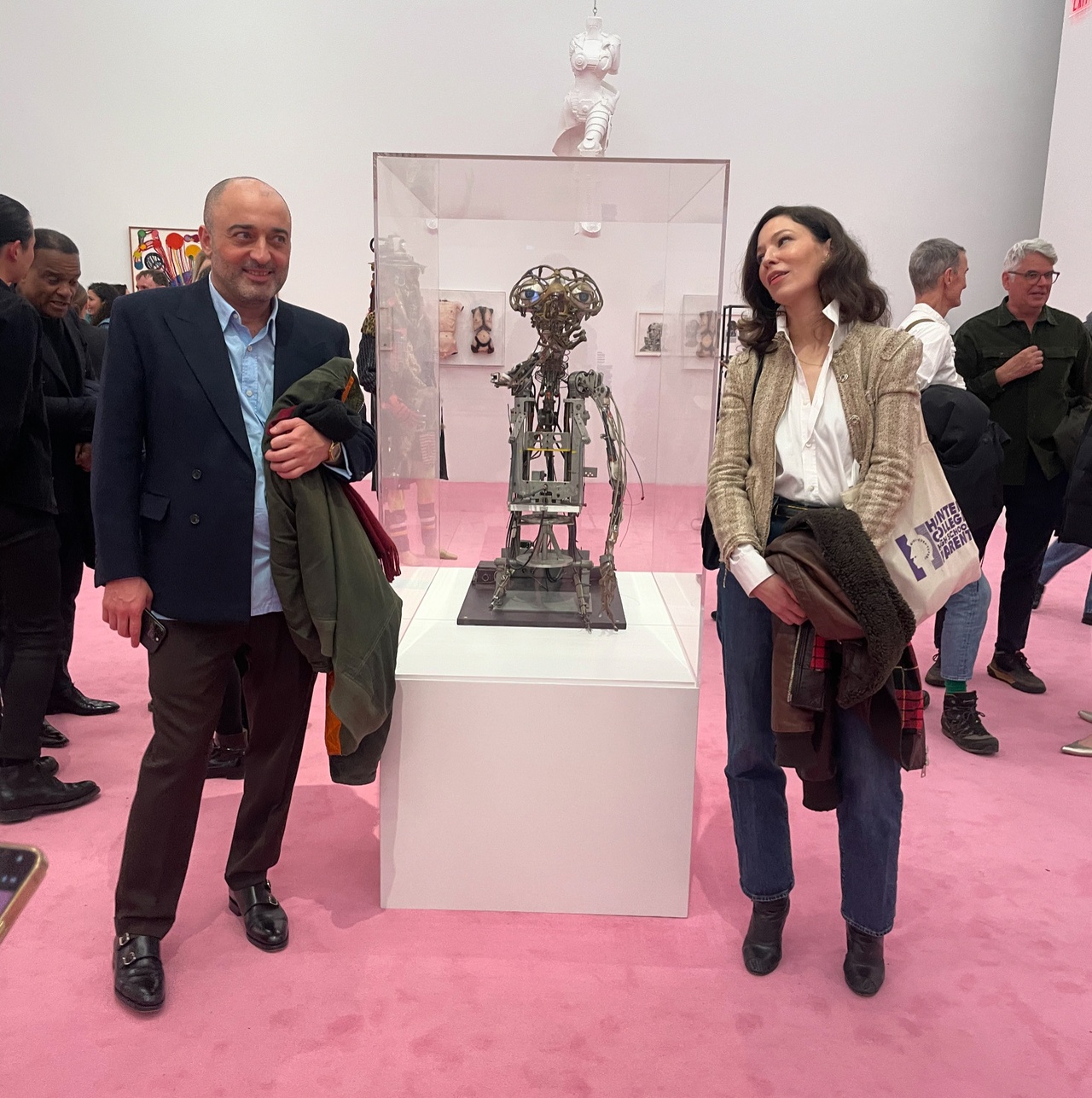
Alissa Bennett, E.T., and Andro Wekua at the New Museum, 2026
Suzie and E.T.
I am often prone to bouts of mild melancholia, as was the case this past March when I attended the unveiling of “New Humans: Memories of the Future,” an exhibition that marks the much-anticipated reopening of The New Museum. On this night as on many before it, I drifted aimlessly from room to room, guided by a maudlin undertow and wondering obsessively if some future visitor might also feel the compulsion to hurl themselves into the zig-zagging void of the vertiginous stairwell. I eventually found friends on the fourth floor in a section of the exhibition that I believe is titled “The Hall of Robots,” where I stood next to my boss for a while, staring dispassionately into the middle distance. He tapped my arm and told me to cheer up. “Look,” he said, gesturing toward a plexiglass box that at first glance seemed to be packed with old car parts or maybe the wiry bowels of a disused oven. “It’s E.T.” I watched the thing slowly come into focus, and it felt like magic for a moment. It felt as though all my childish yearnings to see this creature again had finally rounded the corner into wish fulfillment.
This starstruck flash of pleasure didn’t last (do they ever?), which is documented in a set of pictures I asked someone to take of me, E.T., and the artist Andro Wekua. Though there is a whisper of delight beneath my wan smile in the first of these images, by the last frame my expression has melted into sad astonishment, as though I have suddenly been forced to reckon with the evil glamour of a witch’s curse. In this image, I stare into the vitrine with my brow furrowed, silently apologizing to this thing for the fact that we’ve managed to drag him back to Earth after all, that our inhospitable climate has wrecked him in all the ways he warned us it would. I had no answer to the questions his dingy body seemed to ask, no response to offer in exchange for this glimpse of his lusterless metal private parts or his sad-looking eyes. I couldn’t explain to him what’s wrong with the people on our planet, how it has come to pass that so many of us secretly like to look at dead things.
Since this encounter, I’ve made several impassioned declarations about how obscene it is to publicly display the humiliated symbols of a simpler time, I’ve asked what it means that we still want to look at things when they are no longer capable of looking back. I am gripped by E.T., which people around me have begun to find increasingly exhausting; I don’t think anyone cares anymore if I ever manage to identify what it is that was activated by this otherwise completely inconsequential event. It was only as I began writing this text that it occurred to me that I was experiencing one of those famous repetitions I told you about earlier, that an unresolved puzzle from my childhood has lurched recklessly into the now. Standing in “The Hall of Robots,” perhaps I sensed some subtle shift in the air, as though a decades-old wind had at last changed its course; there was Suzie’s vapor again, asking me how it’s possible that I’ve never learned a single lesson in my entire life.
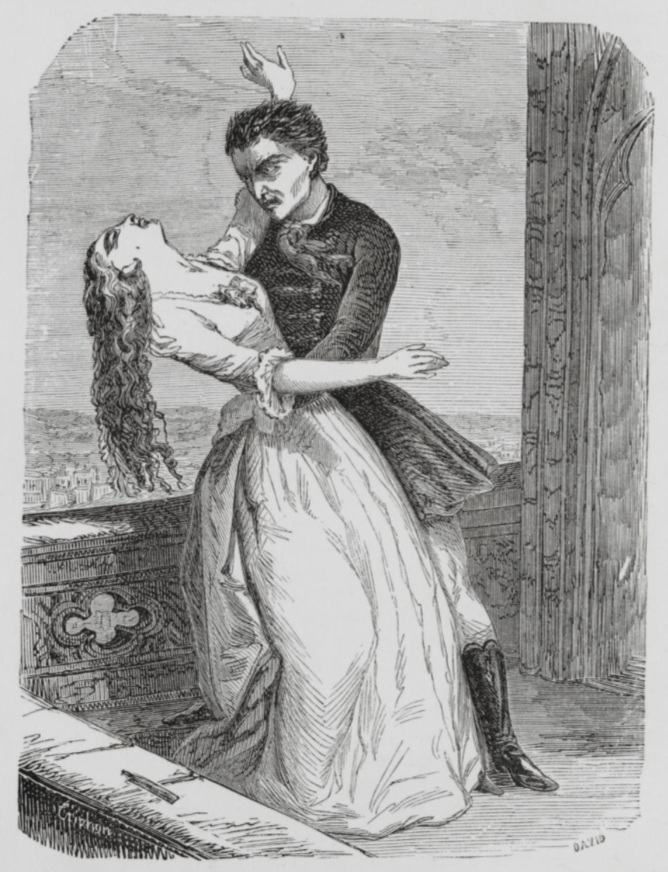
Illustration from E.T.A. Hoffmann, “Der Sandmann,” 1817
Der Sandmann
I don’t know if E.T.’s mechanics still work, but I think he should probably try to stay still for the duration of his incarceration at The New Museum. Denuded of flesh and reduced to his most primal form, any whisper of vitality could only suggest something menacing and vengeful, like the desiccated mummy awakened by thieves after a centuries-long sleep. I wonder if E.T. stares out from his plexiglass box and fantasizes about electrocuting passersby with his light-up finger. I wonder if he dreams of finding a similarly retired robot girlfriend, if he spends his hours wondering where he can get a new coat of rubber skin, or if he mostly just reminisces about the time he almost escaped us for good. Maybe it’s the flicker of sad resignation that hangs heavily around his flying-saucer eyes that makes me believe there might still be a joule of spirit firing through his transformers or whatever it is that he’s made of. What I know for sure is that he looks lonesome, and that it’s hard for me to imagine how anyone can regard the wreckage of his body and not consider the ways it might like to haunt us.
The ancient Greeks placed coins over the eyes of their dead, not only as payment to Charon for the ferry ride across the River Styx, but also because it shielded the living from the horrors of the deactivated gaze. We don’t like it when a thing seems to look back at us in negation, when we subconsciously calculate the subject/object parallax and find that it has collapsed into vacant reciprocity. Sigmund Freud’s contention is that the eyes are the most potently charged site of the uncanny, I guess because they sit at the threshold of life and withdrawal. I’ve been assigning his essay on the topic to my students lately; it feels increasingly urgent to me, as though he anticipated our contemporary taste for chatbot boyfriends and rubber love dolls, as though he saw that we would one day want true-to-life silicone replicas of newborn babies, their inert bodies the exact temperature of human flesh. Freud largely constructed his analysis of the uncanny around E.T.A. Hoffmann’s Der Sandmann (1816), the story of a man driven to madness after discovering that the woman he’s fallen in love with is in fact a doll and not a person at all. There stands Olimpia, that beautiful glass-eyed thing, that stiff-jointed, blandly assenting clockwork whose cosmetic appeal conceals an alarming vacancy. In 2026, I wonder how many men might actually like to date her.
Freud published The Uncanny in 1919, just one year after artist Oskar Kokoschka commissioned a full-scale replica of Alma Mahler, the ex-lover who had left him for the greener and less psychotic pastures of Martin Gropius. Kokoschka provided doll maker Hermine Moos with a list of exacting specifications, including Mahler’s real-world measurements, descriptions of how her skin should feel, and a suggestion for what type of padding might best suggest the whiff of life. If Kokoschka hoped that the doll would serve as a good-enough proxy for the woman he’d lost, the figure Moos delivered disabused him of his fantasy. The object was lumbering and clumsy, its exterior constructed from a fluffy-looking swan skin that left no room for ambiguity, even in the darkness of night.
Despite his displeasure, Kokoschka ferried the thing around. He dressed it in finery and made paintings of it, he engaged a chambermaid and brought it to parties and the opera, dragging it behind him until he eventually tired of its absence of spirit. I wonder if he felt bored or resentful when he eventually emptied a bottle of red wine over its head and decapitated it with a knife; maybe it simply became too shop-worn to support his fantasy. In his old age, Kokoschka would recall the experiment differently; “I freed the effigy of Alma Mahler from its packing,” he wrote in his 1974 autobiography, as though he’d committed an act of generosity rather than one of necrophilic perversion. I’ve spent quite a lot of time looking at photographs of this doll, scrutinizing its turned-back eyes and its leaden limbs, and I’ve come to the conclusion that the comedy of its construction made it an untenable proposition; it feels less alive than Suzie, but also deader than E.T.
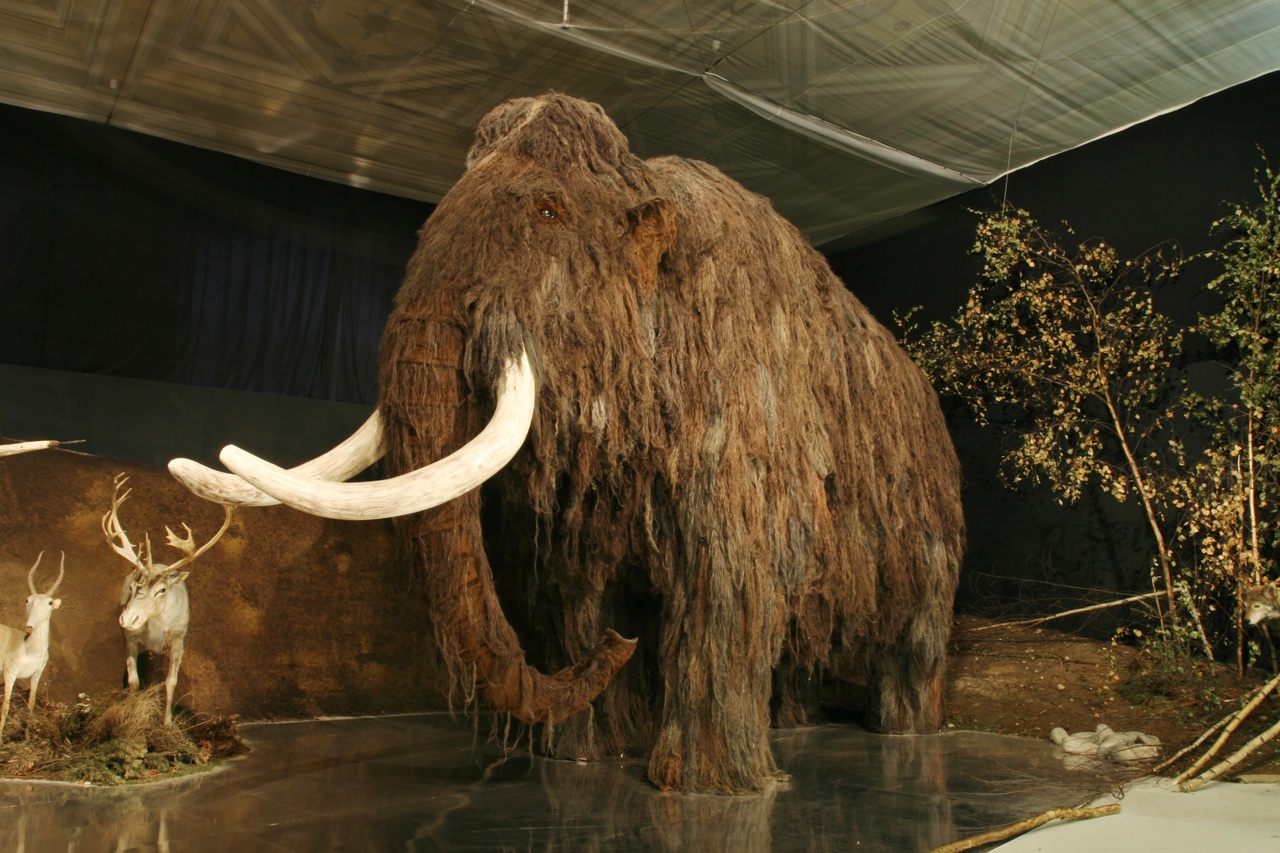
Mammoth at the National Museum in Prague, 2007
Epilogue
I guess the center of what I’m gesturing toward is a question about death and looking, about what it means when we want to regard dead things that seem to reach out toward breath, but feel eerily stirred if they get too close. The category I’ve put E.T. and Suzie in is organized around things I don’t think want to be looked at, to which I will add those leathery bog people, all mummies, that little girl in Palermo, and most of our reknowned animal remains (especially wooly mammoths). I will also admit that there are lots of dead things that don’t seem to mind being on permanent display: There is dead body preservation enthusiast Jeremy Bentham, who is seated comfortably in his glass case at University College London, his plump and folksy figure prepared to skip into the present if it ever gets good again (they had to replace his head with a wax copy because it was scaring people, but it’s just there in a box when he needs it). There is Vladimir Lenin, who has undergone regular embalming treatments to stay in shape for his marathon stretch of being on public viewing for one hundred years. There are also the saints and various other religious figures, whose waxy skin is I guess supposed to remind us of life without end or whatever. I guess at least if we can see their bodies locked up in a case, we at least know that they can’t come back in other much more horrible ways.
My mother and I stayed at my grandparents’ house the night after the wake. I had a series of nightmares that Suzie was standing in the shrub outside my window, where she watched me sleep and occasionally tapped her finger against the glass, her little bobbed haircut turning matted and wet from the rain. I woke up on the living room couch early the next morning with no recollection of how I got there; I must have sleepwalked, though at the time I suspected something much worse.
Today I told someone that I was working on this essay, and he expressed his surprise that I would equate E.T.’s residency at The New Museum with what has come into focus as a formative personal trauma. I said I thought it was obscene to drag this machine out in its current condition, that it would have been better to imagine that he actually got away from us the first time. This person said he thought it was beautiful, and that he couldn’t understand how I’d missed the gesture’s poetry. It made me think about my grandmother and her sisters when they reached in to touch Suzie, the youngest of their family and the first to die. I guess it’s comforting if they could think of her as just sleeping, like they were saying goodnight instead of goodbye. Maybe it’s like when I watched E.T. ride into the sky on that magic bicycle and trusted he’d made it home safe, no matter how bitterly it made me cry.
Alissa Bennett is a writer and has been a director at Gladstone Gallery since 2018. Her essays and short fiction have appeared in publications including The Paris Review, The New York Times, Ursula, and Vogue. Bennett is currently completing a script about the life of Edith Wharton. She teaches at the Yale School of Art and at Sarah Lawrence College.
Image credits: 1. Courtesy New Museum, photo Dario Lasagni; 2. © Elizabeth Harper; 3. Photo Max Falkenstein 4. © Staatsbibliothek zu Berlin 5. photo Petr Novák