

THE PERMANENT FAIR Arnaud Esquerre on the Newly Reopened Fondation Cartier, Paris
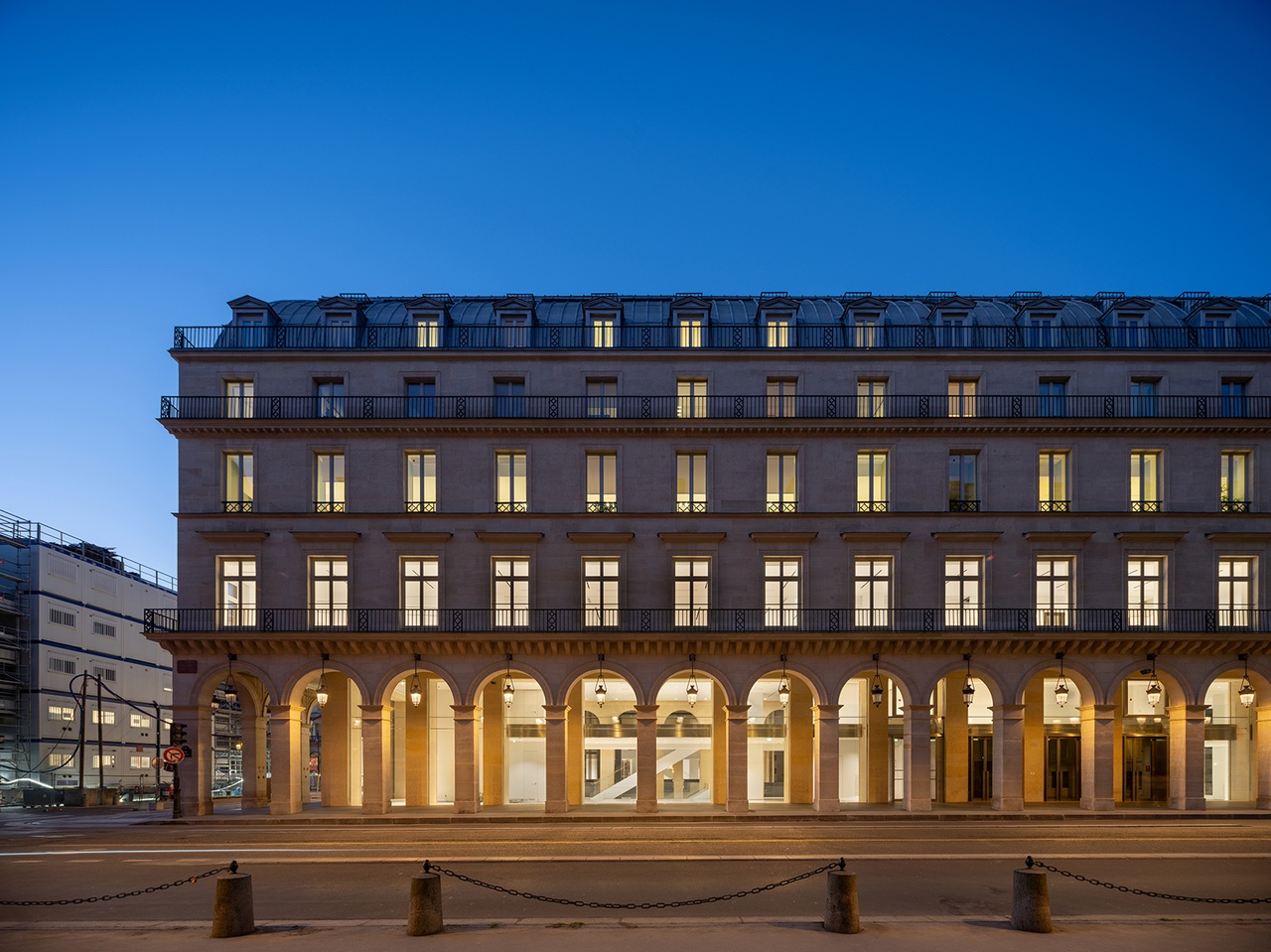
Fondation Cartier, Paris, 2025
In the autumn of 2025, in the heart of Paris, while the Centre Pompidou was closing for a five-year renovation, the Fondation Cartier opened the doors of its new premises at 2 Place du Palais-Royal with the aspiration “to invent new ways of exhibiting art,” as the managing director Chris Dercon writes. [1] Now situated right next to the Louvre Museum, which had 8.7 million visitors in 2024, the newly relocated Fondation is bound to attract more tourists than it did when still housed in its previous building on Boulevard Raspail.
Since the Fondation Cartier’s inception in 1984, one of the founding principles of the institution has been to collect the works it exhibits. Or, as the philosopher Emanuele Coccia writes in the catalogue published on the occasion of the reopening: “the collection […] is no more than the consequence of the exhibition.” [2] From this principle, Coccia deduces that the Fondation Cartier has come to constitute a “new kind of third place” between the Kunsthalle, which exhibits without collecting, and the traditional museum, which exhibits only its own collections. One may question, however, the usefulness of referring – even theoretically – to this opposition between Kunsthalle and museum: It was pertinent in the 19th century but has lost much of its relevance since the second half of the 20th century, as major museums have developed spaces for temporary exhibitions and expanded their lending practices.
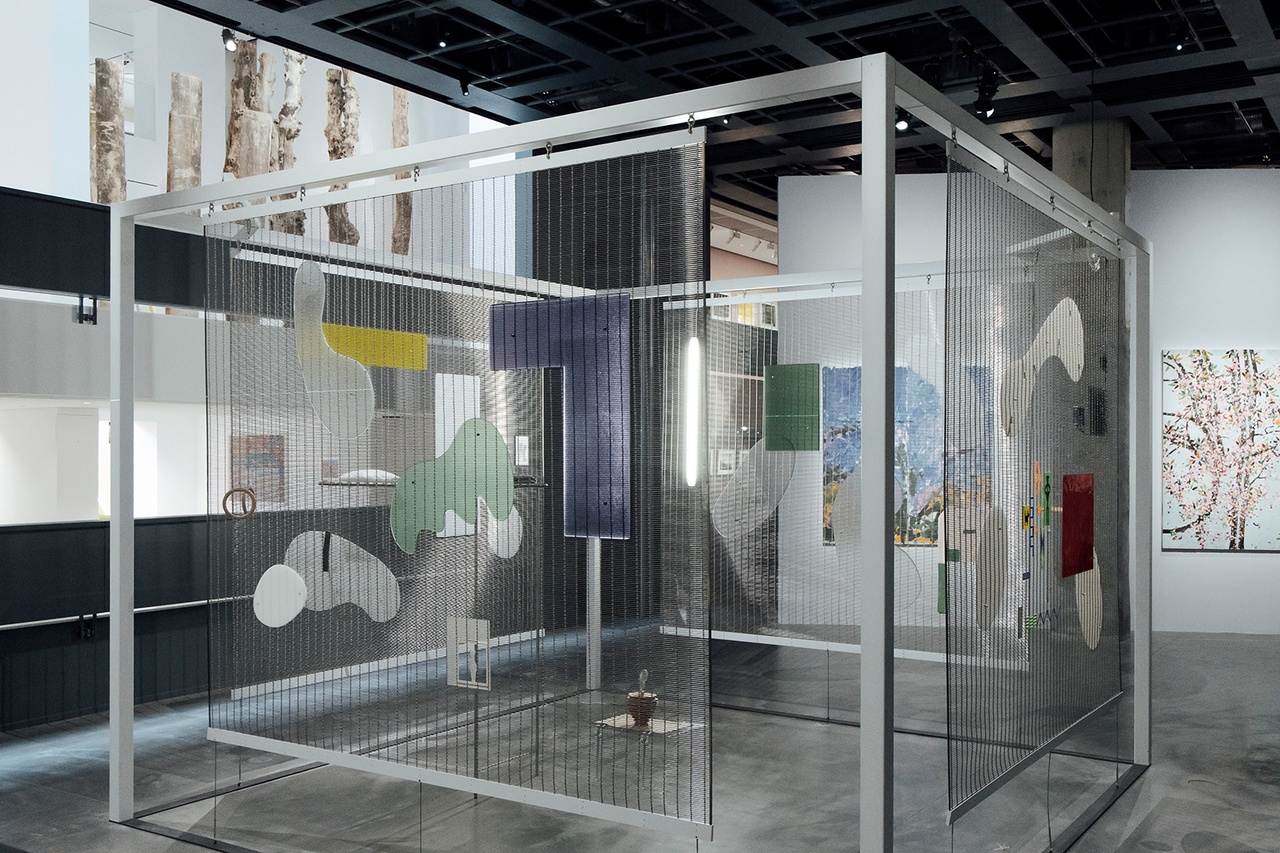
“Exposition Générale,” Fondation Cartier, Paris, 2025-26
In any case, this so-called third place opened with a presentation of works acquired by the Fondation Cartier for earlier shows. Under the somewhat grandiose title “Exposition Générale,” it thus brought together a “collection of fragments of exhibitions,” as Béatrice Grenier, one of the show’s curators, puts it in the same catalogue. By “institutionalizing” exhibition-making as central through this “curatorial manifesto,” the Fondation Cartier presents itself as “the quintessence of the modern museum institution by asserting that the museum is the exhibition.” [3]
I would like to argue, however, that neither the opposition between Kunsthalle and museum used by Coccia in the service of the valuation of the Fondation Cartier nor the idea of a “collection of fragments of exhibitions” makes it possible to understand what the Fondation Cartier has actually invented. In my opinion, the principle of its functioning and the design of the new space must be interpreted quite differently, as I will explain below.
Since the beginning of the 21st century, the gradual convergence of the museum and the gallery has only intensified. On the one hand, many large galleries have increasingly come to resemble museums, notably by involving curators. On the other hand, the gallery system has extended its hold over the institutional sphere by supplying institutions with works and artists, as if the contemporary art museum has become the gallery’s extension – an arrangement that allows artists to be further valorized, that is, to justify the rise of their prices on the primary market through the legitimation conferred by the museum.
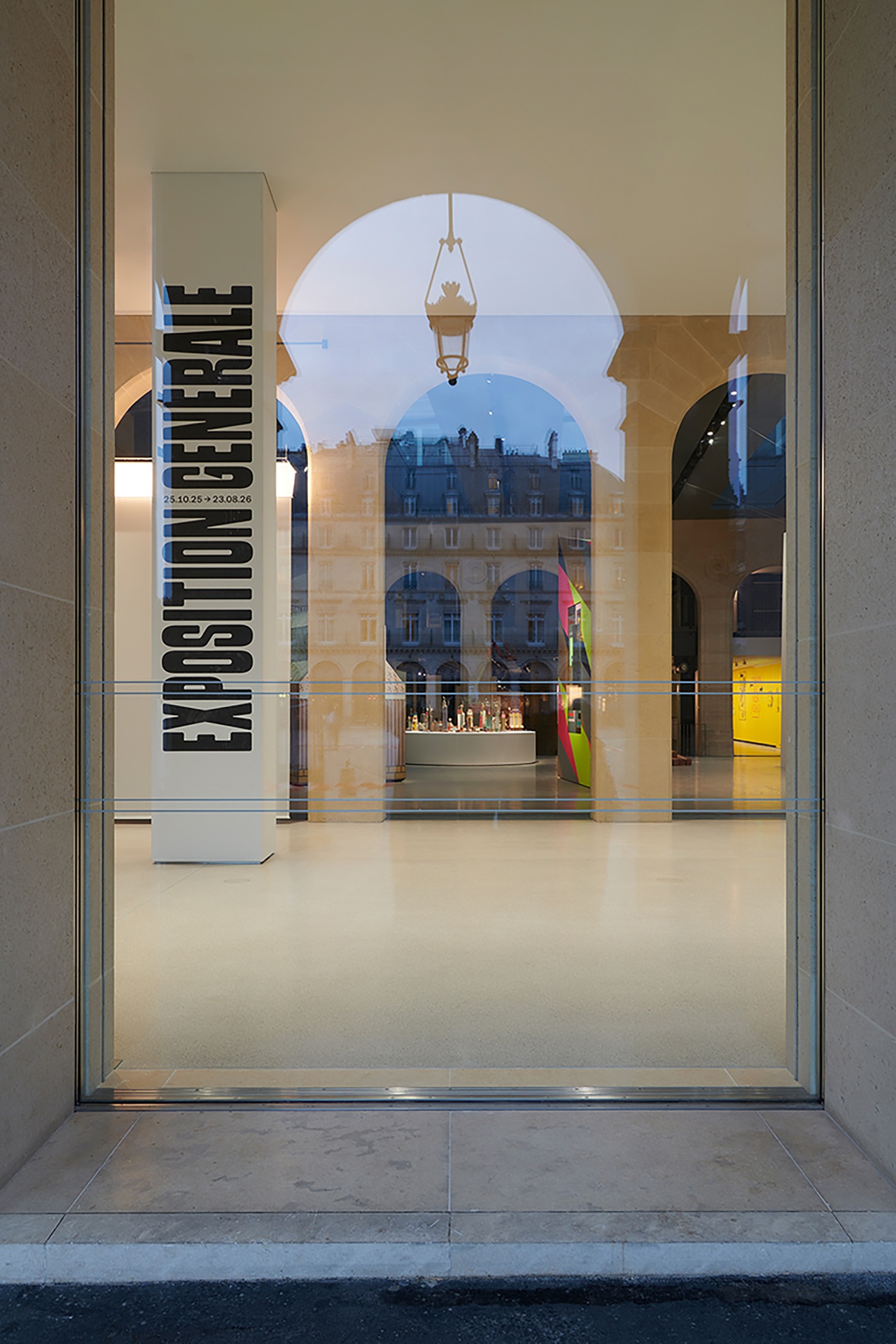
Fondation Cartier, Paris, 2025
Established in Paris long after the Fondation Cartier, the Pinault Collection and the Fondation Louis Vuitton have in turn tended toward the public museum institution model, alongside this convergence of large galleries and museums. They do so either by exhibiting a small portion of their respective major collections on the basis of more or less diffuse thematic frameworks – producing the impression of a museum that regularly renews its display, as the Fondation Pinault does at the Bourse de Commerce (opened in 2021) – or by extending the model of the public exhibition hall, such as that of the Grand Palais, through monographic exhibitions of artists, as is frequently the case at the Fondation Louis Vuitton in Paris (opened in 2014) and at the Fondation Pinault in its Venice spaces. And benefitting from the extremely popular exhibition of Gerhard Richter presented at the Fondation Louis Vuitton in the autumn of 2025, the local outpost of David Zwirner is offering works by this artist for sale.
The Fondation Cartier proposes another model, one that is no less geared toward attracting masses, presenting itself as an extension of the contemporary art fair.
Since the founding of Art Basel in 1970, contemporary art fairs – particularly since the beginning of the 21st century – have proliferated, thriving both as marketplaces and as major attractions for the public. They are characterized by several recurring features concerning their economy, their spatiality, and the ways in which they shape visitors’ experience – for example, the high density of works, the juxtaposition of disparate artists, and the continual circulation of visitors.
At the Fondation Cartier on Place du Palais-Royal, the historic building’s interior, reworked by architect Jean Nouvel, and the exhibition scenography, designed by the collective Formafantasma, were conceived in contrast to the white cube. The walls facing the street consist of large, shop-like bay windows. Following a principle typical of the “enrichment economy” [4] according to which a place is enhanced through a narrative about its past, these windows take up the history of the building: Originally a hotel, it was turned into a department store back in 1887, when it became home to the Grands Magasins du Louvre.
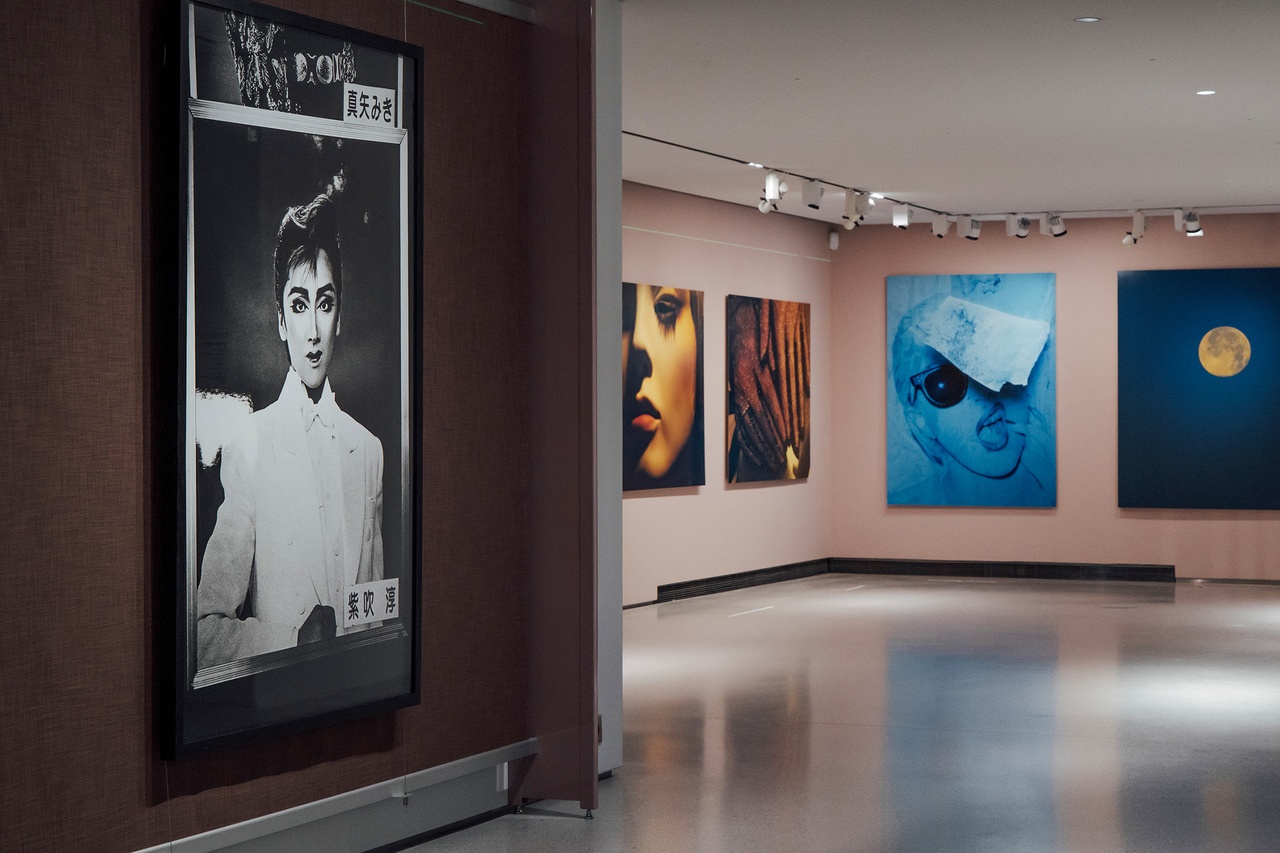
Daido Moryama, “Daido Hysteric no.8,” 1997
Today, the interior of the multi-level exhibition space reproduces the spatial logic of a contemporary art fair: The works, placed closely side by side, generally bear no relation to each other – exactly as in a fair, where two neighboring gallery booths often present entirely different artists. The exhibition is officially organized into four thematic sections (“Machines d’Architecture,” “Être Nature,” “Un Monde Réel” and “Making Things”), with a fifth space dedicated to a selection of artists from the collection. In practice, however, this organization results in an eclectic – and seemingly random – mix of works. After a corridor displaying Claudia Andujar’s photographs, visitors enter an open space where Cai Guo-Qiang’s The Vague Border at the Edge of Time/Space Project (1991) sits alongside Simon Hantaï’s Étude (pour Pierre Reverdy) (1969), facing Gérard Garouste’s large canvas Indienne (1988), with various sculptures by Véio, produced between 2008 and 2012, arranged in the center. In another area, Daido Moriyama’s photographs, a painting by Alex Cerveny, and a video by Bill Viola are displayed in direct succession. Elsewhere, a series of David Lynch’s drawings lines a corridor, almost like the booth of a gallery presenting only these works. And as in an art fair, where every square meter costs a fortune, forcing dealers to distribute their offerings tightly, the space here is equally packed.
In an exhibition organized by a museum, visitors generally follow a relatively linear path. By contrast, in a fair – and at the Fondation Cartier – no linear route is possible. Instead, one walks through aisles, traverses platforms, and is led up and down staircases and on somewhat confusing rounds, often passing the same works repeatedly. The interior’s convoluted structure renders it impossible for visitors to be absorbed in the contemplation of an artwork: They can only circulate continuously, in front of works displayed as if they were available for purchase and through many rather narrow corridors that do not allow for the distance that looking at large-format paintings such as those by Chéri Samba requires. In addition, the lack of space keeps the masses in motion: Stopping in front of an artwork would block the flow of visitors. To prevent this, everyone pushes each other forward. Aside from the narrow corridors, there are wide spaces that aren’t made for stopping either but are to be crossed in every direction. Most of the few seats available are placed in corners or empty corridors, where seated visitors cannot see any artwork. Circulating like potential buyers, viewers find themselves faced with works that have already been bought by the Fondation and whose prices – just like in an art fair – are generally beyond their purchasing power. With its open, stacked levels, the space is never silent but filled with the constant murmur typical of fairs – overlapping, indistinct conversations drifting across different floors.
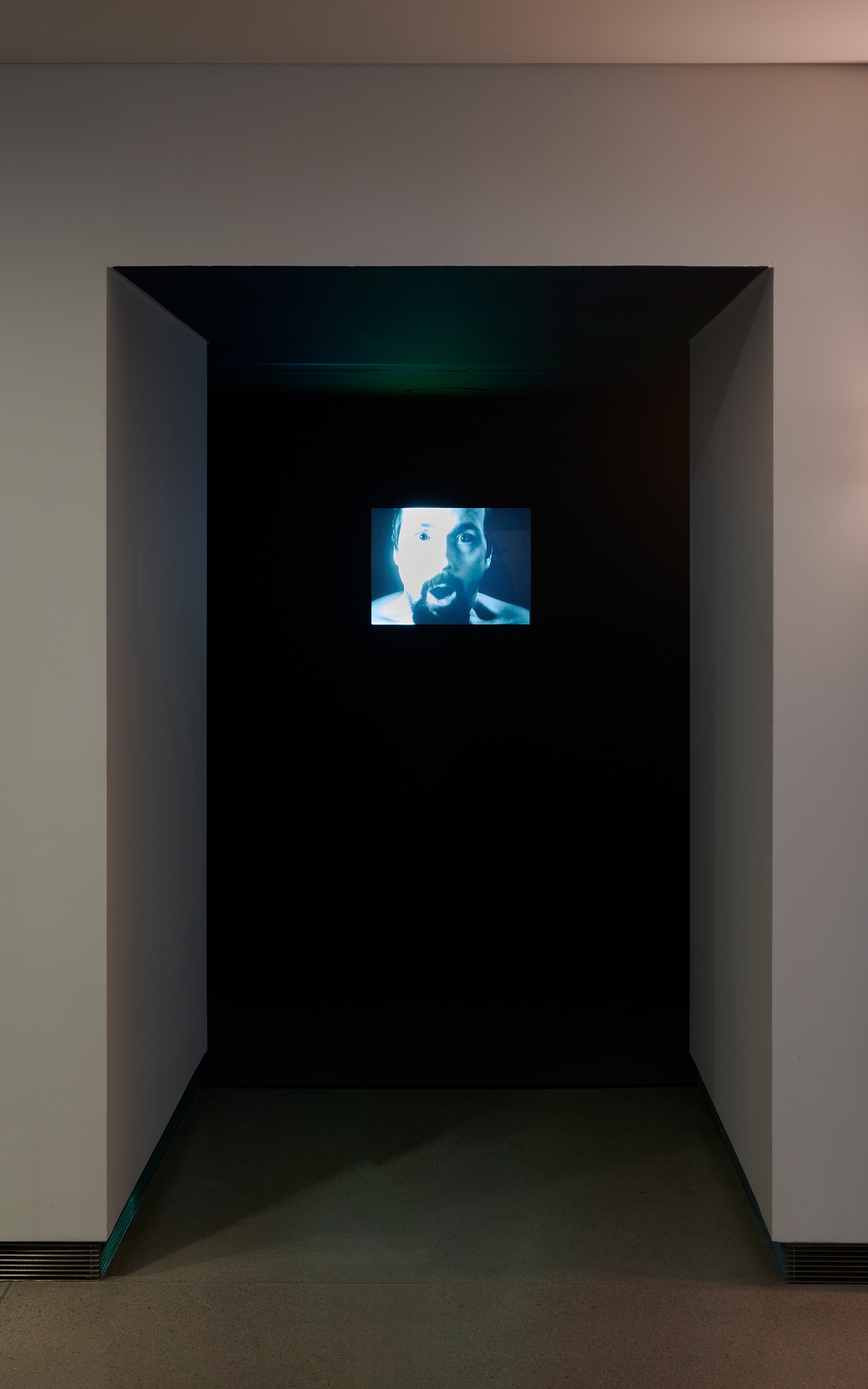
Bill Viola, “Nine Attempts to Archive Immortality,” 1996
As in a contemporary art fair, the layout of the space favors paintings, drawings, and photographs, while installations appear poorly adapted: Surrounded by “Do not cross” markings, some are placed in an open space, where they obstruct circulation and cause visitor congestion; if placed in a closed space, such as Skeet (1990) by James Turrell, they do not correspond to the speed at which visitors move through the Fondation. Why slow down when you’ve already visited all the other spaces at high speed? One difference between Art Basel and the Fondation Cartier, however, is the absence in the latter of small stands selling glasses of champagne for visitors to stroll around with.
The contemporary art fair displays what is for sale, but Coccia’s statement about the Fondation Cartier – “the collection is no more than the consequence of the exhibition” – applies to the fair too: Collectors buy the works precisely because they have been exhibited. Some of the works presented at fairs are commissioned by gallerists from artists specifically for that particular presentation. Although fairs rarely generate considerable profits for galleries, they operate as mechanisms for the valorization of the works and boost the visibility of both artists and dealers. Some of the works exhibited at the Fondation Cartier have been specifically commissioned too, and lest we forget: The space and its shows primarily serve to shape the image of the Cartier luxury goods company.
Besides adopting the characteristics of the contemporary art fair, the Fondation Cartier also does something new and fairly original: It merges three roles usually kept separate – the gallerist who commissions works, the fair organizer who exhibits them, and the collector who purchases them. But by merging these different roles, it exempts itself from regular processes, such as exhibition periods and seasons. Within the “enrichment economy” that links heritage, tourism, art, and luxury, the Fondation Cartier has invented a previously unseen form: the permanent fair.
Arnaud Esquerre is a sociologist at the École des Hautes Études en Sciences Sociales (EHESS, Paris) and at the Centre National de la Recherche Scientifique (CNRS), and coauthor, with Luc Boltanski, of Enrichment: A Critique of Commodities (Polity, 2020).
Image credits: 1. photo Martin Argyroglo, 2. photo Cyril Marcilhacy, photos 3.-5. Marc Domage
Notes
| [1] | Chris Dercon, “Foreword,” in Exposition Générale, exh. cat. (Fondation Cartier pour l’art contemporain, 2025), 7. |
| [2] | Emanuele Coccia, “Collecting,” in Exposition Générale, 285–92. |
| [3] | Béatrice Grenier, “Exposition Générale: The Exhibition as a Laboratory for a New Encyclopedic Model,” in Exposition Générale, 135–44. |
| [4] | Luc Boltanski and I have called “enrichment economy” an economy that combines art, luxury, tourism, and heritage, using a narrative of the past and the form of a “collection” to enhance the value of things. |