
FOLD UPON FOLD Dara Jochum on Lenke Rothman at Kunstverein in Hamburg
“Lenke Rothman: Quality of Life,” Kunstverein in Hamburg, 2026
Rather than casting nascent forms from reputedly raw matter, collage is born amidst the growing material residue of the early 20th century’s disposable modernity. As it emerges from the disparity between the lurid optimism of official narrative and its deteriorated afterlife, it is a quintessentially modern means of expression, a mode of articulating subjective experience through its enmeshment with fragments of the material world. To call Lenke Rothman a collector of such fragments would be an understatement; more precisely, she was a downright hoarder. In over five decades of her work, on view together for the first time in Germany recently at the Kunstverein in Hamburg, the artist used textiles, printed matter, yarn, and other found objects, all lifted from the material and epistemic shambles of post–Second World War Europe.
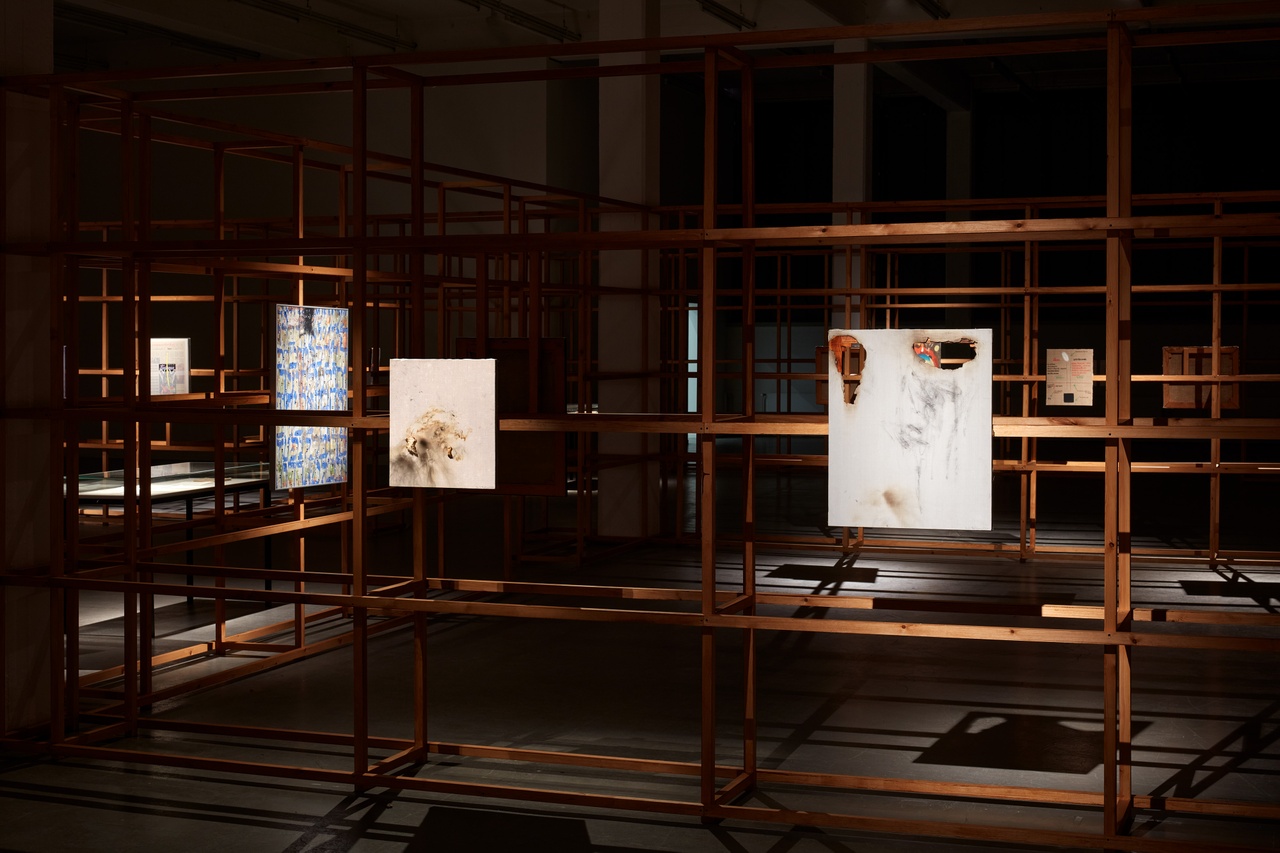
Following a loose chronology, the exhibition unfolds throughout numerous chambers constructed by a skeletal wooden structure in the Kunstverein’s main hall. The story of Rothman, as it is told here, begins with the end of the Second World War. After being brought to Sweden for tuberculosis treatment by the Red Cross from the concentration camp Bergen-Belsen in 1945, Rothman spent the next six years in hospitals and sanitariums, which is where she started making her first collages. She describes them as diaries without words: sheets of paper pierced into patterns with a sewing needle. In an interview for Swedish television decades later, “I was doing to the paper what the doctors were doing to my body,” she recalled. [1] This is mentioned in the wall texts, yet, unfortunately, none of these early works are included in the exhibition, which instead begins with rather generic studies in oil painting from her early art school years in the mid 1950s. Over the course of the exhibition, however, painting’s brief spell quietly fades and the stitching and binding gradually reemerges, becoming a defining gesture, a literal red thread running through Rothman’s sprawling body of work.
“Lenke Rothman: Quality of Life,” Kunstverein in Hamburg, 2026
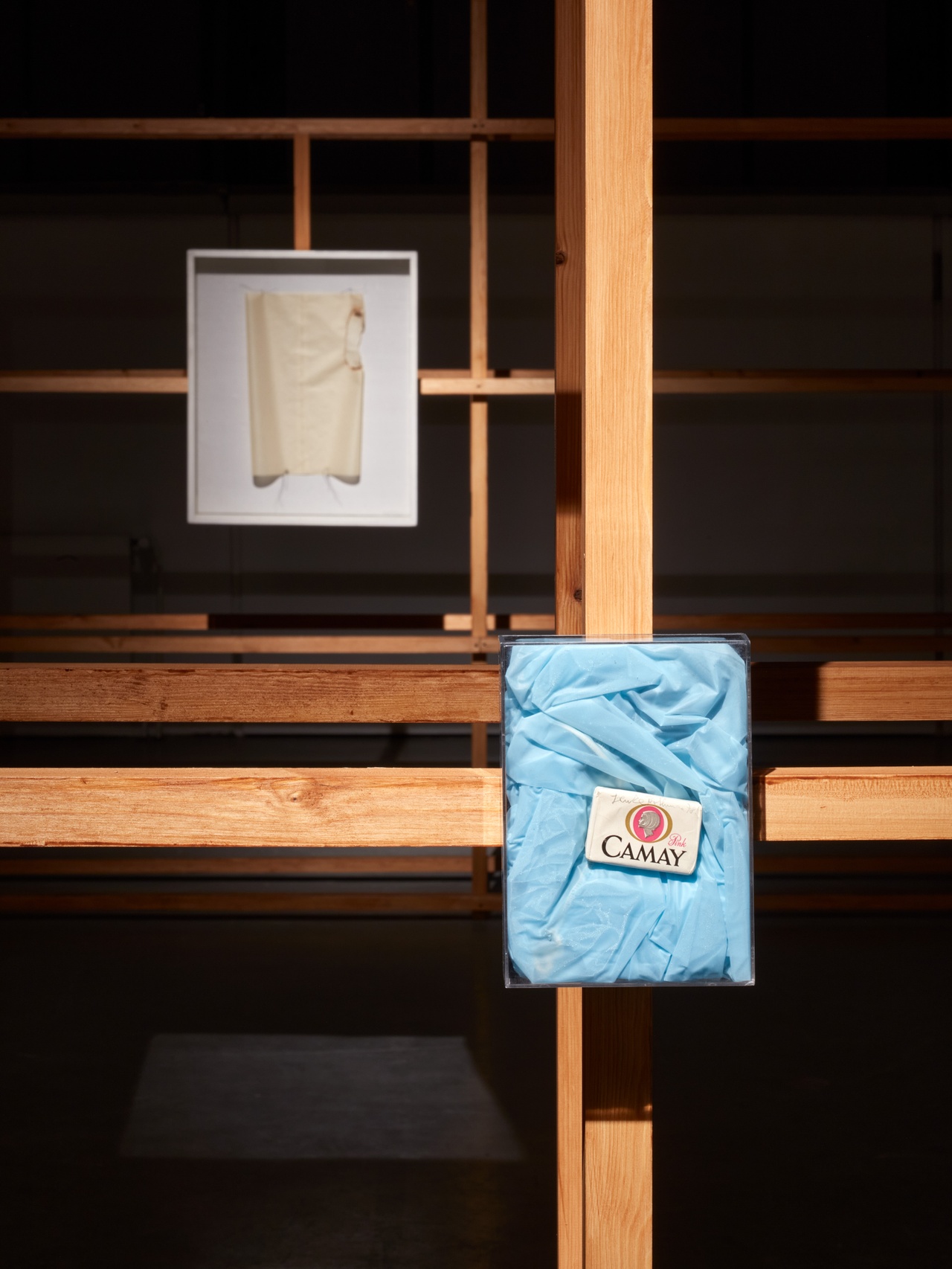
In Den dagliga kroppen/The daily body (1977) and Tillståndet av ett bara/The condition of being bare (1977), various tissue or cloth fragments are folded, bound to a canvas, and encased in a fiberglass box that serves as both frame and container for the fabric’s three-dimensionality. The materials resemble an outer layer, similar to skin, shell or armor. In places, Rothman has burnt holes into the stitched-up surfaces, creating openings and rugged crevices that are then held together with safety pins, evoking a harsher, more deliberate penetration of her materials than in conventional collage. Whereas gluing gives the illusion of seamless cohesion, the cold, piercing needle in Rothman’s works preserves fracture in coalescence in a way that mimics the tender but violent recovery held in corporeal memory. Alongside textiles, many works also incorporate personal belongings and ephemera. Om Pommac-törsten/About the Thirst for Pommac (1978) assembles newspaper spreads featuring chipper advertisements for soft drinks, dated 1949, an identity card issued by Allied forces upon Rothman’s liberation from Bergen-Belsen, and a black-and-white portrait of her as a teenager, taken shortly after her arrival in Sweden. As this piece was made in 1978, Rothman must have held onto these documents for 30 years before integrating them into the work. The weight of her lived experience, set against the backdrop of commercial imagery, produces a jarring contrast as it registers both the rapidly shifting conditions of postwar life and the quiet persistence of an individual fate in the fugitive space beyond mass culture’s lurid velocity. The work features the only portrait of the artist found in the exhibition. Placed close to the entrance, it breaks with the chronology and, by doing so, places the biographical figure of Lenke Rothman, name and face, at the core of its narration.
Lenke Rothman, “Familjen/The Family,” 1964
By including material from her personal life, Rothman employs strategies associated with female autofiction. Sophie Calle, and more explicitly, authors like Annie Ernaux or Natalia Ginzburg, foregrounded biographical narrative in an emancipatory effort that was eventually platitudinized under the slogan “the personal is political.” In each case, the personal is not immediate but staged through intimate matter, everyday materials or experiences that are strung as narrative fragments rather than unified accounts. The specific biography of Rothman recalibrates the stakes of such artistic strategies both ethically and affectively. In fact, perhaps the question to what degree a personal history is a political one has less to do with the work itself and more with the weight it acquires within the frameworks of collective remembrance. In Germany, where pathos-heavy Erinnerungskultur is treated as Staatsräson, it is a balancing act to present an artist whose work is closely linked to the Shoah without fixing it within a moral horizon that overshadows aesthetic operations.
At the Kunstverein in Hamburg, the curators evidently put much effort into avoiding an oversimplified, moralistic reading. The exhibition design and the atmospheric lighting, which illuminates individual works in an otherwise darkened room, are almost anti-didactic and make the works appear material and fleshy, even slightly sacrilegious. The wall texts are well-researched and informative but unobtrusive, presenting context as optional. Nonetheless, this attempt at restraint weighs against the historical narrative, which still strongly shapes the viewer’s reception of the works on view.
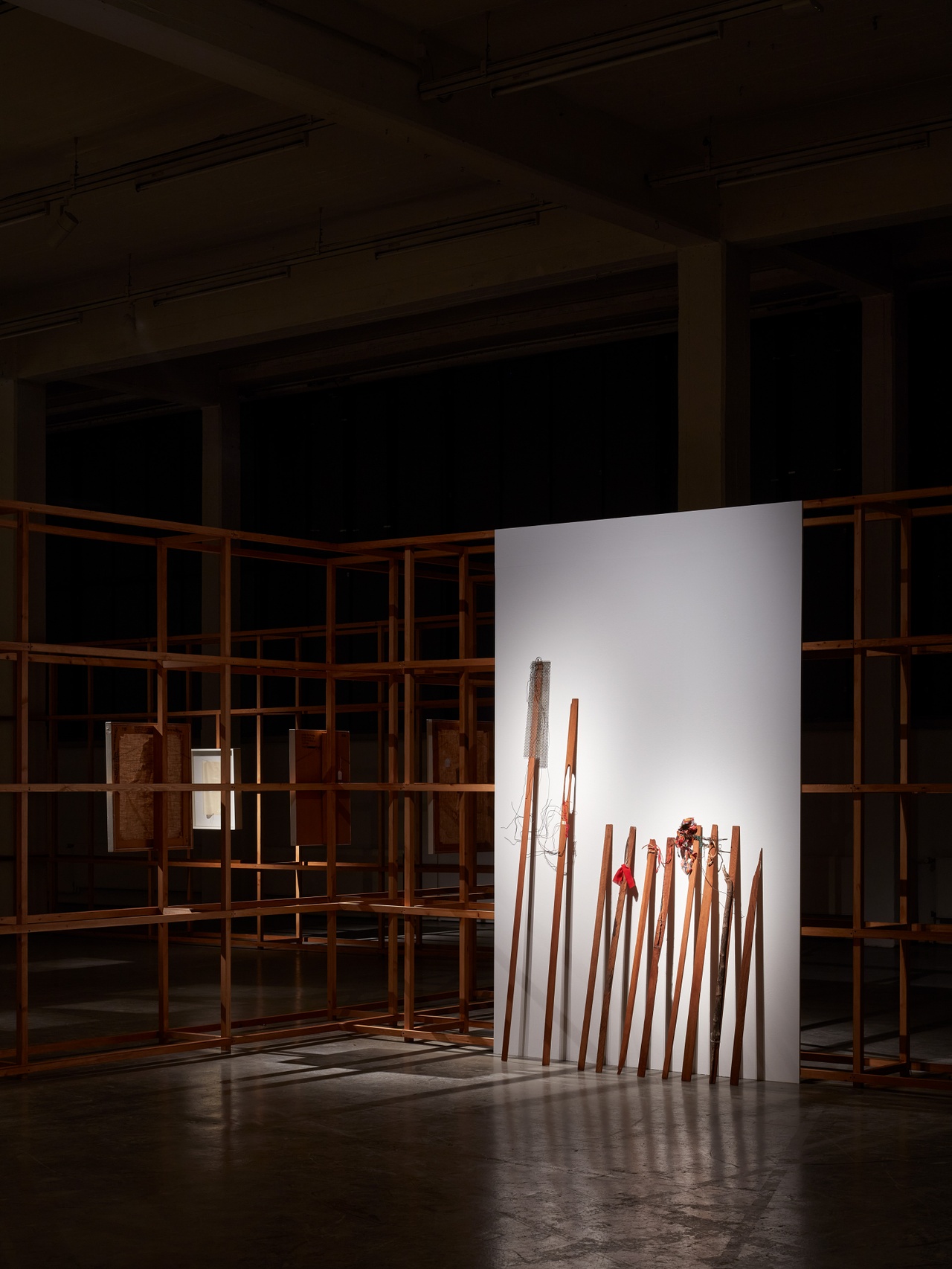
This tension is palpable, for example, in Familjen/The Family (1964): Ten slim wooden beams lean against a wall, two considerably longer than the others; the beams are adorned with ribbon, yarn, or wire in a way that gives each a distinct personality. This impulse for animistic recognition, which repeats in works such as Ur sviten; Ansikten brända i tyg/From the series: Faces burnt in fabric (1976), is childlike and endearing, even humorous. At the same time, the spindly twigs carry an austere, even sullen presence, which is all the more suggestive when considering that of Rothman’s own family of ten, only two children survived the war. The wall text also refers to the Judaist-symbolic meaning of the numbers 10, 8, and 2. While this contextualization is worthwhile and illuminating, it demonstrates how an over-fixation on biography can risk eclipsing the complex, multilayered, and at times even contradictory formal characteristics of the work. Many of her works are vibrant, witty, and full of libidinal energy. This is nicely reflected in the exhibition title “Quality of Life,” which is taken from one of Rothman’s artist books, itself named after a sculpture. Life’s quality, meaning both a degree of excellence and a distinctive trait, is embraced as a productive, ever-giving source of inspiration which, in all its contingencies, becomes material.
The exhibition nicely shows how Rothman’s engagement with the mnemonic quality of objects is not solely tied to history or personal memory but is also shaped by pop-inflicted celebrity culture in works such as Hud/Lien/Skin/Lien (1982) and Dansaren/The Dancer (1981). Hud/Lien assembles a leopard skin stretched at its limbs, an anatomical drawing of a bird, a sign bearing the French word LIEN (band, strap), and a small square of silk marketed as an allegedly authentic offcut of Marilyn Monroe’s bedsheet. To its left, Dansaren/The Dancer presents two identical postcards depicting a sensual Mikhail Baryshnikov, encased behind a fiberglass frame. These quasi-devotional objects hinge on a desire for proximity to idolized celebrities, which, under the conditions of mass media, finds itself endlessly reproduced and commodified.
Lenke Rothman, “Liv som tyg/Life as cloth,” 1981
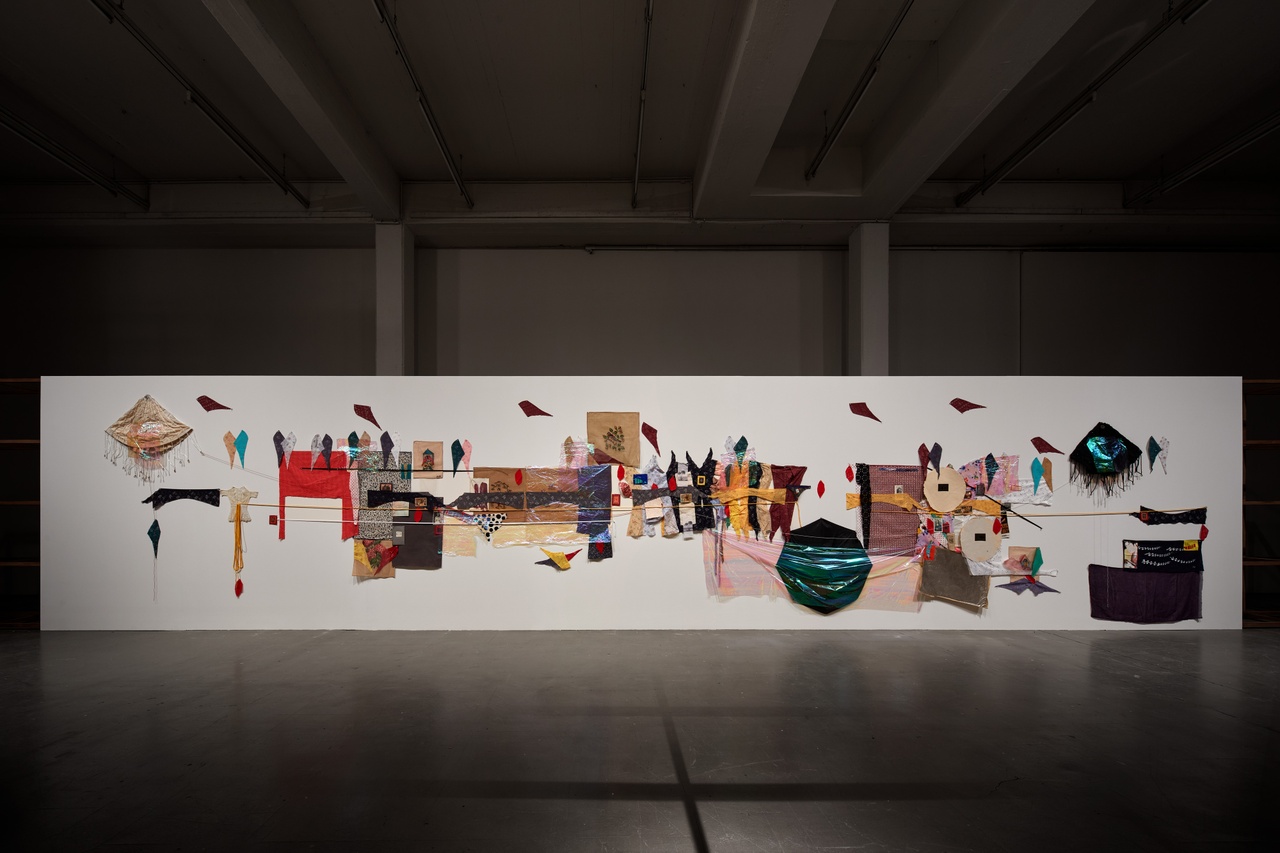
Spatially and thematically, the exhibition culminates in the sprawling Liv som tyg/Life as cloth, which expands over 13 meters of wall. Composed of hundreds of textile fragments and collected objects, it functions as a repository of not only a past, but a present that is the direct product of all that has led up to each moment in time. While memory and remembrance are integral to Rothman’s oeuvre, they do not germinate from an understanding of the past as a sealed-off unit, but as a then that continuously forms the now. Life as cloth had been subject to change since its initial installation in 1981 at the P.S. 1 Contemporary Art Center, as Rothman continuously cut away sections to incorporate into subsequent works, negating a final, static form. Rothman began traveling to New York in the 1980s, befriended Andy Warhol, studied Joseph Cornell, wrote books, had kids. These biographical details do not so much explain the work as form its premise. Each matchbox, scrap of cloth, or postcard retains something of a trace, and gives testimony of time handled, kept, and carried forward. In that gap between personal and public, lived experience and official narrative, lingers the question of what the quality of life, of a life, might amount to: A neoliberal index of valuation, or an indeterminate condition of existence? What is certain is that it continues, if not quite progressing, then at least unraveling.
“Lenke Rothman: Quality of Life,” February 21–May 10, 2026, Kunstverein in Hamburg.
Dara Jochum is a writer based in Berlin.
Image credit: Courtesy of Lenke Rothman and Kunstverein in Hamburg, photos Edward Greiner
Note
| [1] | “SVT Andy Warhol Lenke Rothman,” Lenke Rothman, posted September 30, 2023, YouTube video, 12:20. |