
HILDE LYNN HELPHENSTEIN (1985–2026) By Magnus Resch
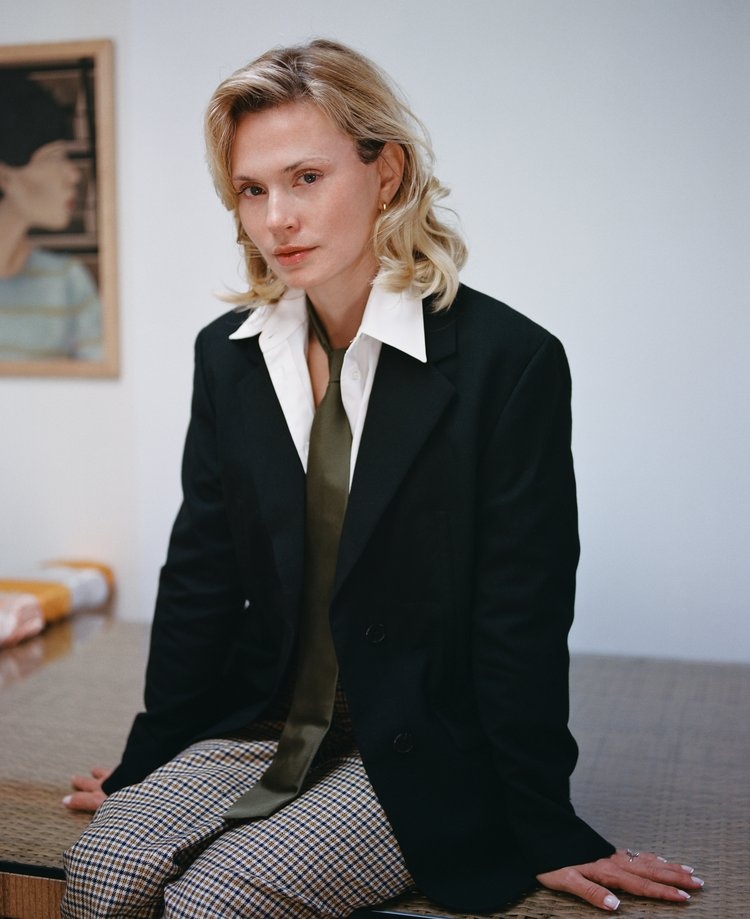
Hilde Lynn Helphenstein
The first time I was supposed to meet Hilde Lynn Helphenstein, she wanted me to sign an NDA. We were going to meet on a bench in Central Park. Then, at some point, she texted me: “Let’s just meet.”
Looking back, that was Hilde. Equal parts mystery and oversharing. Suspicious and trusting. Tough and extraordinarily sensitive. Most people knew her as Jerry Gogosian. I knew her as someone who cared deeply – sometimes too deeply – about artists, galleries, and the art world itself.
Over the years, we spent countless hours together on Art Smack. We disagreed often. We spoke different languages. My instinct was usually data and economics; hers was emotion and intuition. Yet somehow, we always arrived at the same place. We both wanted artists to succeed. We both believed that artists deserved better. What many people never understood about Hilde was that behind the sharpest jokes in the art world was one of the most sensitive people in it.
She could be provocative. She could be emotional. She could be frustrating. She could also be incredibly funny, generous, and encouraging. Her criticism came from caring. Her humor came from caring. Even her frustrations came from caring. She wanted artists to make more money. She wanted galleries to do better. She championed emerging artists, particularly women, long before others paid attention. She wanted the art world to be fairer, more transparent, and less hypocritical. When people or institutions failed to live up to what she believed they could be, she took it personally.
Last week, we recorded a new episode of the podcast. It felt like a new chapter. We talked about Art Basel, which she simultaneously loved and hated. We talked about partnerships, projects, and the discouraging reality that everyone seemed to want collaboration but nobody wanted to spend money. We talked about the art world, as we always did. Most importantly, she talked about her paintings. She was proud of them. Really proud. Not in the performative way people often are, but genuinely proud and excited, like someone who had rediscovered something she loved. For all the attention Jerry Gogosian received, Hilde wanted people to see that she was an artist too.
A few days later, she called me with a question. “How do you deal with criticism?” Some anonymous online account had consistently attacked her, and she was hurt by it. The irony wasn’t lost on either of us. The woman who spent years making the art world laugh at itself was wounded by a few strangers on the internet who have been trolling her for a while. But that was Hilde too. People often mistook her sharpness for toughness. It wasn’t. Underneath the wit and confidence was someone who wanted to be understood and who sometimes worried whether her voice still mattered.
I told her something that day that I hope she believed. I told her that people missed her. That artists missed her. That people asked about her wherever I went. I told her about walking through studios in Los Angeles and having artists stop me because they recognized my voice from our podcast – to ask about her, not about me. I told her that the loudest voices online were often the smallest voices in real life. She liked hearing that.
A few days later I called to check in on the podcast edit. She wanted to tweak it because, in her words, it was her comeback. She didn’t answer my call. Instead, she sent me a photograph of a bruised hand. She told me she had been attacked and robbed. Then she sent a message I haven’t stopped thinking about since: “I held onto my laptop, passport and paintings. I don’t care about anything else.”
That sentence tells you almost everything about Hilde: The laptop. The passport. The paintings. = Work. Freedom. Art.
The tributes appearing across the art world tell a story very different from the one she sometimes told herself. Artists are posting. Collectors are posting. Dealers are posting. Journalists are posting. People she hadn’t spoken to in years are posting. And they are all describing the same person: someone who made them laugh, challenged them, rattled cages when cages needed rattling, and exposed the absurdities of the art world while somehow remaining one of its greatest believers. Reading through those messages, I found myself wishing people didn’t wait until someone is gone to tell them how much they mattered.
For all the jokes, all the satire, and all the criticism, Hilde loved the art world. She loved artists. She loved talking about art. She loved discovering talent. She loved gossiping about the market. She loved arguing about fairs, galleries, collectors, and institutions. Most of all, she loved being part of the conversation. The art world was not simply her subject. It was her community.
A few days before she died, Hilde asked me whether the art world still wanted her. Looking at the response to her passing, I wish she could see what everyone is saying now. Because the answer is everywhere. She wasn’t standing outside the art world looking in. She was one of the voices that defined it.
Yes, Hilde. The art world wanted you. Your voice mattered. It mattered to artists. It mattered to the art world. And it will continue to matter to so many of us.
Magnus Resch, Ph.D., is an art market expert and book author. He teaches at Yale University and is the founder of Magnus.net, the “Shazam for Art,” as well as Larry’s List. His research has been published in Science and Nature.
Image credit: The editors have made every effort to get in touch with the copyright holders. Should any claims remain unresolved, please contact us at redaktion@textezurkunst.de.