
THE MEDITERRANEAN, MARSEILLE, AND GISELLE’S BOOKS by Michaela Melián
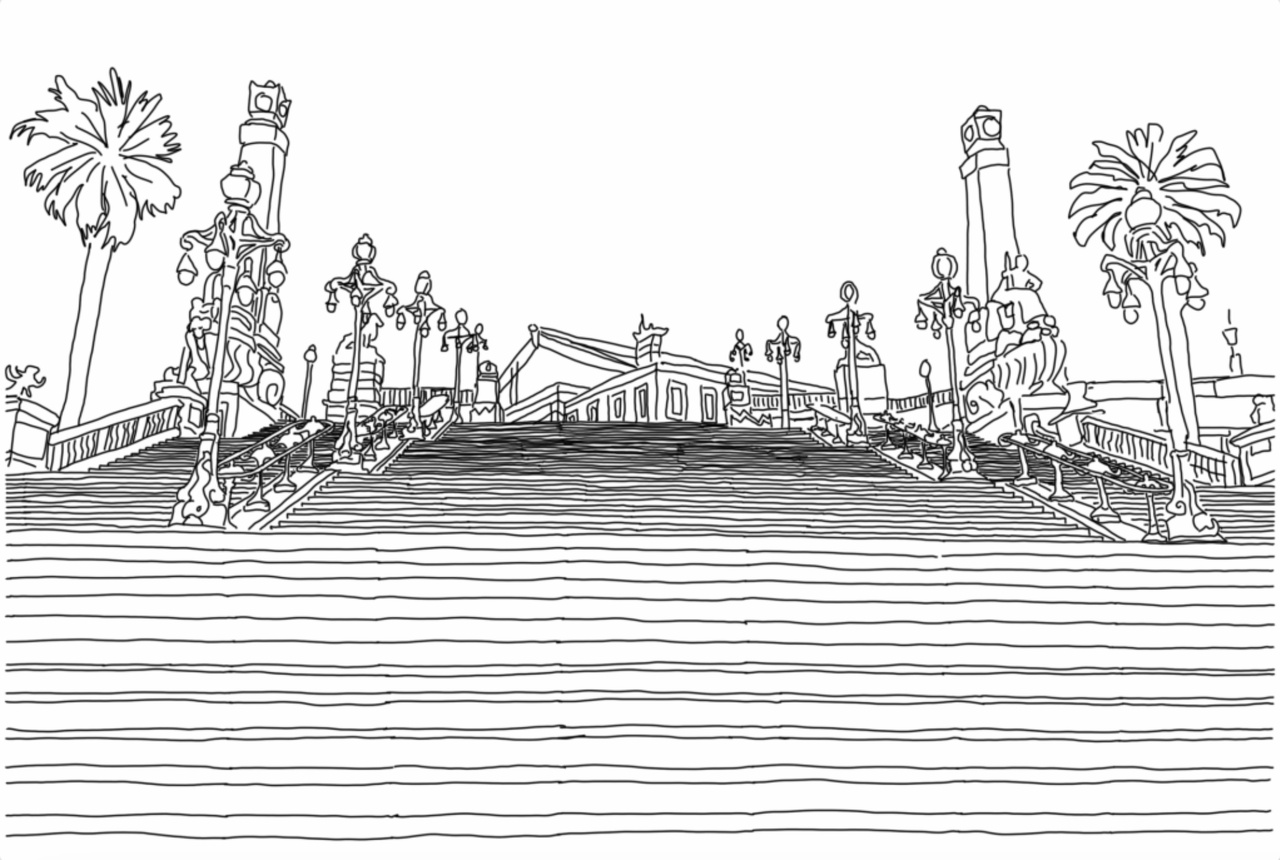
Michaela Melián, “Gare St. Charles,” 2024
Whenever you arrive at the Gare de Marseille-Saint-Charles and step out onto the terrace in front of the station building, you are overwhelmed anew every time. The view stretches far beyond the densely built-up city, to the mountain massifs surrounding it and encroaching upon it, all the way to the horizon of the Mediterranean Sea. Via the imposing station staircase – lined with large sculptures, built for the 1922 Colonial Exhibition and now the focus of critical discourse due to their allegories of Asia and Africa [1] – we arrivals descend toward the Boulevard d’Athènes as if on a stage stairway, immediately immersing ourselves in the wealth of themes, impressions, and experiences this city has to offer.
Marseille has always been on the periphery of Europe, with its gaze oriented toward the Mediterranean rather than Paris or Central Europe; accordingly, people here have a different perspective and view the centers of power in the north with a sense of distance. In Marseille, migration is neither a metaphor nor an abstraction but a reality that has existed for over 2,000 years. Many people live here in exile; having been forced to leave their past behind, they have introduced parts of it unmistakably into urban life. Through its programming, the Mucem – Musée des civilisations de l’Europe et de la Méditerranée – highlights Marseille’s integration into the Mediterranean region. For example, the permanent exhibition “Méditerranées,” established in 2023 and continuously evolving through 2030, presents diverse conceptions of the Mediterranean region from Greco-Roman antiquity through the colonial era to the present. Using various museographic models, including many contemporary artworks, the exhibition demonstrates how art history and ethnology museums have constructed idealized images of the Mediterranean. Throughout the city, the historical relationships between France, as a former colonial power, and the African continent are a major theme.
Many Marseille residents live near the poverty line. Especially in the northern suburbs, high unemployment, poverty, and drug-related and gang-related crime cause major problems. In 2021, the French government presented the ambitious future-oriented revitalization plan “Marseille en Grand” to support France’s poorest major city through investments in key public infrastructure such as schools, transportation, housing, and public safety. In addition to government and municipal measures, there are numerous citizen-led initiatives, such as the so-called soupes populaires and cantines solidaires, where collectives cook a meal at lunchtime and people can stop by to eat at cost or for a voluntary donation. That strong sense of solidarity, which is part of Marseille’s identity, makes this city so special. L’Après M, in particular, has gained international fame: in the Quartiers Nord, the former employees of a closed-down McDonald’s branch occupied the building, and they now, with support from the city, sell food they prepare themselves and provide free groceries to those in need. The massive anti-drug-mafia demonstrations that have been taking place in Marseille since the end of last year have also attracted attention far beyond France’s borders.
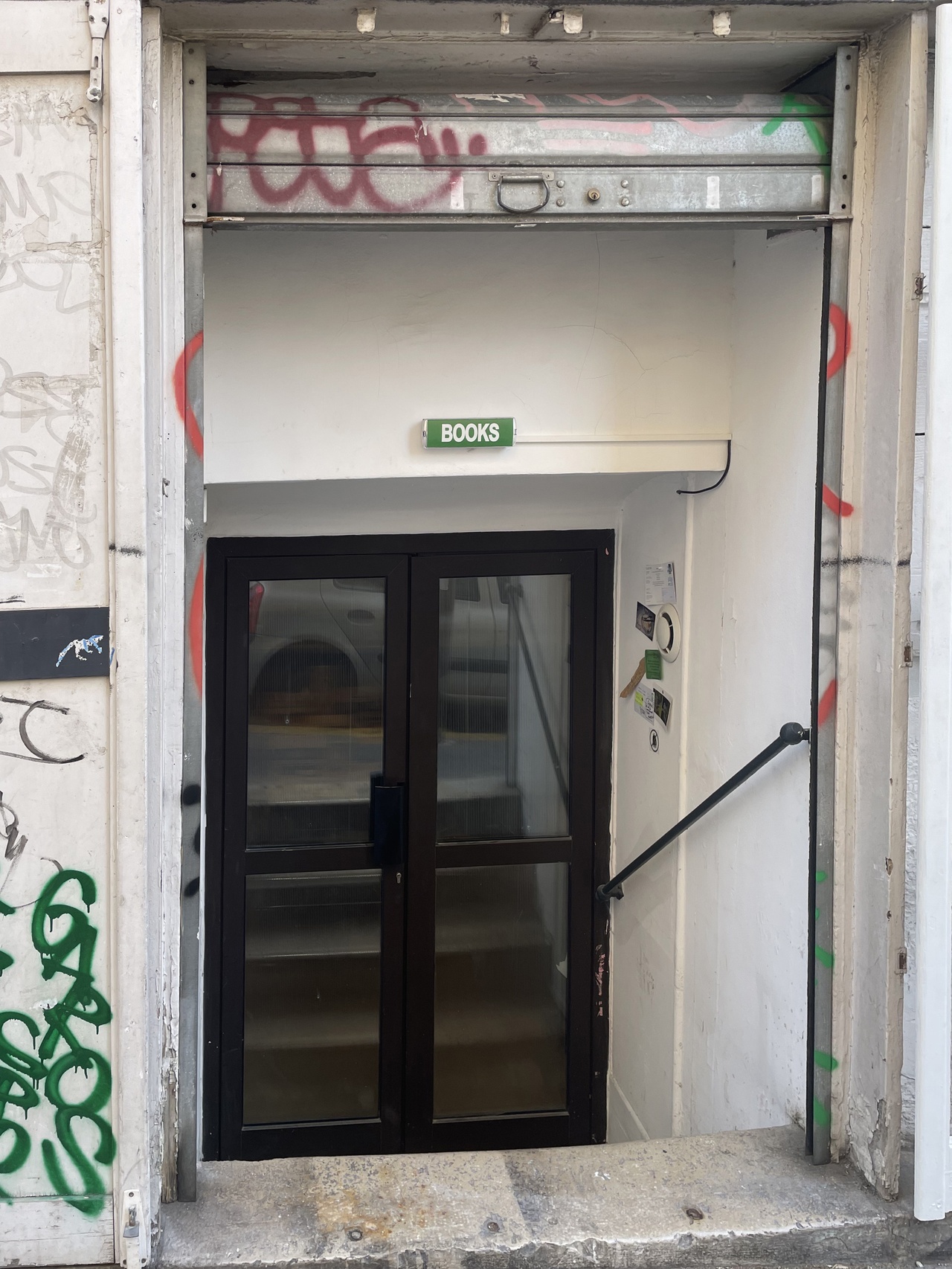
Entrance to Giselle’s Books
Right at the foot of L’escalier de la gare de Marseille-Saint-Charles, on Rue des Convalescents – named after a hospital established during the plague for sick travelers passing through – are the premises of Giselle’s Books. The two founders, Lucas Jacques-Witz and Ryder Morey-Weale, have been in Marseille for six years, and their non-commercial concept for Giselle’s Books fits right in with the city. Both studied at the École des Beaux-Arts in Toulouse and, even while still students, turned the hallway of their shared apartment into a project space under the motto “to work with other artists on other artists’ practices.” After completing their studies, they moved to Berlin. In 2020, when the pandemic broke out, they were in Shanghai on a research fellowship as part of a graduate program called “Mondialité en…”. Paul Devautour, the former director of the Collège invisible de Marseille – the first postgraduate program for artists in France – was the initiator of this program, which Jacques-Witz and Morey-Weale still speak of in the highest terms. When it ended prematurely due to the pandemic, they had to leave China overnight and decided to go to Marseille. At the time, many creatives from Paris, London, Brussels, Berlin, and other European cities were moving to France’s second-largest city, where rents were relatively cheap and the weather was Mediterranean, which made the restrictions imposed by Covid-19 measures comparatively bearable. Rumor has it that thousands of creative professionals moved from Paris to Marseille during the pandemic to pursue their digital work in affordable apartments. To this day, the international influx continues. Just like Barcelona, Berlin, Athens, or Istanbul before it, this city attracts many young people. One can imagine how many apartments in the trendy neighborhoods have already been snapped up by newcomers – and how many more will be.
North of the Porte d’Aix, in a vast area along the harbor in the Arenc district, large-scale demolitions of buildings have taken place in recent years. A long-established community of residents – mostly of North African origin – and their many small shops and workshops, have had to make way for the plans, as a new Marseille is being built here as part of the controversial large-scale project Euroméditerranée. Since the 1990s, with funding from the French government, the city of Marseille, the Provence-Alpes-Côte d’Azur region, the European Union, and private investors, a cruise terminal with a shopping center and various new university buildings – but above all, many upscale apartments – have been built here. When the artiste promeneur Nicolas Mémain guides visitors through this part of the city, he describes it as a war zone. But the French government’s Programme Investissements d’Avenir (Future investment program), which finances large-scale investments in sustainable architecture for public housing, educational facilities, cultural institutions, and infrastructure such as public transportation, is part of Euroméditerranée, too. The Port of Marseille is also home to one of Europe’s most important hubs for undersea data cables from Asia, the Middle East, and Africa, housed in a gigantic former submarine bunker built by the Wehrmacht in 1943–44.
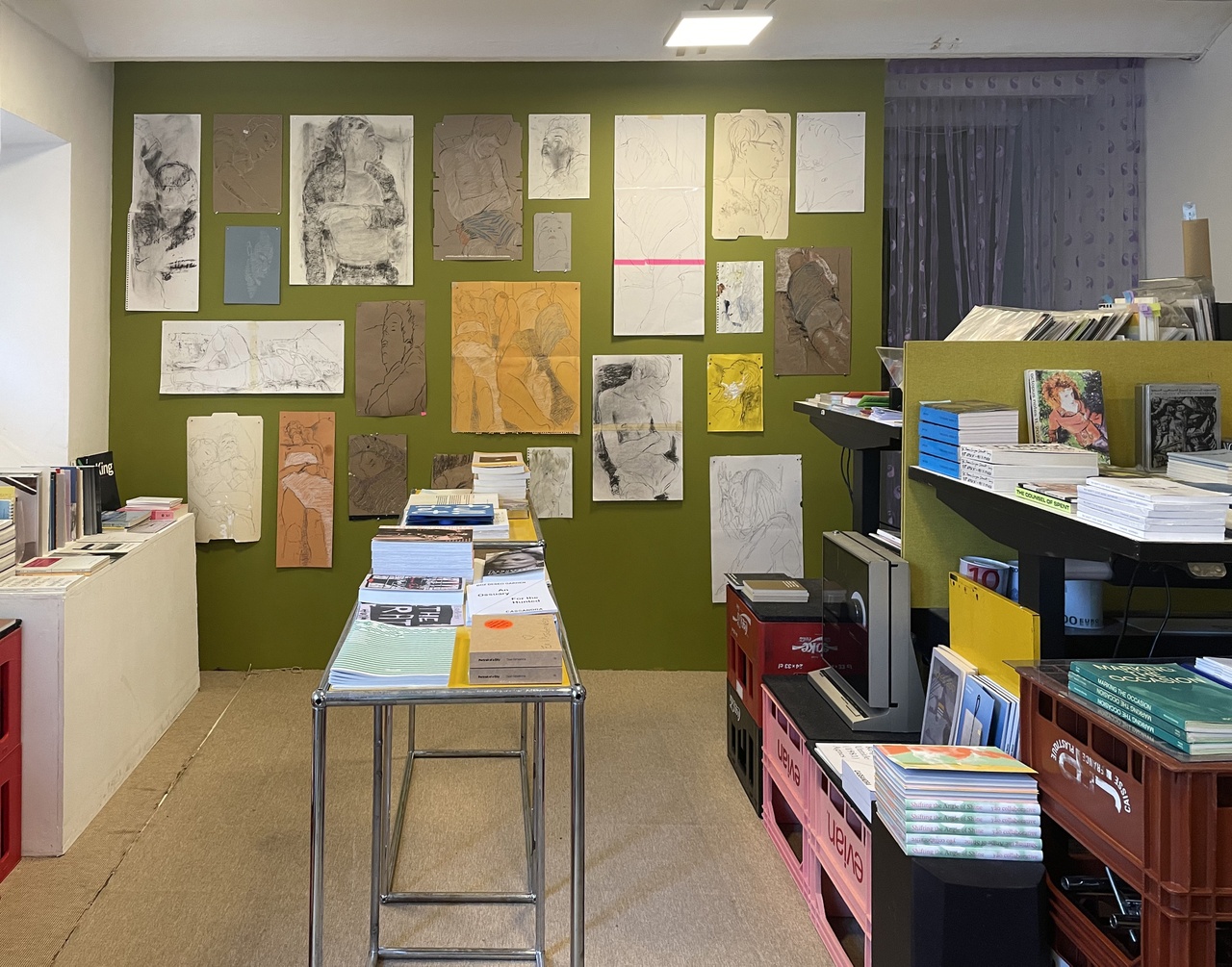
Interior of Giselle’s Books
Despite the steady influx of international residents – both legal and illegal – to Marseille, there are still many vacant spaces that artists can rent and use relatively inexpensively as studios, workshops, or artist-run spaces. The city’s many excellent bookstores, publishing houses, and record shops are worth mentioning as well. This part of culture has a long tradition. From 1925 to 1966, the French literary journal Cahiers du Sud was published here; even under the Vichy regime and the German occupation, it managed to maintain its European – indeed, international – orientation and, in the 1930s and 1940s, increasingly became a forum for German exile literature in France. For many decades, important archives have been housed in the city center: the CIRA (Centre International de Recherches sur l’Anarchisme) since the mid-1960s, and the CIPM (Centre International de Poésie Marseille) and Mémoire des Sexualités (LGBTQI+ Archive) since the 1980s.
When Jacques-Witz and Morey-Weale arrived in Marseille in September 2020, they launched Giselle’s Books in their apartment as a nonprofit art association (Association loi 1901). Initially, it was conceived as an exhibition and research space dedicated to publishing practices in contemporary art, with a focus on presenting and archiving ephemeral artistic processes. From the outset, the project has also included a continuously expanding and publicly accessible archive library for artists’ books and art publications. Giselle’s Books is an organization dedicated exclusively to artistic research, not to dealing in art, and the two founders have no interest in commercializing their program; Jacques-Witz works as an archivist, and Morey-Weale holds various jobs as an artist in Marseille. The two do not situate Giselle’s Books at the center of the contemporary art scene but rather on its periphery, where market dynamics have less of an impact, and where they can follow their own rhythm. In Marseille, they have found ideal conditions for this, because the city is so different from, say, Paris, London, or Berlin, as Jacques-Witz emphasizes in conversation: “There’s a different sense of time here, and a different kind of attention. The city’s energy is beneficial for many artistic practices, such as writing. And people tend to resist the ‘too much.’ They take their time; on the weekends, they leave the city or go about their own business, slowing down a bit. In comparison, Paris consists of a constant 24/7 rhythm of events and openings – how is one supposed to be creative in such an environment? A project like Giselle’s would be very difficult to sustain in a city like Paris or London, where there is neither the time nor the space for it.”
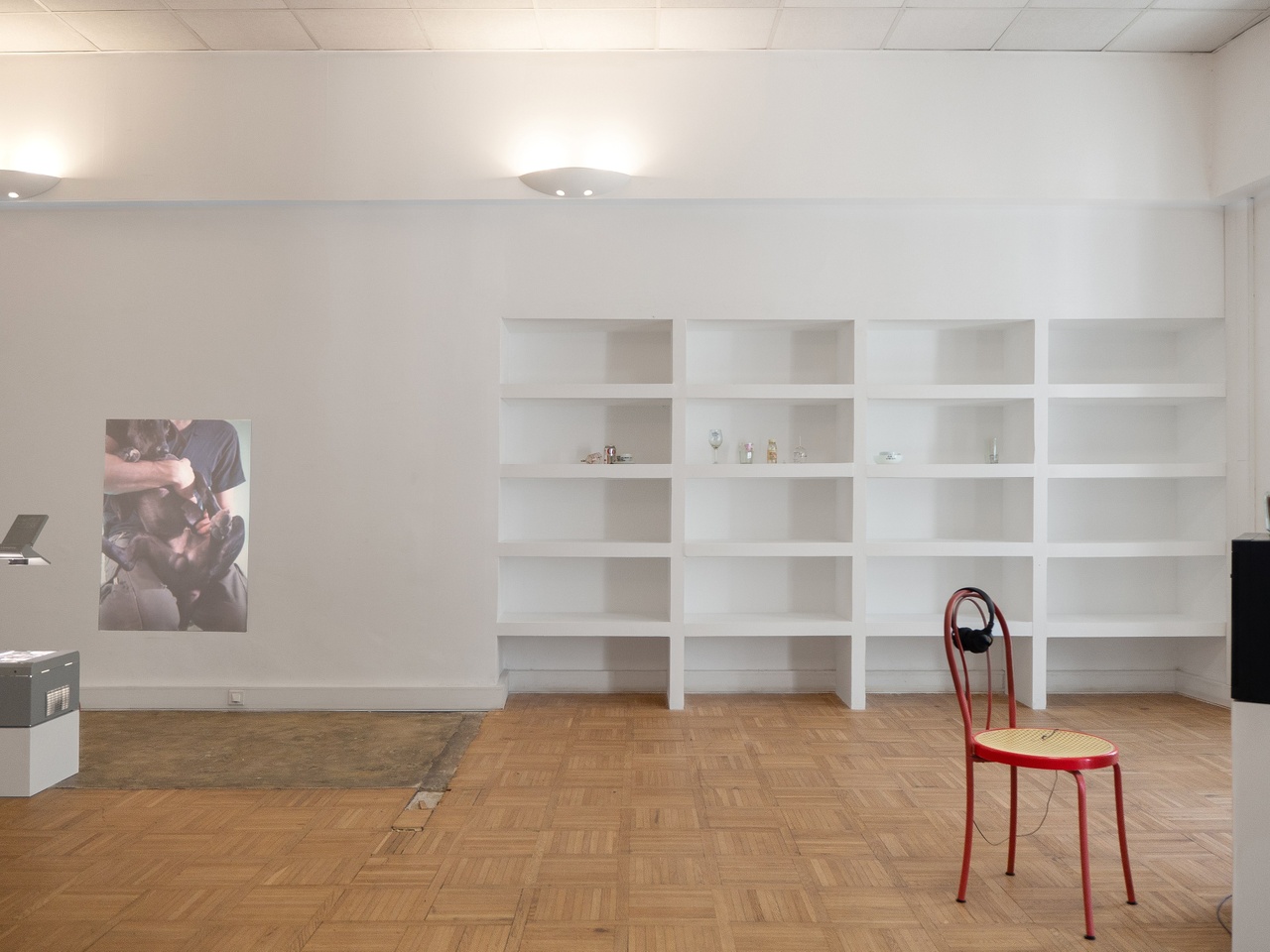
“Fake Fruit & Co,” Giselle’s Books, Marseille, 2026
In August 2022, I visited Giselle’s Books for the first time. Stefan Kalmár and Raoul Klooker, who had launched their project space, OCT0 [2] , in Marseille half a year earlier and were now collaborating with Jacques-Witz and Morey-Weale, took me there: While the video work Penumbra by Hannah Black and Juliana Huxtable was on display at OCT0, located just a few minutes away, down Boulevard d’Athènes in the city center, Hannah Black was scheduled to read from her poems at Giselle’s Books that evening. We walked along Rue des Convalescents, a narrow alley, past Chinese shops and a mosque, rang the bell at an unassuming door, and went up to the second floor. There, a spacious, bright room opened up, featuring shelves built into the walls and several large coffee tables covered with books and magazines: an exquisite selection of old and brand-new artist’s books, art catalogs, art magazines, theoretical publications, and literature. For example, I immediately recognized several publications from Berlin’s Harun Farocki Institut on one of the tables. Dotted throughout were sofas and armchairs for sitting and reading – a beautiful, simple, and inviting introduction to the world of Giselle’s Books. Further back in the room, at a counter separating the space from Jacques-Witz and Morey-Weale’s private living area, drinks were being served. You could climb onto the large, tarred flat roof of the neighboring building via a windowsill, where many guests were already sitting on the ground, awaiting the reading. Hannah Black also came outside through the window, took a seat on a bar stool, and read her texts from her cell phone, accompanied by the hum of traffic and the babble of voices from the neighboring windows. A remarkably diverse audience listened to her with rapt attention.
“At first, people thought Giselle’s was a bookstore. But we’ve always been a kind of editorial organization that pursues a wide variety of activities,” Jacques-Witz and Morey-Weale explain in an interview. “We started by setting up this learning library. Through it, we’ve developed a perspective on publishing, but also on archiving. Because publishing is a form of archiving practices.” The two operators describe themselves as editors; they don’t want to be seen as curators. With their various activities, they see themselves as a platform that, above all, aims to foster networking among researchers, artists, curators, and writers. They have also recently established a residency program: Since Jacques-Witz and Morey-Weale planned to travel in November 2025, they decided to make their space in Marseille available for an author’s own projects during their absence. They announced this opportunity in a social media post, received responses from about 150 applicants from all corners of the world, and selected Sean Burns, who writes for Frieze and runs a publishing house in London called Queer Street Press. In the future, Giselle’s Books will continue this invitation-based practice during the quiet winter months. Starting in April, when the high season begins in Marseille, the exhibition program will be resumed. In May and June 2026, the group exhibition “Fake Fruit & Co” was on view, featuring works by Uri Aran, Dustin Ericksen and Mike Rogers, Tina Girouard, Ana Jotta, Chick Strand, George Tourkovasilis, and Charles Veyron, curated by the itinerant artistic enterprise Ampersand. Since July 2026, “Everything is NOW” will present works by Jill Westwood, who maintains a large archive of ephemera and project documentation. Most of the exhibits – such as the material related to Westwood’s performances from the 1980s – are being shown here for the first time in France.
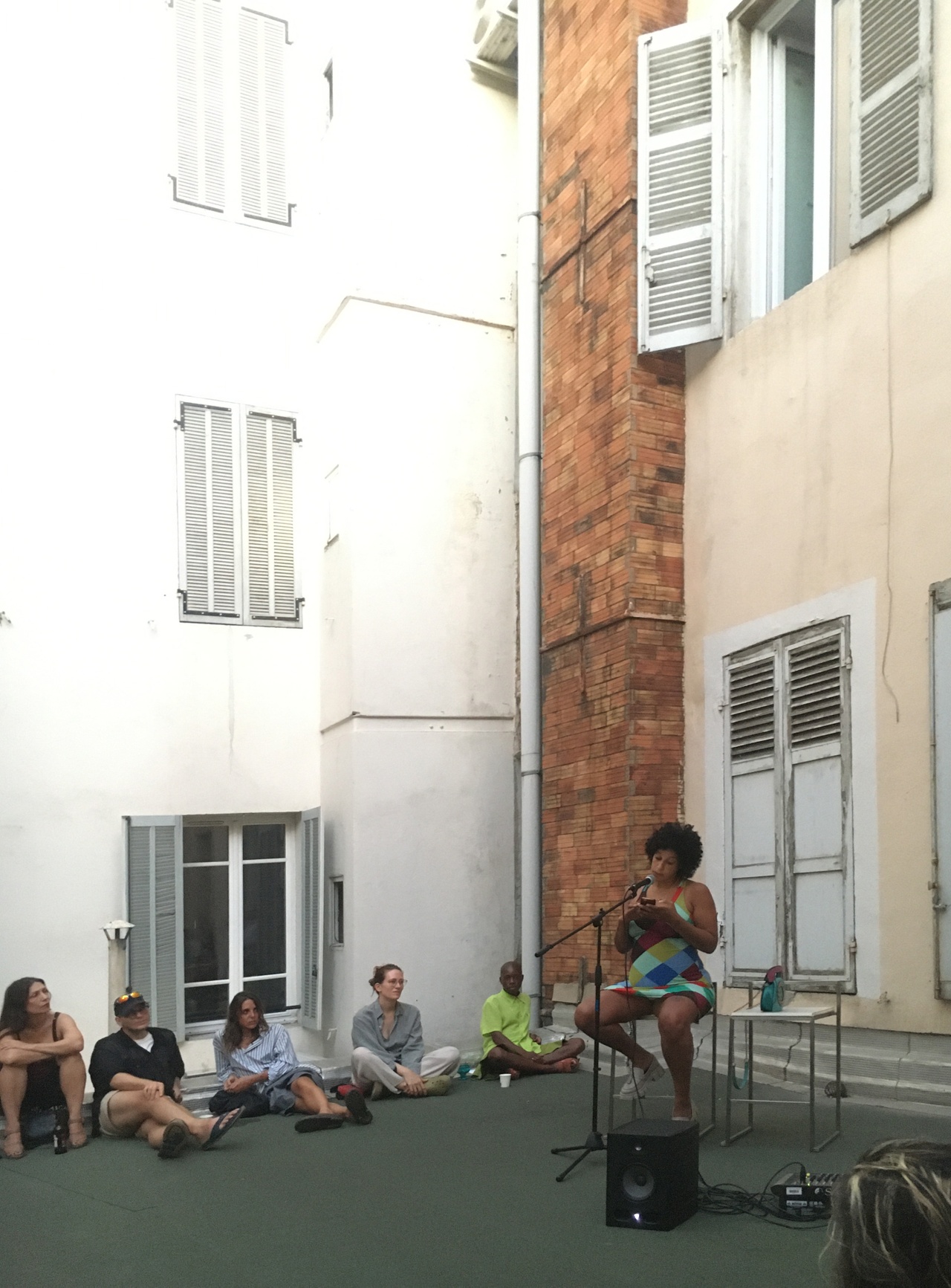
Hannah Black at Giselle’s Books, 2022
“We have an audience that regularly attends our events, including many expats,” Jacques-Witz and Morey-Weale explain. “Marseille is a transit city with a constant coming and going of people, so our audience changes from event to event, from season to season – it’s constantly evolving.” Since December 2025, Giselle’s Books has also operated another space two streets away, on Rue Maurice Korsek. Readings and events now take place in that storefront, and the reading library is also accessible there. The space on Rue des Convalescents remains a combined residence and exhibition space. In addition to its ongoing program, Giselle’s Books began publishing its own books in 2025. The first publication was created in collaboration with Tarren Johnson, a California-born choreographer and dancer living in Berlin. That small volume of her collected poems serves, in a sense, as the manuscript for her next dance piece. Another project is a magazine in which content from Korea and the Korean diaspora is being translated into English for the first time. The editor is the French-Korean editor Maria Jooyoung. Several editorial collaborations are planned for the coming year.
In 2022, Jacques-Witz and Morey-Weale were involved in founding the Systema art festival, which takes place annually in late August in Marseille [3] – thus coinciding with the Art-o-rama art fair at the Friche la Belle cultural center, a former tobacco factory north of the train station, where primarily young but already established international galleries exhibit, attracting a financially affluent audience from France and across Europe. Systema, by contrast, sees itself as a platform for independent art spaces and non-commercial art initiatives. The festival is based at the Palais des Arts, also known as the Palais Carli, which was built at the end of the 19th century as an art academy and is located in the heart of the city. This fantastic venue features a huge hall on the first floor, surrounded by tall, empty library rooms. Antique furniture, sculptures, faded wallpaper, worn-out staircases, blind mirrors, and a collection of historical and concert grand pianos provide a dramatic backdrop of fragile, decaying beauty for works one would rarely find at an art fair. At Systema, they are given space and time.
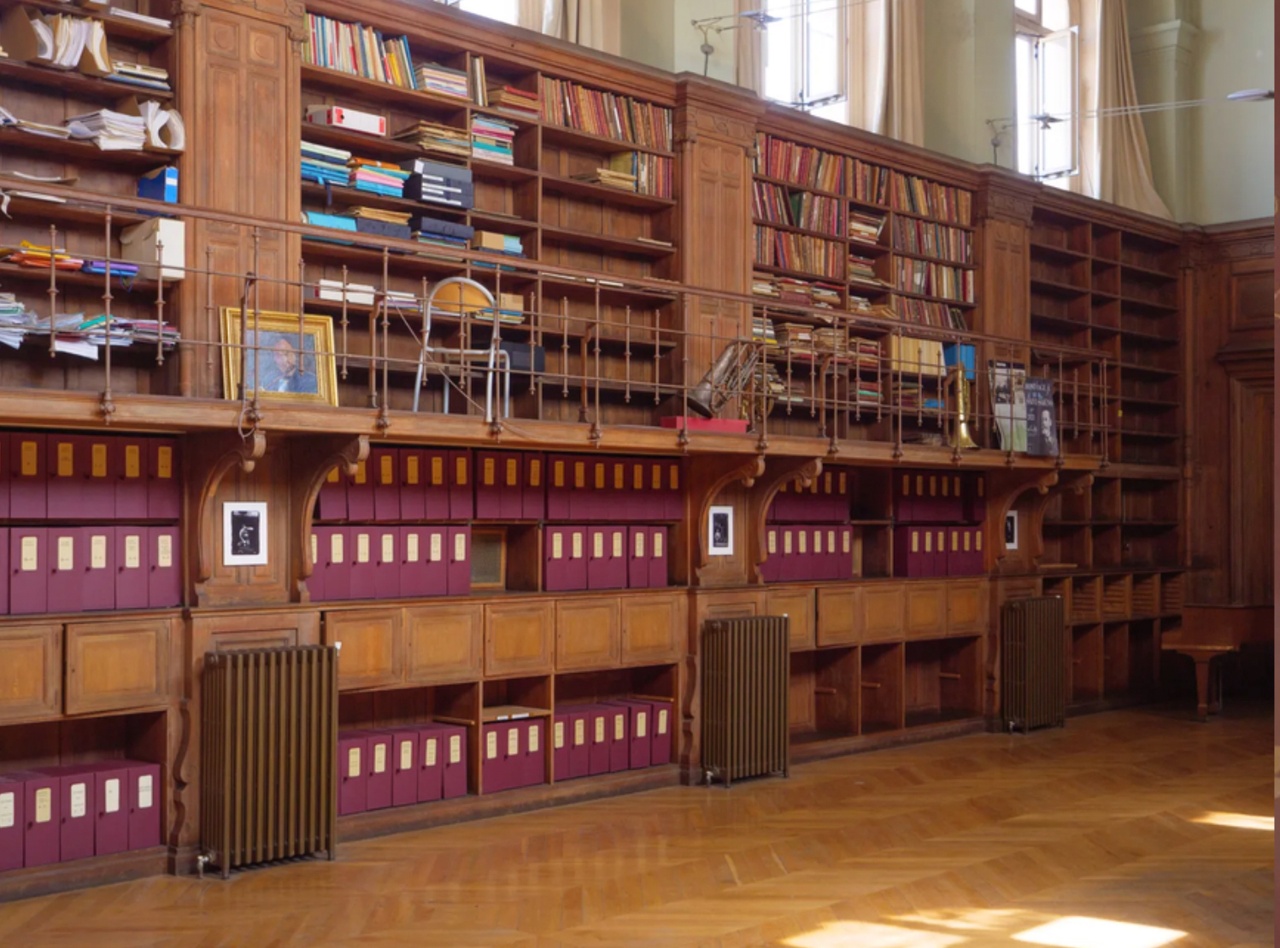
“SYSTEMA,” Palais Carli, Marseille, 2024
Until now, artists and artist-run spaces were invited directly to the Systema festival. From the submitted proposals, the curatorial board selected works for the exhibition at the Palais Carli. The artists then set up the exhibition themselves. This year, however – for Systema’s fifth edition – participants from previous festivals were asked to suggest projects and artists they felt would be a good fit. The aim is to bring together artists who didn’t know each other before and to create an ever-growing network of like-minded individuals. Since most artist-run spaces have very limited financial resources and typically rely on self-exploitation, the organizers aspire for Systema to foster international exchange among these projects and give them greater visibility. “We nonprofit organizations face many common challenges, but direct exchange is often lacking. With Systema, we want to help make that exchange possible,” Jacques-Witz tells me, explaining Giselle’s Books’ motivation for participating in the festival’s organization. As a sort of convention for the independent art scene – which is significantly larger in Marseille than the established gallery scene – Systema attracts new visitors every year, especially young people, who take the opportunity to experience not only all the artist-run spaces, bookstores, and cultural events but also the Mediterranean Sea.
Michaela Melián, an artist and musician, lives near Munich and in Marseille. Her exhibitions “Passagen – Passages” in Marseille and “Osnabrücker Gesänge – Rosi Ève Hélène” in Osnabrück are currently on view.
Image credit: 1. Courtesy of Michaela Melián; 2., 3., 5. Courtesy of Giselle’s Books; 4. Courtesy of the artists and Giselle’s Books; 6. Courtesy of the artists and SYSTEMA, photo Raphaël Massart
NOTES
| [1] | See, for example, the “Les statues de l’escalier de la gare Saint-Charles” project by the Musée d’Histoire de Marseille. |
| [2] | OCT0, an interdisciplinary art space featuring exhibitions, readings, film screenings, and publications by the Semiotext(e) press, was run by Stefan Kalmár and Raoul Klooker on Rue Guy Môquet from 2021 to 2024. |
| [3] | More information can be found on the festival website. |