
PUNK REHEARSAL SPACE Samuel Staples on Klara Lidén at KW Institute for Contemporary Art, Berlin
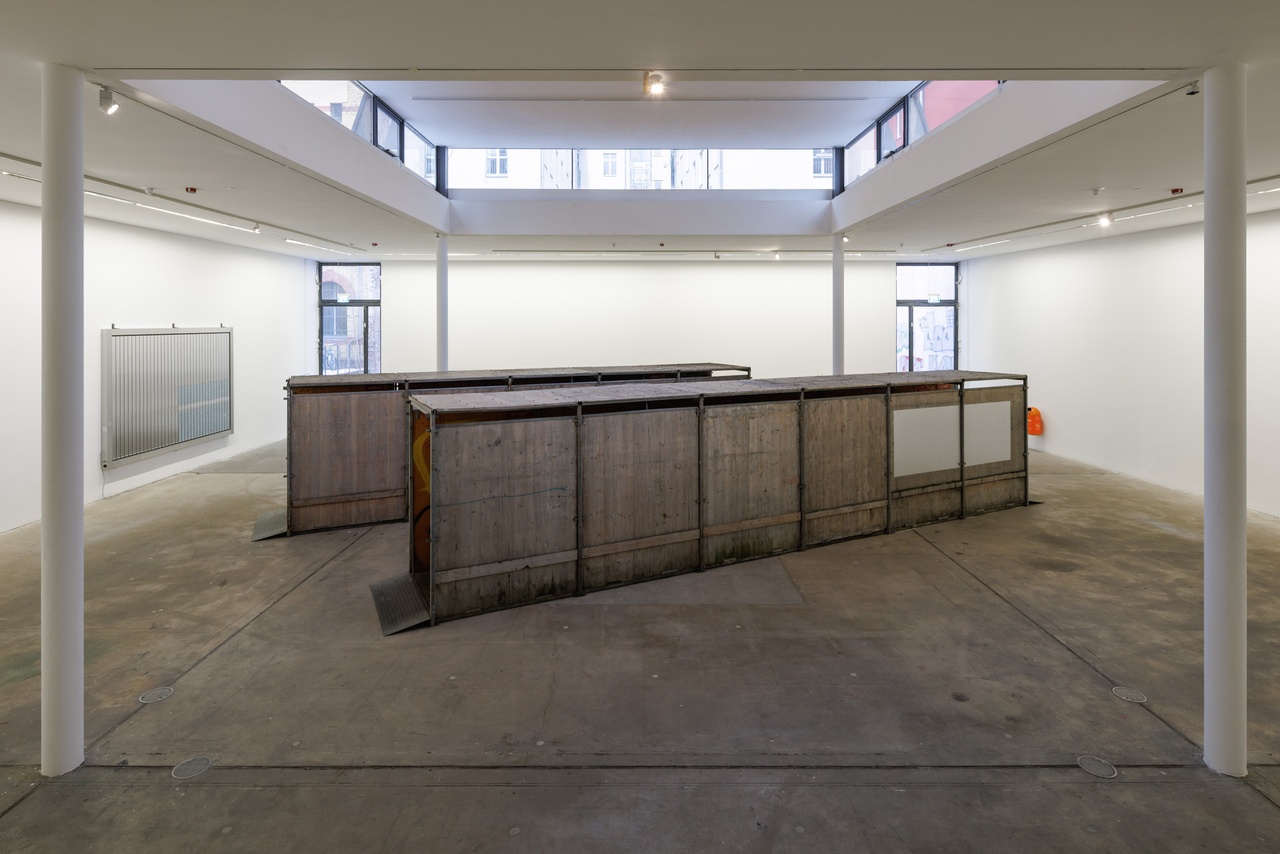
“Klara Lidén: Kunstwerke,” KW Institute for Contemporary Art, 2026
“What makes someone take a city apart?” asks Calla Henkel in the catalogue accompanying Klara Lidén’s survey exhibition at KW Institute for Contemporary Art, Berlin. [1] Across more than two decades of work, Lidén has climbed, dismantled, and temporarily inhabited urban structures. Yet, what emerges throughout the exhibition is not simply antagonism toward the city but a strange intimacy within it. Rather than positioning herself outside of these structures, Lidén repeatedly places her own body at their limits. She adopts the roles of amateur dancer, trespasser, teenager, outsider, and reluctant participant.
An early photograph, Self-Portrait with the Keys to the City (2005), condenses many of the exhibition’s concerns into a single image. Lidén stands holding an assortment of tools used to open and interfere with infrastructure – bolt cutters, wrenches, a flashlight, a manhole-cover hook. The image initially reads as confrontational or mischievous, but the tools also suggest access and wandering. What is implied in this photograph is enacted throughout the subsequent videos in which Lidén handles the city physically, demonstrating that infrastructure is something to touch, pry open, drag, or carry. Like with skateboarding, architecture is turned away from its intended use. Train carriages, scaffolding, rooftops, and sidewalks become temporary surfaces for improvised movement.
Lidén’s work has often been framed through urban intervention or institutional critique. Yet, “Kunstwerke” (German for “artworks,” while also referencing the institution’s acronym, KW), suggests a more complicated position. Her works do not so much oppose the city as inhabit it awkwardly, exposing the forms of exhaustion and bodily adjustment that its structures produce and demand. Repeatedly in her videos, Lidén climbs, hangs, drifts, and collapses, interrupting the expected patterns and routines that organize urban space. Here, the city ceases to function as a neutral setting and instead becomes a site of bodily negotiation. If institutional critique traditionally depends upon a critical distance from its object, Lidén’s work is compelling precisely because it relinquishes that distance. Again and again, critique emerges through implication rather than opposition. Through its selection and staging, the exhibition emphasizes the extent to which Lidén inhabits the structures she engages rather than confronting them from an imagined outside. Lidén’s actions make visible urban habits by repeating gestures until they become awkward forms of choreography. [2]
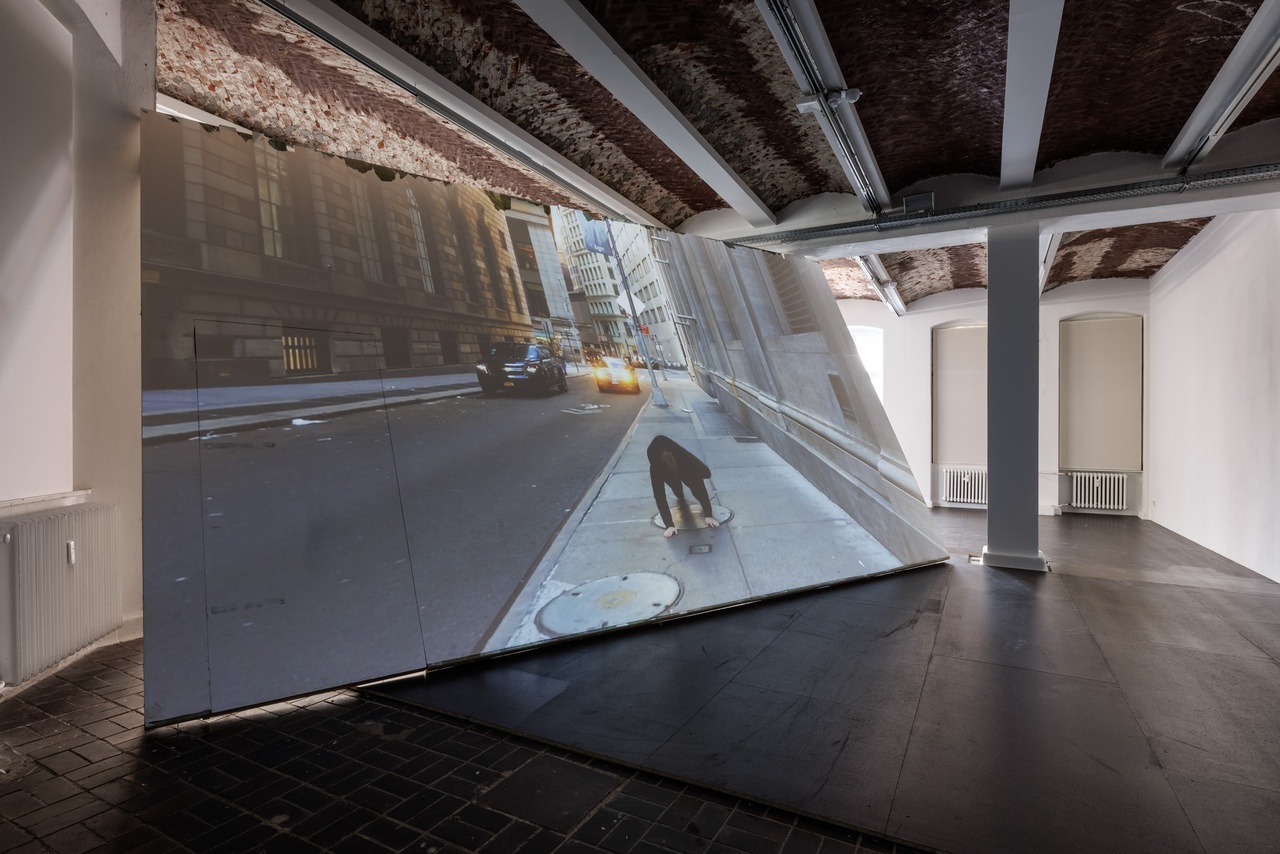
Klara Lidén, “Grounding,” 2018
The strongest works at KW feel driven by boredom, repetition, exhaustion, and the stubborn persistence of movement itself. In Paralyzed (2003), Lidén swings from the rail of a Stockholm commuter train before climbing into the luggage rack overhead. In Grounding (2018), she repeatedly falls while walking through Manhattan’s Financial District, each collapse abrupt and strangely matter-of-fact. Lidén’s repeated falls recall Paul Virilio’s notion of the accident, where instability is already built into systems of movement, turning bodily breakdown into an ordinary condition of urban living. [3] Both works retain traces of slapstick, but stripped of the release or resolution typically associated with comic performance. In Paralyzed, Lidén’s actions still register as mischievous or rebellious, staged before an audience of commuters. By contrast, the near-empty streets of Grounding transform repetition into something more isolated and compulsive, even involuntary. Rather than rebellion, the repeated falls begin to resemble a body searching for rhythm within the rigid choreography of the city. Lidén once described herself partly as “this amateur dancer who wants to return ideas of rhythm to the activity of building.” [4] This statement feels less metaphorical than practical, especially when considering Warm-Up: State Hermitage Museum Theater (2014), where Lidén joins a ballet rehearsal, her visibly untrained movements falling out of sync with the disciplined coordination of the ensemble around her.
The exhibition begins not with the city but with enclosure. Situated at the beginning of the exhibition, Unheimlich Manöver (2007) heavily obscures the view into KW’s central hall. Composed of the complete contents of Lidén’s former Stockholm apartment, compressed into a dense accumulation of furniture, clothing, tools, and domestic debris, the installation redirects movement through the exhibition itself. Before encountering the larger architectural spaces beyond, viewers must first pass alongside this cramped interior world. The gesture inevitably recalls a longer artistic history of relocating private living or working spaces into institutional settings, yet Lidén’s apartment functions less as autobiography than as an architectural threshold shaping the exhibition from the outset.
The works occupying KW’s central hall – particularly Rosie Rosie (2026), built from materials used in temporary pedestrian passageways through Berlin construction sites – transform objects to regulate movement into sculpture. The work extends Lidén’s longstanding interest in provisional architecture, though at this scale the installations feel more monumental than provisional. The effect is undeniably powerful, though the scale of KW’s central hall changes the work’s relationship to the viewer. Where similar installations at Kunsthalle Zürich seemed capable of dominating their surroundings, here they become more recognizably sculptural. Throughout “Kunstwerke,” the most persuasive works are those in which bodily friction remains visible. In the hall, some of that tension risks being absorbed into monumentality entirely.
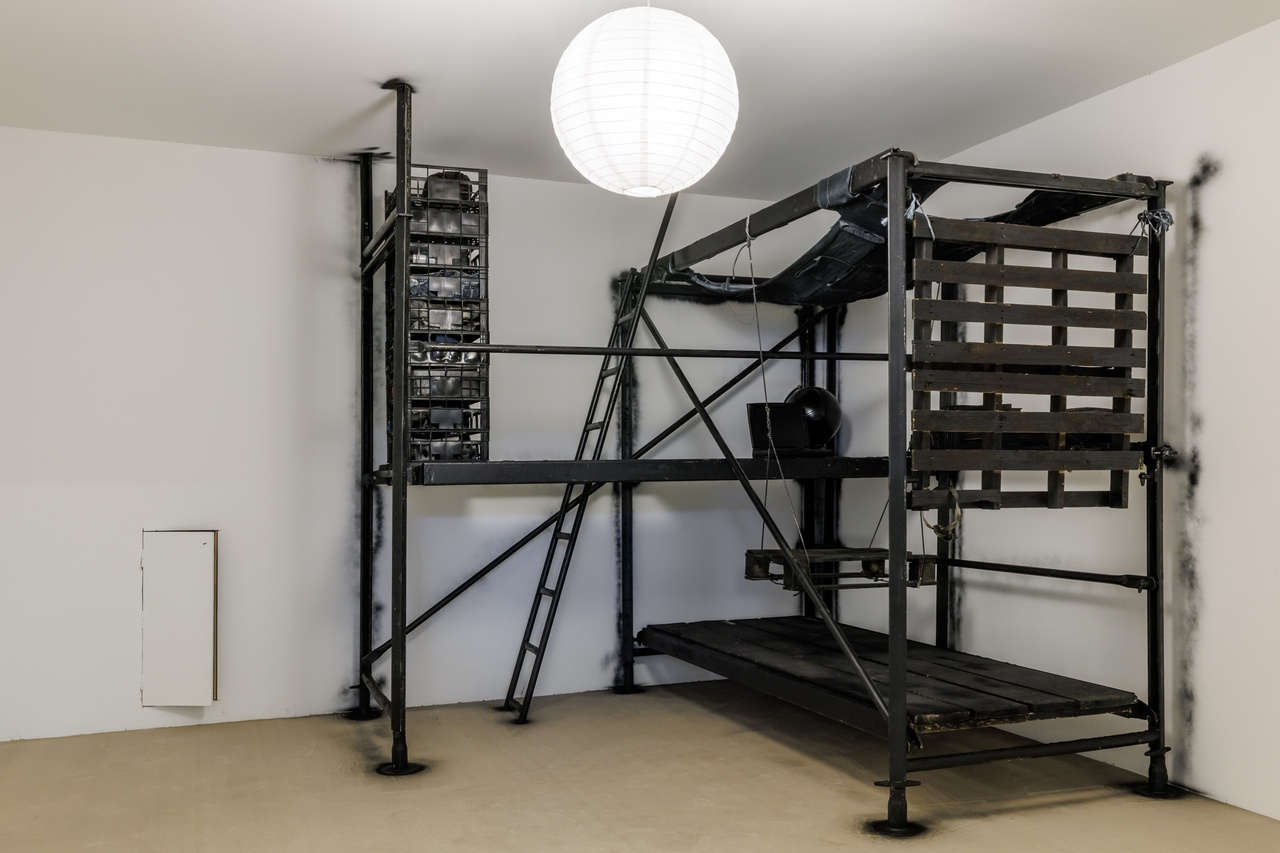
Klara Lidén, “Teenage Room,” 2009
Lidén’s work is at its most compelling when the city gives way to the room. Works such as 550 (2004), Teenage Room (2009), and Axe from Teenage Room (2009) shift attention from urban space toward the emotional life of interiors. In 550, filmed inside a cluttered Brooklyn apartment, Lidén moves topless through cramped rooms, pedals an exercise bike, plays piano, and lies across an unmade bed, singing softly about needing more space. The apartment feels less inhabited than accumulated, thick with the residue of stalled movement and unfinished thought. Teenage Room pushes this atmosphere further. Mattresses, scattered objects, and provisional arrangements recall the temporary worlds assembled during adolescence – bedrooms shaped through music, avoidance, exhaustion, and self-invention. The presence of the axe shifts the work psychologically. What first appears withdrawn or makeshift begins to feel volatile.
Throughout the exhibition, one thinks occasionally of Mike Kelley’s installations, [5] in which rooms and leftover objects retain the emotional residue of adolescence long after the body has left them behind. Lidén takes on adolescence itself as a position: uncertain, improvisational, emotionally overinvested, and not yet fully integrated into societal structures. An atmosphere of frustrated rehearsal and improvised performance runs through Bodies of Society (2006), in which Lidén attacks a bicycle with a baseball bat inside her apartment with deadpan persistence. The video recalls less a piece of performance art than the strange intensity of being alone too long inside a room, and the way in which objects begin to absorb aggression and restless physical energy. In S.A.D. (2012), installed in KW’s lower-level gallery space, discarded Christmas trees lean together in exhausted clusters. The work is funny at first, almost abject in its directness, before becoming unexpectedly melancholic, transforming urban leftovers into a strangely vulnerable collective body. Like many of Lidén’s titles, S.A.D. refuses distance or theoretical disguise. The emotional condition is stated plainly.
Several of the videos at KW are installed within temporary architectural structures resonating with the environments depicted on screen. These rooms, corridors, and interiors resemble sculptures as much as punk rehearsal spaces – environments assembled around the desire to momentarily disappear from ordinary social life. Throughout her work, Lidén rarely treats architecture as something fixed. In this sense, her work recalls that of Gordon Matta-Clark, [6] through a shared understanding of space as physically negotiated. If Matta-Clark split architecture open, Lidén approaches urban environments through bodily friction and misuse, testing how movement itself might destabilize spaces that otherwise remain structurally intact. The tilted wall constructed for the aforementioned Grounding extends this logic directly into the exhibition architecture itself. The angled screen throws perspective slightly off balance, transforming the act of viewing into another form of bodily adjustment.
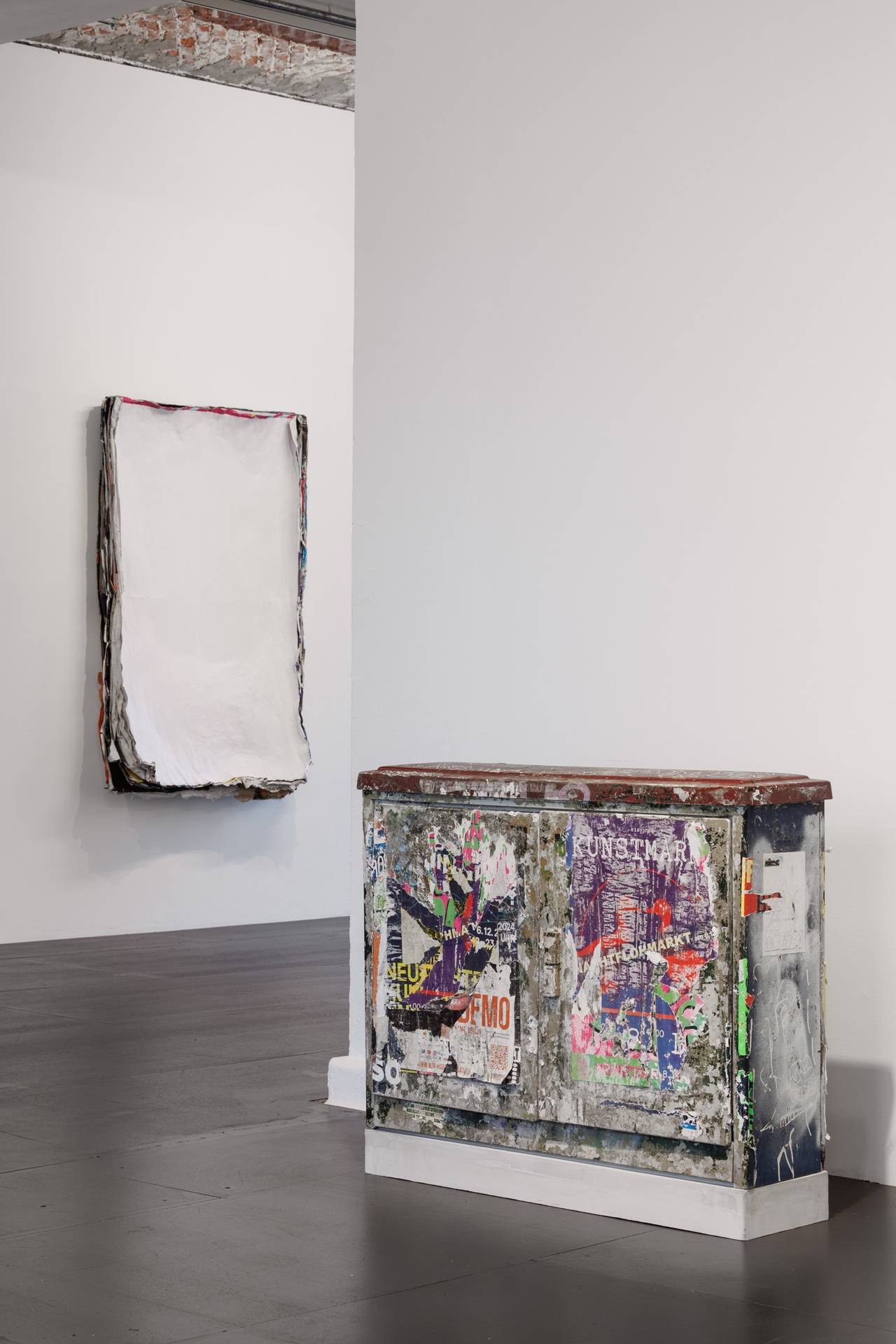
“Klara Lidén: Kunstwerke,” KW Institute for Contemporary Art, 2026
In You’re all places that leave me breathless (2020), filmed along Berlin’s elevated U1 tracks during the pandemic, Lidén carefully climbs and moves along narrow metal structures above the street below. The work recalls the impossible weightlessness of Fred Astaire musicals while simultaneously undoing them. [7] Rather than transcending gravity, Lidén appears pinned to it: Every movement emphasizes effort, hesitation, and bodily exposure. What makes the work so affecting is the extent to which it returns to concerns already present in the early videos – the awkward body, the improvised action, the negotiation with architecture, and the possibility of failure all reappear here in a more distilled form. The pandemic-era works do not mark a break in her practice but feel like an attempt to recover the vulnerability and immediacy of the earlier pieces. What remains constant is less a fixed visual language than a recurring mode of encounter: movement as endurance, and improvisation over spectacle.
This same sensibility is extended into the exhibition’s more recent sculptural works. The ongoing poster paintings (2006-2013) and trivision billboard works (2024) operate through subtraction. Layers of commercial information are stripped away, covered, and erased, leaving behind surfaces that feel muted or strangely suspended. The works feel less confrontational than exhausted, as though the visual noise had been worn down through overexposure and repetition. Even here, the city survives only in fragments: torn paper, dulled surfaces, traces of information scraped nearly blank.
Rather than escaping urban systems, Lidén inhabits them, taking the city apart not from the outside but from within, staging encounters between bodies and spaces neither side fully controls. She occupies positions of awkwardness, amateurism, and bodily vulnerability, exposing the effects of architecture, urban infrastructure, and public space on everyday life. A body hanging from a rail. Someone singing softly about needing more space. An apartment turned inside out. A room left behind.
“Klara Lidén: Kunstwerke,” KW Institute for Contemporary Art, Berlin, February 21–May 10, 2026.
Samuel Staples is a curator and writer based in Berlin.
Image credit: 1 Courtesy the artist; 2 Courtesy the artist, Galerie, Sadie Coles HQ and Reena Spaulings Fine Art; 3 Courtesy Boros Collection; 4 Courtesy the artist, Galerie Neu, Sadie Coles HQ and Reena Spaulings Fine Art, photos Frank Sperling
Notes
| [1] | Calla Henkel, “Klara Lidén,” in Klara Lidén (0,0,0) (DISTANZ in collaboration with Kunsthalle Zürich, KW Institute for Contemporary Art, and MoMA PS1, 2026), 201. |
| [2] | Henri Lefebvre, Rhythmanalysis: Space, Time and Everyday Life, trans. Stuart Elden and Gerald Moore (Continuum, 2004). |
| [3] | Paul Virilio, The Original Accident (Polity, 2006). |
| [4] | Klara Lidén, quoted in “Klara Lidén: Rumpfflächen und Plünderbanden,” press release, Bonner Kunstverein, November 19, 2010–January 30, 2011. |
| [5] | See Mike Kelley: Half a Man (Los Angeles: Museum of Contemporary Art, 1991) or Mike Kelley: Sublevel (Verlag der Buchhandlung Walther König, 2000) |
| [6] | See Gordon Matta-Clark, Splitting (1974), or Gordon Matta-Clark, Office Baroque (1977). |
| [7] | See Fred Astaire’s performance in Royal Wedding, directed by Stanley Donen (Metro-Goldwyn-Mayer, 1951). |