
THE AFTERLIFE OF A CRITIC Steffen Zillig in Conversation with Leonie Huber and Anna Sinofzik on the Pseudonym Annika Bender
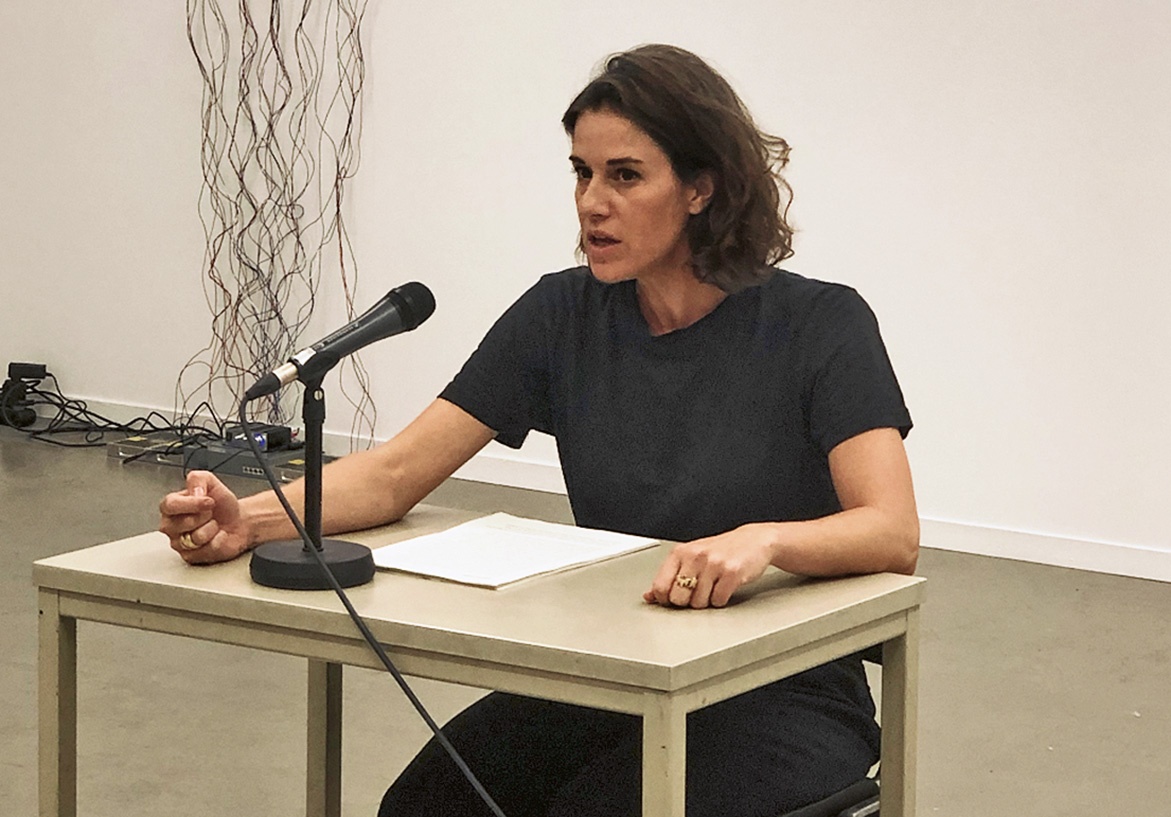
Anne Schäfer as Annika Bender, “Diversity United,” Hamburger Kunstverein, September 7, 2021
ANNA SINOFZIK: In a 2015 lecture at Kunsthalle Bern, Annika Bender – probably the best-known *Donnerstag* pseudonym and played on that occasion by an actress – criticized the social organization of the art field. The lecture appeared soon afterward in book form as Death of an Art Critic. Above all, Bender lamented a certain cult-like quality that, in her view, fostered a fear of ostracization, leading individual participants in the field to hold back from speaking freely when it came to assessing art. Was the decision to publish your reviews pseudonymously in Donnerstag an attempt to create that freedom for yourselves?
STEFFEN ZILLIG: Yes, in a way. Bender identifies several criteria as typical of a cult, group pressure being one of them. It’s definitely one reason so many forms of art criticism seem inhibited. If you come looking for scathing reviews, or even for aesthetic judgments and cromulent arguments to support them, you often do so in vain. That was already the case back when Dominic Osterried, David Kühne, and I launched Donnerstag in the early 2010s. Even at openings, people hardly ever argued about the merits or shortcomings of a show, as if criticism per se was somehow inappropriate. We were seeing the tail end of the art-market boom, and the prevailing ethos was that there’s this huge supply of contemporary art out there – just pick whatever you like. One person likes red, the other likes blue, whatever.
SINOFZIK: So no reason to argue.
ZILLIG: Right. But I think arguing over what makes art good or bad is totally central to the game. Ideally, that’s what allows for the relative autonomy of the art field to emerge. Of course, every aesthetic response is subjective, but – and I’m following Immanuel Kant here – it comes across as though it were universal. When I see a work that excites me, my intuitive conviction is that it’s also objectively worthy of that excitement. That’s what makes me almost evangelical, what makes me immediately want to tell everyone about it. The same goes when I see a bad exhibition and think, Surely this must aggravate other people, too. But around the time Donnerstag launched, there was this success-driven pressure to keep things upbeat. There was plenty of criticism of society and the art world, but heaven forbid anyone critique innocent artworks. There was this real feeling of reticence.
SINOFZIK: Your conclusions echo the ones our editorial predecessors set out in the 2006 TZK issue “Verriss,” which explored the scathing review – or rather, its decline. They traced the reluctance to judge mainly to the imperative to network, which grew stronger as the internet made the art world more interconnected in the 2000s and has continued to intensify as the field has become more precarious. As the writers behind the Donnerstag pseudonyms, you stayed anonymous. And with that, you freed yourselves from social pressure, but you also submitted to it – rather than calling out problems under your own names. A reticent person, after all, is one who effaces themselves …
ZILLIG: That’s true. We were all studying art when we started the blog, and we had this vague sense that exhibitions had stopped mattering somehow. Which is extremely frustrating, because as an artist, you usually put everything you’ve got into an exhibition. When you make an artistic statement, you don’t want it to just get a few polite nods. That professional courtesy – “nice work!” – is almost more painful than a scathing review. With *Donnerstag*, we were, in effect, simulating what we felt was missing from the critical discourse. Pseudonymity seemed like a way to play the public game differently. Because as a beginner, you make arguments that are obviously full of holes a lot of the time. And when you’re an artist who’s also criticizing other people’s exhibitions, it begs the question of whether it’s because you feel you’ve not been given a fair chance. As if people are saying, He’s only trashing the exhibition because he didn’t get asked to do one.
LEONIE HUBER: But at Donnerstag, you weren’t just reviewing your peers’ exhibitions. Bender’s first takedown was of an exhibition by Rosemarie Trockel, whose artistic career presumably wasn’t seriously harmed.
ZILLIG: Yes, that was later though. It’s important to distinguish between three phases of Donnerstag: At first, it was a blog by art students experimenting with criticism and with using pseudonyms to write about their peers’ shows. Then there was a phase when people from cultural studies and art history joined in and started writing regular reviews. The third and final phase, when Annika Bender first appeared, was totally devoted to the kind of writing we wanted to read as artists: exhibition reviews that made a sustained argument and reached a clear judgment. We didn’t publish as many texts, but we spent more time laboring over them, often collaboratively.
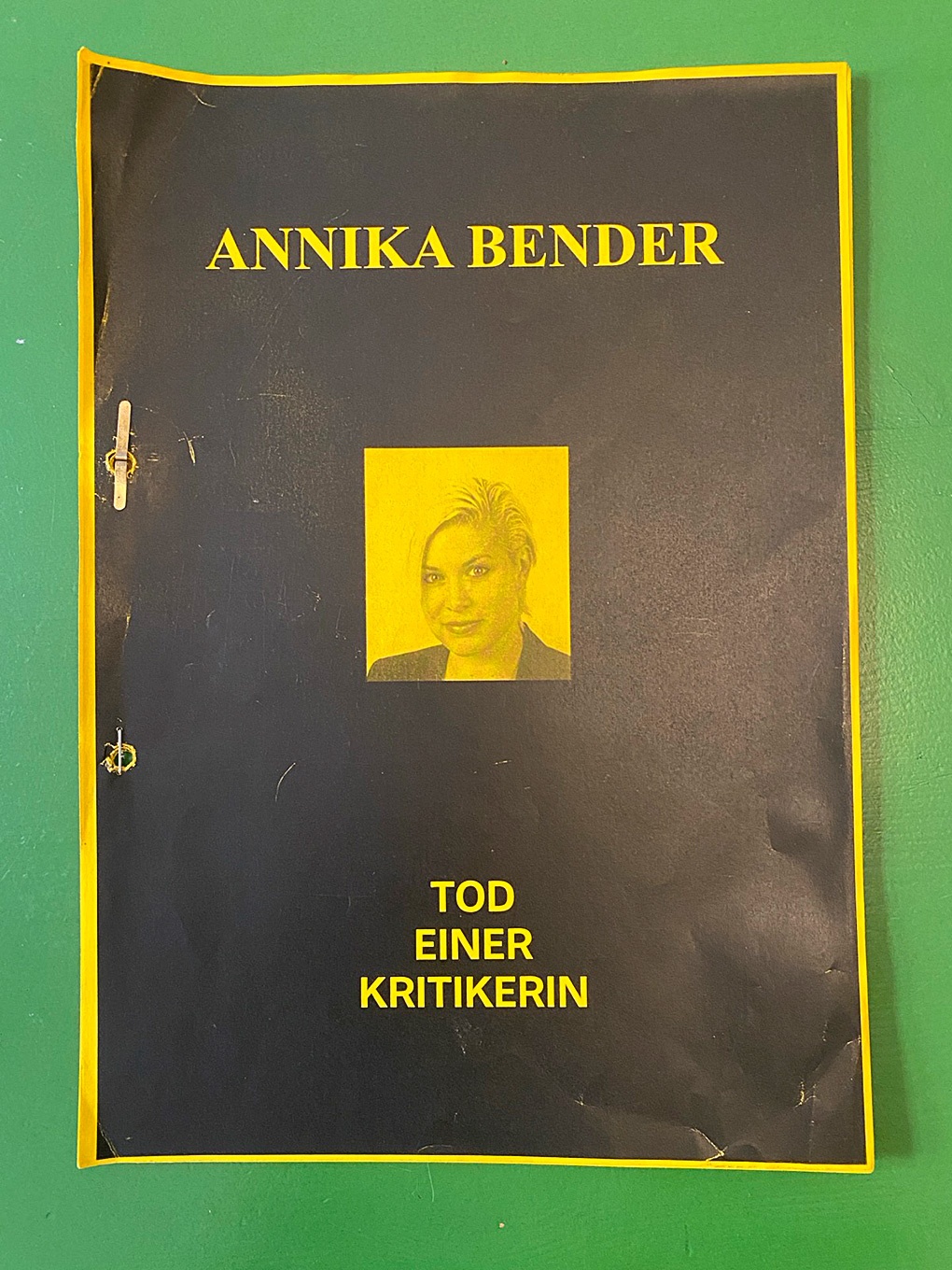
“Tod einer Kritikerin” (Death of a Critic), bootleg from Cittipunkt Library, Berlin
HUBER: As the blog developed in the way you’ve just described, you gained experience. So as you got more involved as participants in the art world, your access to information must have changed too. In Bern, Bender repeatedly argues that an insider position precludes criticism and describes herself as “just another figure from nowhere, outside the network.” Did you deliberately use Bender to stake out an outsider position, as a way of pushing back against your own professionalization?
ZILLIG: It was important to hold on to a certain outsider position. Or to imagine one, at least. But on the other hand, Donnerstag would definitely have been less successful if we hadn’t created personas that, for all their obscurity, were just as immersed in that frame of reference as our readers were. They gave the impression that they were out at the same openings and art events as everyone else, but people just hadn’t met them yet.
SINOFZIK: When you say you created personas, that sounds like a strategic approach to crafting backstories. Did you have backstories for Bender and the blog’s other pseudonyms?
ZILLIG: Not really. It was more that we had a bit of fun with it now and then. I think that idea would be more plausible today, given how strong a comeback biographism has made. For some years now, there’s been this strong desire for origin and identity, for biography and political stance, as a way of giving artistic work – and texts, too – extra weight. The dynamics of the digital culture war probably also satisfy a need for open conflict – a need that lies dormant behind the perpetual facade of success that the art world makes you maintain. And they guarantee a kind of social relevance that apparently can no longer be produced just through a critical engagement with artworks.
SINOFZIK: After the Bern event, the publication of Bender’s lecture was titled Death of an Art Critic, invoking Roland Barthes to suggest a break with biographism. But in fact, Bender’s identity and biography were an essential part of your game, right? When she published a review of Helena Huneke in TZK in 2015, for instance, Bender’s author bio described her as unemployed. That does seem like a deliberate gesture: a counter-gesture, perhaps, against the elitism so often ascribed to the art world.
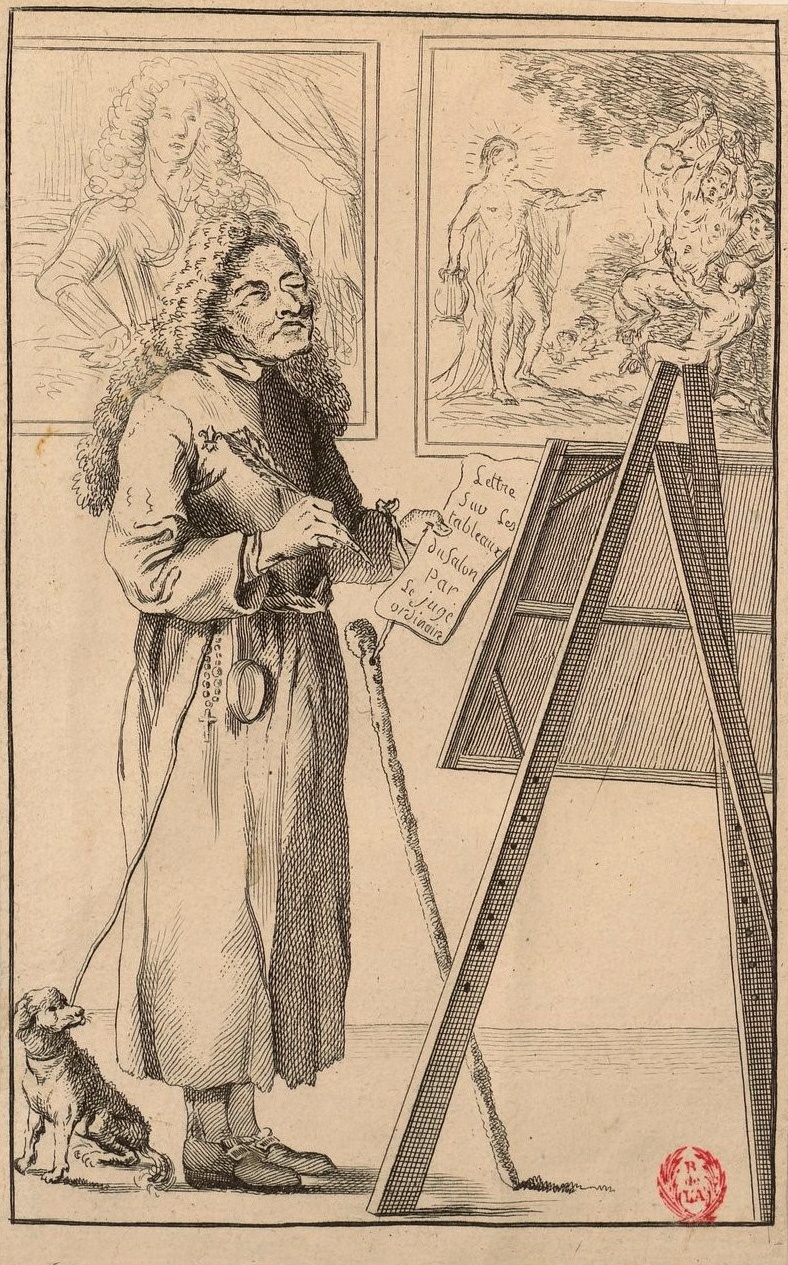
“Le critique d’art aveugle” (The blind art critic), caricature of Étienne La Font de Saint-Yenne, 1750s
ZILLIG: Admittedly, yes. Although I would have no problem with the art world as an elite space if that elite were serious about debating its criteria and actually applying them. Instead, belonging often has more to do with class or with certain social skills that, depending on your background, you might have to actively acquire. I like to compare it to sports, where the game’s own logic is, by its nature, much better protected. At the top level, sport is elite but permeable. Because art lacks that kind of rule, discourse and critical engagement around it actually matter all the more. And yet, football discussions often sound far more nuanced these days than exhibition discourse does.
HUBER: Within that model of competitive sport, pseudonyms like Erik Stein or Annika Bender work like a fictional racehorse you can bet on but one that, unlike anonymous criticism, can also be given a set of defining traits. For you, what’s the crucial difference between anonymity and pseudonymity?
ZILLIG: Pseudonymity is more of a game: You choose a disguise. A name fires the imagination and invites speculation. A name like Anonymous Collective Group would probably conjure up something too, but what appealed to us was that Annika Bender might actually exist and that she evoked a distinct image in readers’ minds.
SINOFZIK: And what role did gender play in it all? The decision for an outspoken woman to take over the editor-in-chief position from a man – was that indicative of a broader intent?
ZILLIG: The shift was purely performative, and again, we were motivated more by playfulness than by strategy. At a certain point, Bender came to embody the sharper editorial direction the blog had taken. We had some fun with it, giving her smarter answers in email interviews than we gave Stein, for instance, and creating the impression that she was gradually pushing him out. Basically, the same people were behind both pseudonyms: two men.
SINOFZIK: So you weren’t using a female pseudonym to, say, criticize the feminist positionality of someone like Trockel, where a male pseudonym might have made you more vulnerable to attack? And even if that weren’t the case, were you accused of occupying a speaking position that, as cis men, was not yours to claim?
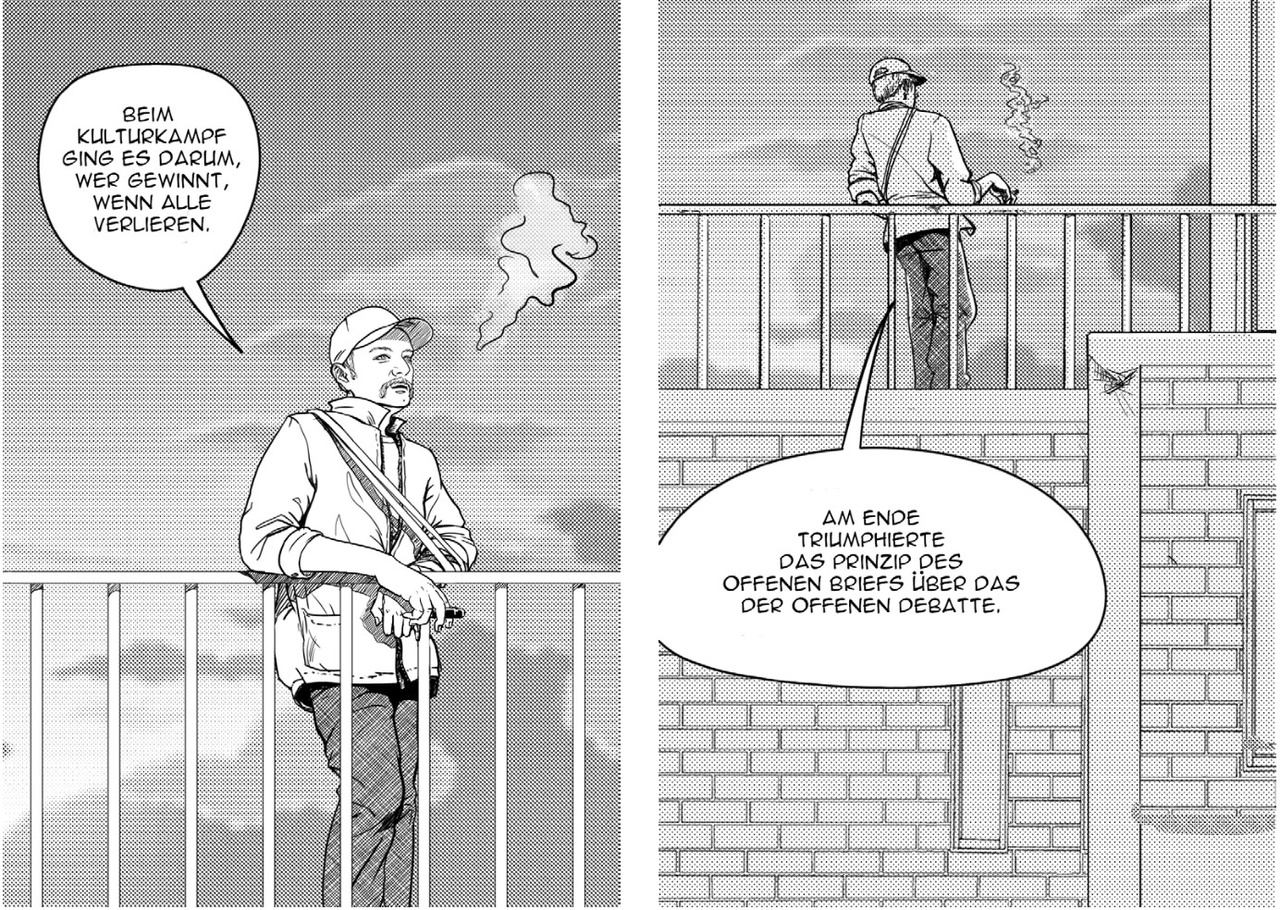
Soyon Jung, Steffen Zillig in a comic for “Intercity – Zeitschrift für Föderalismus und Polyamorie”
ZILLIG: Five years later, there definitely would have been that kind of response. But back when Bender left the stage, the criticism wasn’t framed that way. There were other female pseudonyms too, of course, and women like Hanna Böge and Anna-Lena Wenzel, who regularly wrote for *Donnerstag* pseudonymously. There was no calculation behind it. Bender just ended up being the name that got the most response. She got invites to exclusive events and was approached by a bunch of art magazines with requests to write for them.
HUBER: It’s also interesting that the courtesy smile – the friendly “nice work!” you say dominated the art field around the time Donnerstag launched – tends to carry more feminine connotations, which makes Bender’s sharp-tongued reviews seem all the more exceptional.
ZILLIG: Yes, definitely. I also think that, at the time, people wanted a figure like Annika Bender: outspoken, gutsy. We fell in love with her, too, wondering what an extraordinary woman she must be.
HUBER: Then again, there’s that ordinary name she had, which suggested she was a pretty ordinary person.
ZILLIG: That ordinariness probably reinforces Bender’s potentiality even more. The discourse I dream of isn’t simply driven by just a handful of voices from Manhattan or Berlin but is challenged by combative, ordinary names from Mannheim, Nuremberg, or Bremen. You often hear that the field is oversaturated, but maybe what it actually needs is more competition beyond the established camps. For that, the game of criticism would have to get sharper while also less threatening. Exhibitions these days get drastically fewer reviews than they used to. So now, a scathing one isn’t just one argument among many; it can quickly come across like a targeted act of aggression. That also has to do with social media, where the algorithm rewards escalation, such that civil disagreement tends to be the exception. And that’s the tabloid logic that hangs over the digital public sphere. The fear of getting canceled and the forced lockstep of open letters also give rise to this relentless virtue signaling. I don’t want to say there’s no courageous criticism left at all, but things get personal quickly online or get pulled into tribalistic fights between Team A and Team B.
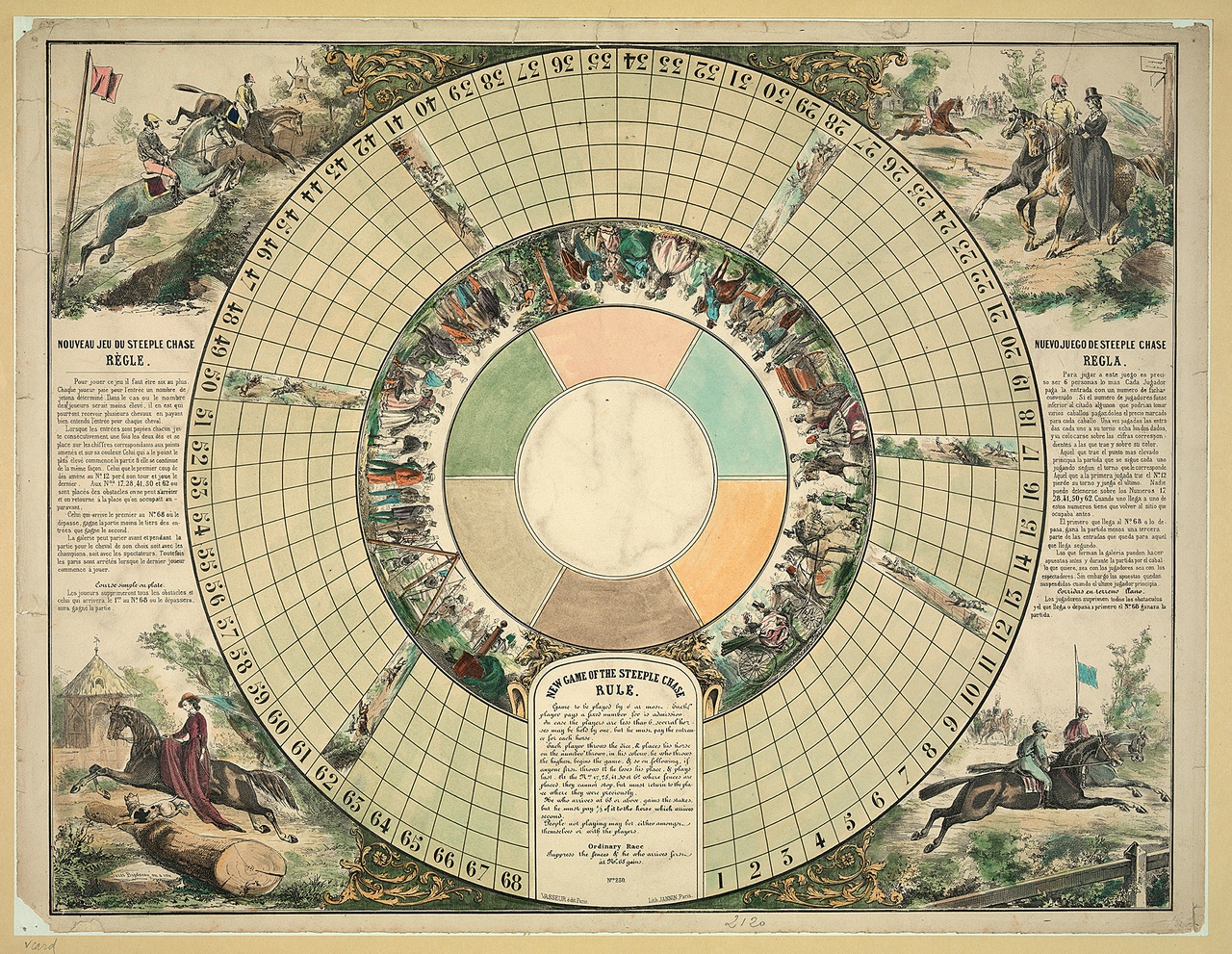
Nicolas Henri Rousseau, “Steeple Chase,” first published ca. 1850
HUBER: The discrepancy between center and periphery in the art field is also a theme in another talk, “Diversity United,” given in 2021 at the Kunstverein in Hamburg by Bender, the critic who was by then already officially dead. In it, Bender focuses on the social media factionalism mentioned earlier and on biographism. She speaks of a “spectacle of identities” that emerged in the art field in the mid-2010s, alongside the resurgence of right-wing populism in Western democracies, and describes herself as “a bisexual Asian-Polish art critic.” Can Bender’s stance be excused by her socialization in what she herself calls the “hardened post-ironic busyness of recent years,” or is she meeting identity politics here with excessive cynicism?
ZILLIG: By the time of that appearance, the circle of people writing as Bender had grown even larger. Five people were lending their experiences to the persona, and, in turn, the persona began making biographical arguments. By 2021, the whole rationale for pseudonyms had changed completely, which is why we thought it would be interesting to dig Bender up again. The lecture’s title references that idiotic mega-exhibition held that year at Tempelhof Airport. It could have marked the peak of an ill-conceived trend, but in hindsight, it was more of a stop along the way in a continuing trajectory. Given that the arts pages had begun regularly covering fresh conflicts and scandals in the art world, the articles seemed, if anything, even further removed from debates about artistic significance. Maybe that’s why I have this fantasy of a more sports-like criticism, one that actually renders judgments – that compares, works out criteria, and evaluates. So that anyone can win, not just Team A or Team B.
SINOFZIK: While I partly agree with your diagnosis, your proposed solution strikes me as rudimentary. Wouldn’t that send us back to a model of criticism like the utilitarian 18th-century system of evaluation developed by the English painter and writer Jonathan Richardson, which claimed to give critics and collectors a method by which supposedly anyone could scientifically assess the overall quality of any painting?
ZILLIG: I don’t want to overplay the sports comparison; it’s an imperfect one, of course. What I mean is that criticism should be more a matter of genuine artistic competition, where factors like biography, identity, political position, connections, and personal sympathy may matter but shouldn’t be decisive. Even an asshole can, if need be, put on a good exhibition, of course. That doesn’t mean I don’t care whether someone is an asshole, but it often seems as though aesthetic judgment has been completely displaced by ethical judgment.
HUBER: I’m sure some people thought Bender was an asshole, too. How do you think her acerbic reviews would be received today, given the forms of discourse you’ve just described, which have shifted along with media and political conditions? Would her tone be judged as polemical and the pseudonymous form dismissed as unserious?

“Diversity United,” Material Verlag Hamburg, 2021, shown here with song books at “Innere Mission,” Klemm’s, Berlin, 2024
ZILLIG: Polemic has become a tool of propaganda, which has given it a bad reputation. But outside the culture war, it has something very productive to offer. Polemic keeps readers with you through longer stretches of argument and brings passion and edge into play. And precisely because it has that edge, it also draws out stronger counterarguments. And what’s better than a debate with strong arguments on all sides?
SINOFZIK: In Bender’s case, polemic is bound up with pseudonymity. At any rate, her combative reviews increasingly prompted demands in the Donnerstag comment sections that Bender show her face and account for herself rather than evade responsibility. As a successful critic, she was invited to openings, but she always declined. Can you understand why some people saw that as cowardly?
ZILLIG: Yes. Even we knew that it couldn’t go on like that forever. With the talk in Bern, we more or less decided to face the problem head-on. Bender closes by addressing us as the authors and makes much the same argument: Show your faces and stand behind what you write! And she’s right. At some point, if you’re serious about changing anything in the art world, you have to take the risk. Especially now, when precarity is getting more and more extreme, when we’re not just dealing with the old reticence that used to inhibit us back then, but also with the escalation dynamics I mentioned, and with alarmist clickbait on social media. I totally get why a lot of people don’t want any part of that and would rather just opt out of the conversation altogether.
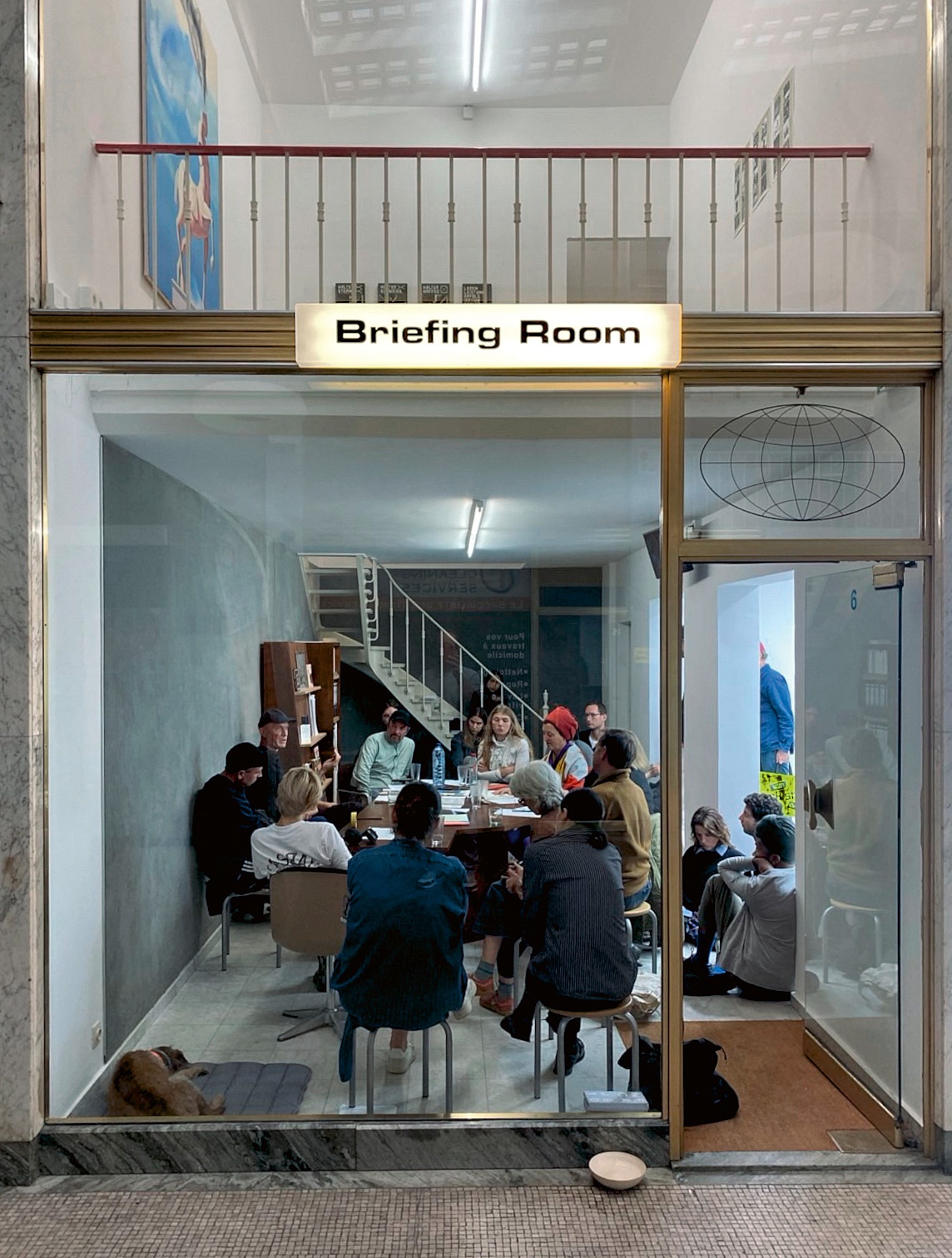
“Commission d’expertise” with Michael Hirsch, Briefing Room, Brussels, September 15, 2024
SINOFZIK: Dominic Osterried, who was behind the Annika Bender pseudonym with you, isn’t taking part in this conversation, because he’s opted out, having stepped back from the art field some time ago. You, though, run Kunstverein Langenhagen, where you founded Forum Kunstkritik, where, as the website declares, you’re “meant to disagree!” So its claim is similar to that of Bender, whose talk – shortly before calling on the two of you to come out of hiding – called for more argument and fragmentation. But the demand she made of Dominic and you seems to be carried forward in the format too: In the Forum – and the nod to democracy’s originary scene is surely deliberate – people stand in front of a live audience and show their faces, quite literally. A counterpart to Donnerstag, but under different conditions? Or just the logical result of a learning curve?
ZILLIG: Both, maybe. Forum Kunstkritik is basically a live version of an exhibition review. Critics are invited to present three exhibitions through images, then to discuss their verdicts with the audience. With a roundtable, there’s much less room to dodge the issue or hide behind empty rhetoric, and that makes the discussion feel much more grounded and alive. There were precursors, like the debates we held at Briefing Room in Brussels and conversation series that took place at Klemm’s in Berlin two years ago called Innere Mission [Inner Mission], which was billed as a kind of religious mutual aid group – a cult within a cult, so to speak. I think we need more subsects like that, a lot more different venues and players, to get the game of criticism going again. That would be a positive kind of the fragmentation that Bender spoke about – the kind we, as somewhat naive beginners in *Donnerstag*’s early days, tried to simulate through a multiplicity of pseudonymous voices.
Translation: Matthew James Scown
Leonie Huber is an art critic and editor at TEXTE ZUR KUNST.
Anna Sinofzik is a writer and editor-in-chief at TEXTE ZUR KUNST.
Steffen Zillig is an artist, critic, and curator. The third issue of the artist’s magazine Intercity – Journal of Federalism and Polyamory, which he publishes, has just been launched. He lives in Hamburg.
Image credit: 1. Photo Nicholas Tammens; 2. Photo Max Stocklosa; 3. Public domain; 4. Courtesy of Steffen Zillig, publisher of Intercity – Zeitschrift für Föderalismus und Polyamorie; 5. Public domain; 6. Courtesy of Klemm’s Berlin, photo Lukas Stolle; 7. photo Elena Conradi