Using images that are stereotypical, objectifying, and often outright dehumanizing, conservative and right-wing actors stir up panic about the people they regard as a threat to their worldview. Transfemininity is regarded as particularly threatening and becomes framed accordingly, as can be seen – for example – in the executive orders by the Trump government that supposedly protect cis women by “reestablishing biological truth.” Mine Pleasure Bouvar examines the phenomenon of transmisogynistic representations, emphasizing its intrinsic connection with the capitalist ideology and social order.
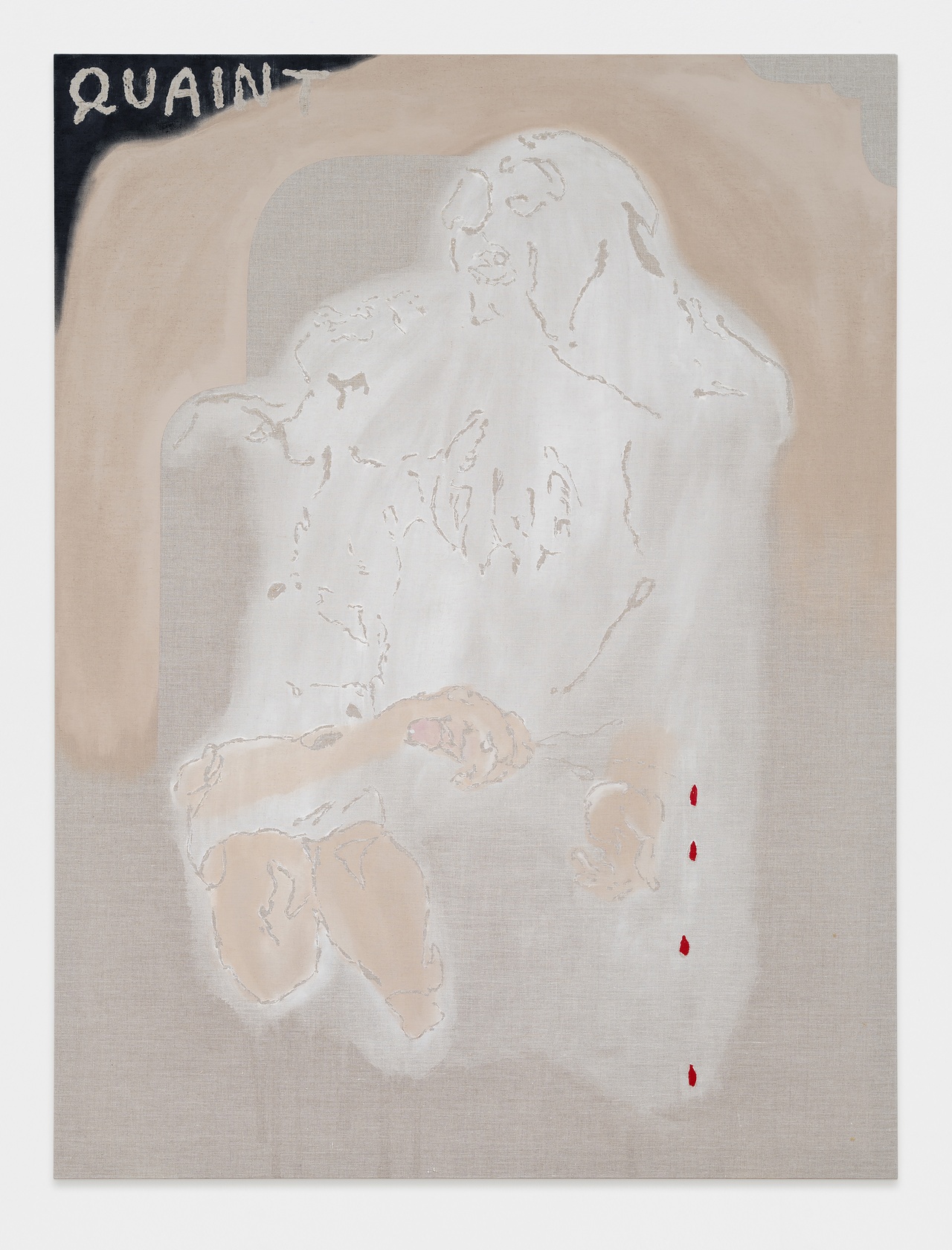
Trans panic at the Künstlerhaus in Vienna! From October 2025 to February 2026, the institution showed a group exhibition entitled “Thou Shalt Make an Image unto Thee.” The exhibition was devoted to contemporary reimaginings of the Christian canon of images and found its way into the right-wing populist culture war in the media when it was accused of blasphemy. While the German Bild tabloid newspaper focused on Martin Kippenberger’s crucified frog from 1990, the Austrian Kronen Zeitung chose an abstraction of a Pietà, Quaint Sunday/Mary’s Penis N°3 (2024) by the nonbinary trans artist Anouk Lamm Anouk, as the target of its outrage: “Art Show Shocks with Mother of God as Trans Woman” was the headline of the report, which mainly referred to statements by the Initiative Christenschutz (Initiative for the Protection of Christians), which took offense at the association of the Holy Virgin with transfemininity.
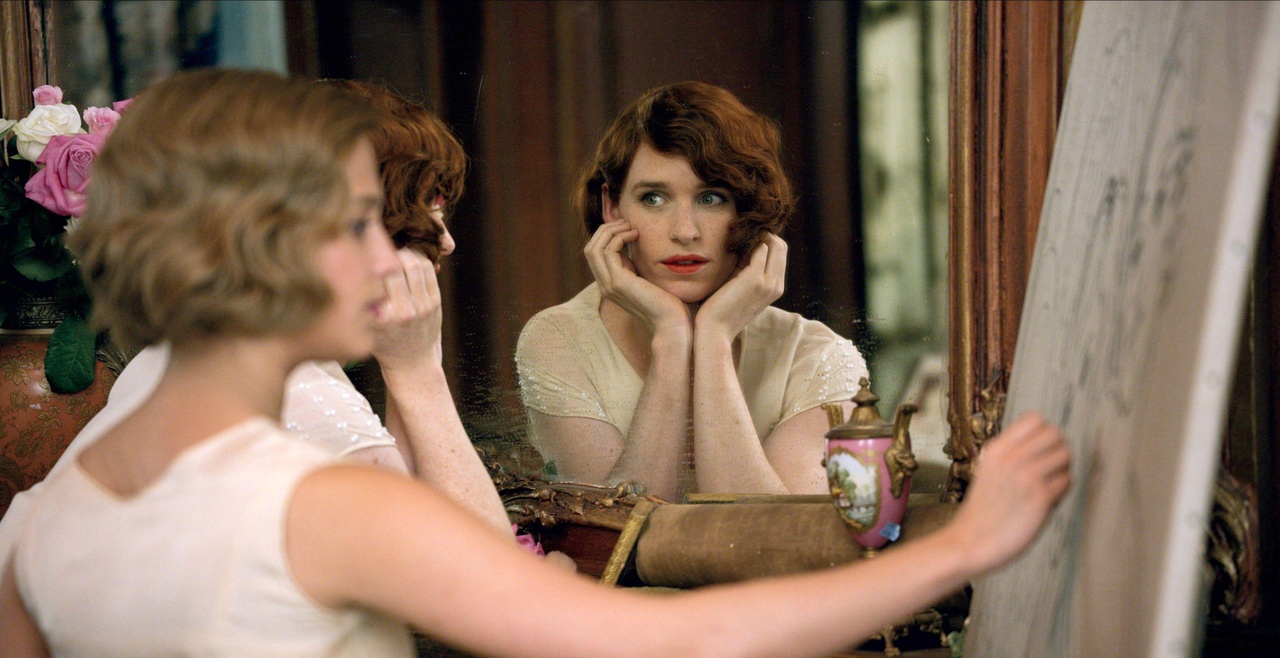
For the moral-panicking “protectors of Christianity,” but also for other extreme right-wing bogeyman-constructors, trans women are an ideal victim – precisely because in the popular imagination they are never allowed victim status but are regularly seen as perpetrators. From Norman Bates in Alfred Hitchcock’s Psycho (1960) and Buffalo Bill in Jonathan Demme’s Silence of the Lambs (1991) to Tatort episodes and the novels that J. K. Rowling has published under the pseudonym Robert Galbraith – the idea of feminized, monstrous, and threatening people who are “actually men,” and who have nothing better to do than seduce and murder vulnerable women, is a well-known trope. It serves to legitimize violence against trans women either as self-defense or – in a particularly popular argument – as defense of women and children. This mechanism, known as trans panic, has concrete effects on women’s lives beyond pop-culture representations. Thus, in US law, trans panic is used as a legal defense for perpetrators of transmisogynist violence, and in German law it has also been codified with the introduction of the so-called Self-Determination Act (SBGG), which can be used to justify the potential segregation of trans women in order to protect the privacy of cis women. At the same time, cis women’s protection is only conditionally granted, so long as it specifically excludes trans women – for example, in the law passed in early 2025 regarding the financing of domestic violence shelters for protection against gender-specific and domestic violence.
In Vienna, too, the demonization of transfemininity by the “protectors of Christianity” is aimed partly at calling cultural funding into question – and the chorus of right-wing journalists from the Kronen Zeitung to the Bild are happy to jump on that bandwagon. The specter of the trans woman is used to justify funding cuts in the cultural and social sectors; this is both in line with late neoliberal austerity policies and utilized as a disciplinary sword of Damocles over the necks of all those women who suffer from gender-based violence and oppression. The magnifying glass of transmisogyny therefore reveals a fundamental function of misogyny as a cultural strategy that bolsters domination.
As historian Jules Gill-Peterson writes,
Misogyny is not only pure or abstract woman-hating; in practice it fixes itself to women forced to live at the bottom of other social hierarchies, like race and class […]. Misogyny selects people like trans women based on compounding factors that make it easier to victim-blame them and escape accountability. […] Rather than trying to eliminate all women, misogynist violence can ironically be quite selective as a way of symbolically threatening all women.
Such a threat invites participation from all those who are prepared to submit to the conditions of the hegemonic order. Transphobic feminists have long been in cahoots with Christian fundamentalists and men’s rights activists when it comes to the denigration of trans women. Already in 1981, a certain stripe of cis women’s rights activists supplied the father of neoliberalism, Ronald Reagan, with arguments for cuts in the health-care sector, particularly through transmisogynist attacks on care for trans people. This also reveals a critique of the description of existing conditions as patriarchy: It is not men who rule but capital, which subjugates workers and the poor of all genders for the sake of accumulation. Specific gendered aspects of class society cannot be viewed outside of this context. Dehumanizing, transmisogynist representations also reflect this.
Bourgeois society, based on the heterosexual nuclear family, banished queer people from the sphere of the home. Pushed to the margins of the social structure, trans women, above all, found (and find) opportunities to earn a living in the precarious sector of entertainment and services. As sex workers, dancers, and cabaret performers, they are hardly perceived in their role as workers but are seen as entertainment for sale. The Hamburg curator Saeleen Bouvar uses the wordplay “corps de plaisir” to describe how popular images portray trans women either as sexualized objects of desire or as figures of fun. The commodity form overshadows its producers, whether they are onstage, on the streets as sex workers, or in digital sex work. And so, literature, film, art, and television reduce transfemininity from a human characteristic to a punchline or a caricature. Not infrequently, the transmisogynistically conditioned gaze is focused on transfeminine bodies or merely on body parts. A striking example of this comes from the first lesbian dating show worldwide, Princess Charming, which has been shown on German private television since 2021. Although it has not included any trans women so far among its candidates, it sells sensationalist discussions about the (real or imagined) penises of trans women as something supposedly educational. Transfemininity is abstracted into an object and placed at the disposal of non-transfeminine people and their needs.
Even in Anouk Lamm Anouk’s “trans Mary,” whose penis is emphasized through color and perspective in the otherwise schematic painting, a nonbinary trans artist who is not transfeminine reduces transfemininity to a body part, utilizing it – quoted – in relation to universal questions “of transcendence beyond binary conceptions of gender.” An examination of transfemininity on its own terms falls by the wayside, and trans Mary is allowed to be neither whore nor saint but becomes a fetishized piece of flesh, an exchange value for the profit motive and the gaze of third parties.
Meanwhile, images of femininity – as long as it is cisfemininity – are treated as a matter of national importance. “Women are typically constructed as symbolic bearers of the nation, but are denied any direct relation to national agency,” writes Anne McClintock. If Austrian “protectors of Christianity,” taking up far-right discourses, take offense at feminist and queer responses to religion and argue that the insult consists of the fact that the focus is specifically on the Christian canon rather than the Jewish or Muslim one, for instance, the underlying message is clear: Christianity is the West; Christianity is the homeland; and the association of Christian iconography with transfemininity is thus an attack on the nation itself.
In cisfeminizing the nation as mother and propagandizing the protection of women and children, bourgeois nationalism makes cisfeminine bodies into symbols of national integrity. As I have previously stated, “Dramatizing the raped, defenseless cis woman arouses emotions, sparks male fantasies of domination, and plays with the damaged national self-images of the defenders. There is no space for trans people in this narrative.” Not just symbolically, but very concretely, German trans women – despite a certain level of legal recognition – may be denied the status of women by the Self-Determination Act when it comes to questions of conscription in a state of “military tension or defense.” During such a time, self-determination is effectively suspended, meaning that the changing of male gender markers can be ignored or barred during and two months prior to the state of defense, and some trans women may be required to perform military service. Further, the national claim to interpretive power over in/admissible images of women is revealed in that claim’s fascist exaggeration. For example, hyperbolic reporting exaggerated by racist tropes that also didn’t hold back from instrumentalizing accounts of sexualized violence against cis women on October 7 serves to legitimize the genocide in Gaza. Meanwhile, the Israeli government prevents any independent inquiry into that violence, even though such an inquiry is urgently needed – it even “denied any direct relation to agency,” as McClintock formulates it. Additionally, the Israeli government denounces and arrests trans women who refuse to take part in the genocide, branding them traitors to the national cause.
In times of neoliberal crisis, with imperialist confrontations emerging ever more openly, gendered images are increasingly used to demand commitment to nationalist defense of the interests of dominant capitalist factions. Authoritarian policies, such as the restrictive reorganization of the reproductive sphere when global care chains fall into disarray, are enforced to the detriment of women (trans and cis). As refusenik Ella Keidar Greenberg said about the fear that those in power have of unyielding trans women who reject their exploitation by the forces of capital, “That’s why we’re so scary, because the existing system and its reproduction is insured by us […] staying disciplined and obedient.”
Translation: Lucy Duggan
Mine Pleasure Bouvar is a traveling agitator and precarious freelance political educator focusing on politically organized transphobia, fascism studies, and Marxist transfeminism. Furthering trans liberation and queer communism, she* writes, workshops, thinks, and conspires against gendered exploitation and the commodification of identities.
Image credits: 1. © Anouk Lamm Anouk, photo Simon Veres; 2. Alamy (Paramount Pictures); 3. © Eva Hayward, Visual AIDS archive; 4. Alamy (Focus Features / Universal Pictures; 5. © Alessandro Simonetti
Notes