
BRUCE HAINLEY TO ANNETTE WEISSER Houston, September 2, 2026
Wim T. Schippers, “Van Oekel’s Discohoek,” 1974
The latest exchange between our two columnists-cum-pen pals, Bruce Hainley and Annette Weisser, begins with a letter dedicated to Wim T. Schippers, who cofounded the short-lived A-dynamische Groep, or A-dynamic Centre, artist collective with Ger Van Elk and Bob Wesdorp in 1961. Schippers died on the very day that Hainley landed in Amsterdam from Houston during his most recent trip to Europe. While Schippers’s conceptual artistic works and TV productions are quite well known in the Netherlands, they do not receive the attention they deserve in the international art world, as Hainley points out in his letter to Weisser. Since we are also privy to their correspondence, we too can enjoy a brief introduction to a body of work that owes its current appeal not least to its heartwarming humor.
Dear Annette,
I flew back from Europe about four weeks ago, and at some point over the ocean it sank in that I was actually returning to this shithole nation, to use our moron leader’s abreactive phraseology. About 30 minutes out from landing, the purser came on the PA system, her previously confident voice filled with pause. Prefacing what she was about to relay, she’d never had to make an announcement quite like this: Upon the plane’s pulling up to the gate and parking, could everyone please remain seated because DHS/ICE officials would be boarding the plane to “escort” someone off. We landed. She made the announcement again as the plane slowly taxied to the gate. And then we all sat as a lone brown man was shame-paraded by some “authority” – I don’t recall insignia – to the exit, where another “authority” waited. Debasement and scaremongering so clearly structured this action, since there was only one way off the plane and the person could have been, at least, quietly pulled aside upon disembarking. Passengers took a minute before getting up and gathering their things. It was the quietest exit from a plane I’ve ever experienced. What a grotesque and vicious country this has become or, rather, has in so many ways always been, which I guess is true of most empires: any site – from hospital to supermarket, from DMV [Department of Motor Vehicles, where driver’s licenses are issued] to immigration court, now airplane aisles – a roaming opportunity for the cruelest, fakest perp walks, or so much worse. T. J. Clark, in his recent, astonishing essay in the London Review of Books on the Chauvet cave paintings, translated the word hegemon as “a bully” (he sees the paintings, the picture making – contra language’s hegemonic, representational predations – as incitement to art, to, as he puts it, a “non-linguistic self-consciousness, experiment, expertise”). Bully, so much more exact than “supreme leader” for an “enforcer of the dimmest kind of consensus.”
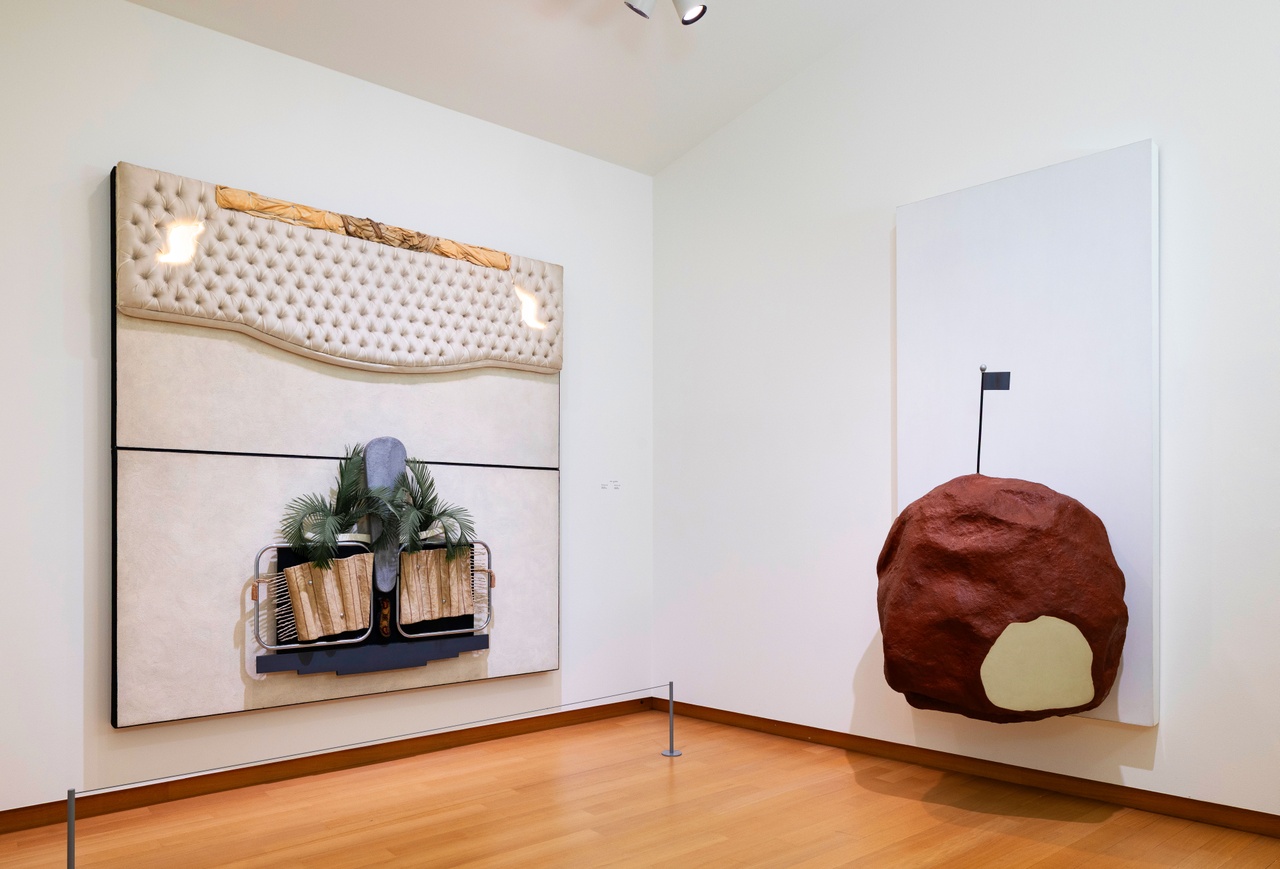
On June 10, 2026, the day I flew to Europe, Houston to Amsterdam direct, Wim T. Schippers died. I didn’t clock what this might mean until I was back in Amsterdam to leave many weeks later. His was a name and pursuit I’d never paid attention to or, really, even ever heard of – and, yet, recently I’ve been mulling over little else. The Stedelijk Museum had a small room dedicated to Schippers’s work on display as part of their permanent collection. Honestly, I don’t know where else, outside of the Netherlands, you could go to see this spirited trickster’s art. RIP.
Wim T. Schippers Room, Stedelijk Museum Amsterdam
Why am I writing to you about Schippers? Well, last summer, after I saw the superb “Daan van Golden: The Original” exhibition in Schiedam, I’d meant to write to you about DvG and his quietly astounding ventures, but for whatever reason I didn’t. In 1967, Schippers put a short interview with van Golden and supermodel Willy van Rooy (van Golden’s girlfriend at the time) on the first episode of Hoepla, the second of the many Netherlandish TV programs Schippers was involved in creating. When Lily van der Stokker curated works by van Golden and Schippers into an exhibit she organized for Bureau Amsterdam in the late ’90s, she confirmed that in both gentlemen she discerned a typically Dutch fascination for the normal and the everyday, even the boring. In 1961, with his rambunctious peers Ger van Elk and Bob Wesdorp, Schippers formed the A-dynamic Centre. A headline for an interview with the rowdy troika in Vrij Nederland asked “Is Neerlands jeugd wel slap genoeg?” (Is Dutch youth slack enough?) Perhaps not. Temperaments and tensions flared and the group lasted barely over a year. On the occasion of his excellent 2017 Bonner Kunstverein survey, curated by Michelle Cotton, Schippers told Frieze: “I introduced the adjective ‘adynamic’ to react against prevailing notions at the time that art be ‘vital,’ ‘expressive,’ ‘subjective,’ ‘spectacular’ or ‘wild.’ Inspired by Kurt Schwitters, I drew attention to insignificance, to inane things and even to dullness. Not as dogma, though. After all, silly little things can be beautiful, too.” People admire the “limp” line of so many of his drawings of lump-likenesses. While his earliest endeavors coincided with the arrival of Fluxus in Europe and brushed up against Nouveau Réalisme, Schippers’s innate conceptual edge and artistic wanderlust always led him wonderfully astray. It’s almost as if Walter De Maria and Andy Kaufman were two aspects of a droll Dr. Jekyll.
I checked the websites of The Met, MoMA, and the Art Institute of Chicago, the databases of several American art magazines, and the TEXTE ZUR KUNST and MMK websites: There’s basically no mention of him. Why could be something to gnaw on. Perhaps due to his eye liking to travel and his constant pursuit of an aesthetic elsewhere? “I am not against success,” he explained to Noemi Smolik in Frieze. “But I do not place ‘success’ first. I simply do things and show them – and people have the right to think they are silly or stupid or whatever.”
Some of my favorites of his early interlopings: pouring a bottle of limonade gazeuse into the North Sea at Petten; a four-meter-high plastic pudding; a Salt Room and Glass Room, in which the floors of two galleries were covered completely, deeply, with the respective materials (his Pindakaasvloer [Peanut butter floor], conceived in the same year, 1962, had to wait until 1969 to be realized and became one of his most famous works); a giant purple chair overlooking a greensward in the Vondelpark; the Economisch Concert (1963), which “required the ignition of a small amount of fireworks” and was “banned by the fire brigade”; marches (long before Daniel Buren’s ballets) organized in dialogue with Willem de Ridder, in which, for example, “on Friday, December 3, 1963, at 3 o’clock in the afternoon exactly six immaculately dressed men left the tunnel of the Central Station” and walked on a planned route that eventually landed them in Rembrandtplein, “where they dispersed”; a programma van geuren [program of scents] that started each morning at Steendrukkerij de Jong & Co. with a “scent of oranges with a Southern disposition” and would modulate as the day went on to the aroma of pencils (“immediately evoking memories of work, school and the office”), which shifted by afternoon, when “one could enjoy the ‘typical Dutch scent of anise seed,’” and then ended, later, with a “sultry musk.” In 1969, he raised a tall Indian Summer Christmas Tree in an Amsterdam square, annoying many. He went on to perturb others with a verisimilar Dutch church steeple sunk into the marshy pond at the Technical University of Twente. I won’t even get into how many of these works precede more famous artists’ use of similar materials and sites.
Wim T. Schippers (left) and Paul Haenen provide the voices of Ernie and Bert on Sesame Street
I wonder if Schippers’s attraction to and use of basic, daily stuff and activation of whatever the Dutch word for informe would be didn’t have as much to do with issues and matters of class, economy, and authority as Dutchness. Was he devising kinds of becoming-local, perhaps a variation on becoming-minor? He told Smolik:
My father, who was very religious, refused to support me during my time at the Kunstnijverheidsschool [applied arts school that is now the Gerrit Rietveld Academie]. I was very poor and worked in a plastic factory and as a night watchman. During my second year, I exhibited some drawings. My teachers didn’t like the work – or me. But the city of Amsterdam supported artists by buying art directly from them. The Stedelijk selected my drawings, paid me 1,300 guilders [GB£3,250] for them and exhibited them. The director of my school called me and told me this was unacceptable – as long as I was enrolled in lessons, everything I made was also regarded as work by the teachers. So, I left school. Almost immediately, Sandberg, then the director of the Stedelijk, invited me to put on an exhibition.
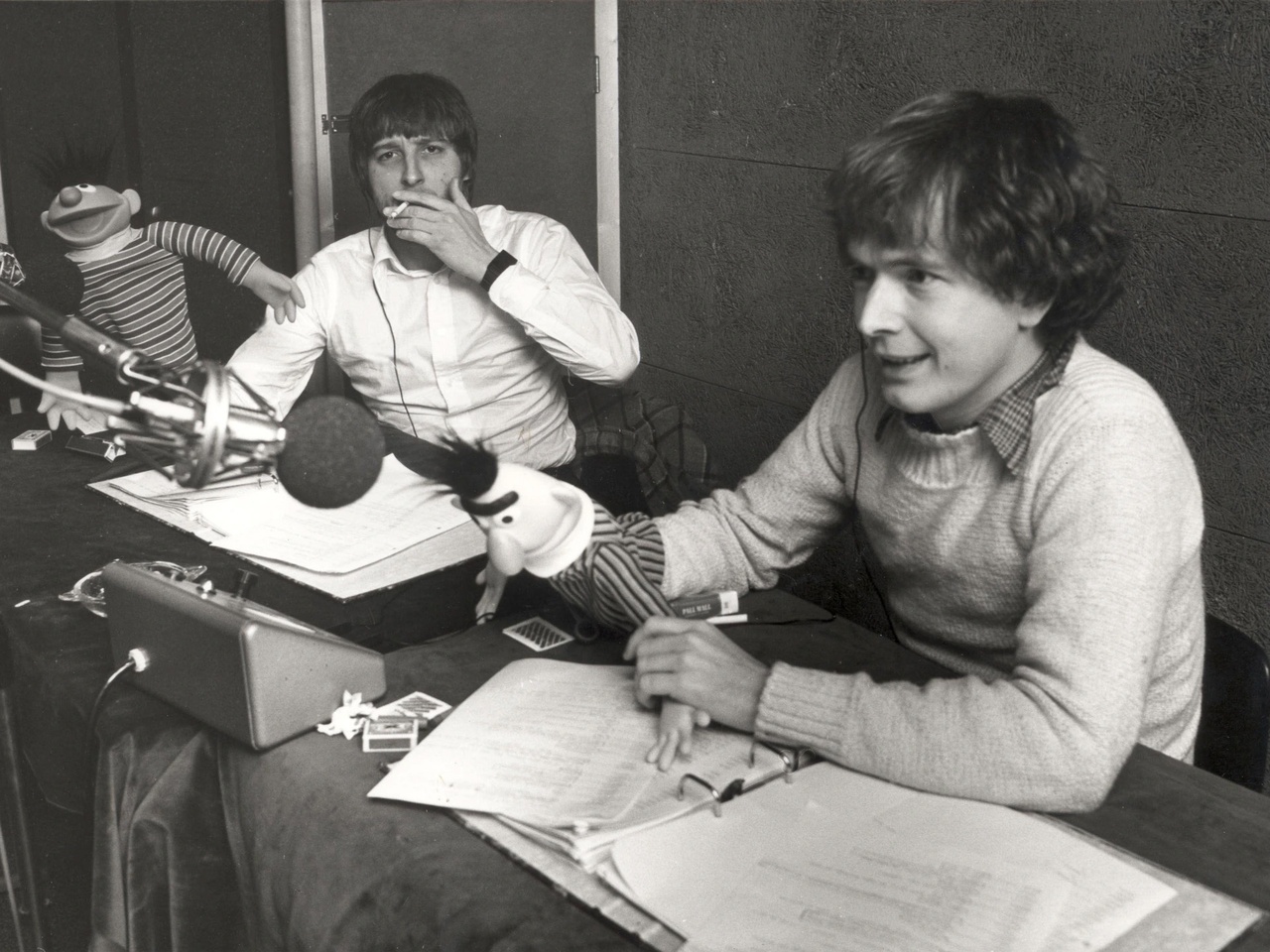
Similar minoritizing motifs and floutings enliven Schippers’s various acute ventures into theater, radio, and television, which he considered the biggest museum in the world. The Stedelijk wall text includes the information that he was “the voice of Ernie on Sesame Street” from its start on Dutch airwaves in 1976 and for decades after. (He would eventually provide the voicework for Kermit de Kikker, Guy Smiley, and Count von Count, too.) Just that fact alone is some of the best information I’ve ever read in a museum didactic.
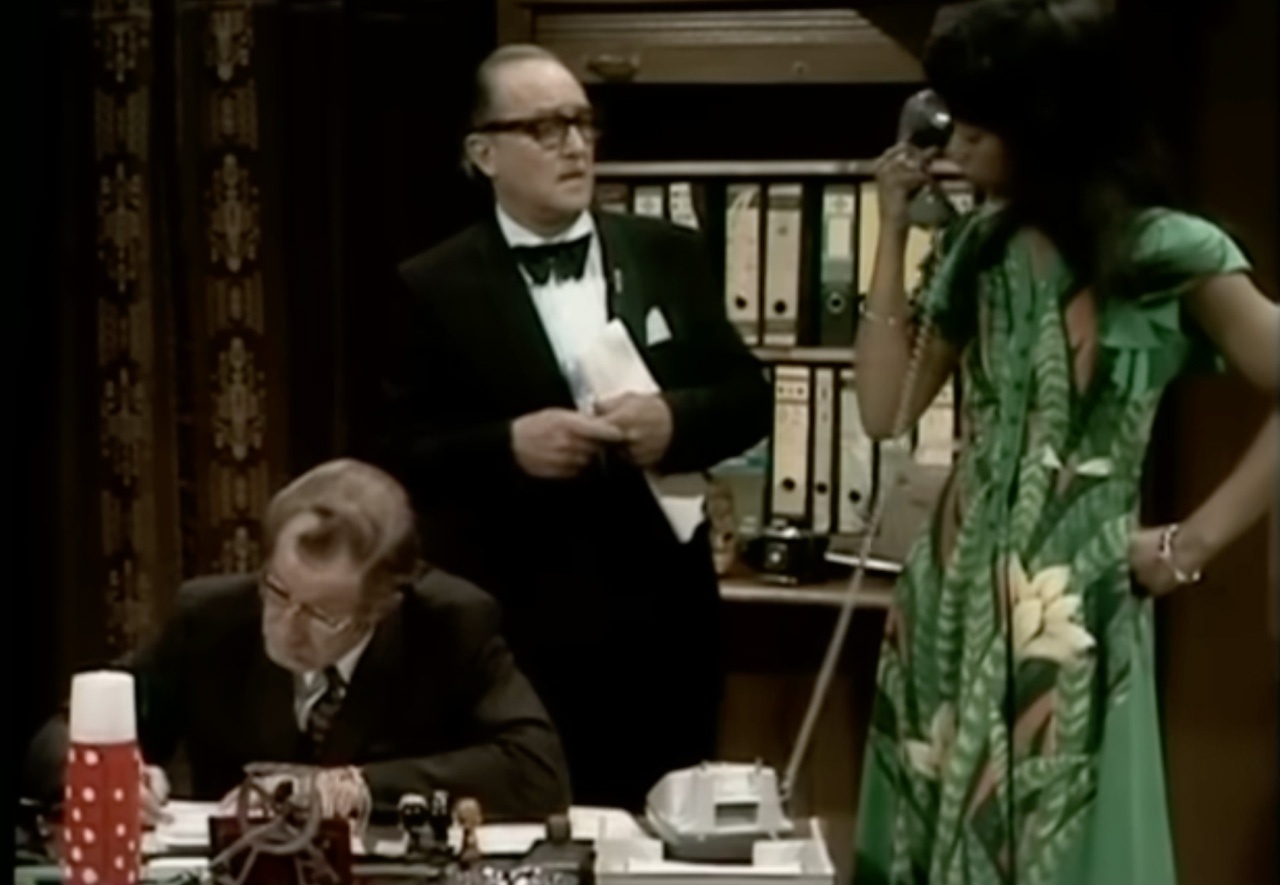
Playing on a small monitor was an episode of Van Oekel’s Discohoek (1974–75), with its somewhat boorish, bumbling, but exuberant master of ceremonies, Sjef van Oekel (Dolf Brouwers), and nearby, his always busy, grumpy accountant, Ir. Evert van de Pik (Jaap Bar), who, through his bookkeeping and phone answering, attempts to keep the chaotic proceedings organized. Good luck, Evert! A gentle anarchy reigns. The Schippers-designed sets get crashed into, the various pop music acts are almost always shown to be lip-synching to a rinky-dink turntable that it is Evert’s job to play. Schippers deeply understood form as well as the vernaculars of so much popular culture – here, the commercial status quo of “live” top-ten music shows – and sent them spinning. While Donna Summer tries to “sing” her song “The Hostage,” which features a phone ringing and a caller’s voice as part of the track, Evert keeps answering the phone on his desk that she wants to use as a prop; meanwhile Van Oekel moons, oblivious, completely smitten by his guest star.
I’m really not doing justice to Schippers’s controlled deployment of sweet mayhem on Discohoek or any of his other TV shows. It could be the heat. It’s been 36–38 degrees Celsius almost every day since I got back from Europe, the nights plummeting to a chilly 26–27 degrees. I messaged a friend in cooler climes that the atmosphere is like bathing in a cafeteria vat of Manhattan clam chowder – including steaming chunks.
Wim T. Schippers, “Obstakel,” 1960
Most of my information arrives by way of an extraordinary book by the inestimable Harry Ruhé, a collector and founder-proprietor, since 1976, of Galerie A (now online at https://www.multiples.nl). The Best of Wim T. Schippers was published in advance of a survey of Schippers that Ruhé organized at the Centraal Museum [Utrecht] in 1997. “I became more and more convinced that a book should be devoted to Schippers’ work,” Ruhé confesses near the start of his spellbinding treatise. “An inventory of everything that had come about in the past thirty-five years. A survey of the assemblages and drawings, the films and ‘events,’ but also of the work for radio and television, the theatre shows, the stage productions.” His love of every aspect, every twist and turn, of Schippers’s unusual artistic trajectory remains palpable on each page – from his discussion of “fake dog turds […] manufactured by Schippers from all sorts of choice delicacies and subsequently placed haphazardly on the pavement [such that] passing dogs would greedily gobble up the finely sculpted ‘dog piles,’ much to the alarm of the owners” to his bringing back to its magnificent classy glory Mnemosynum, 1966, an unlikely combine work – part white vinyl tufted headboard with embedded lighting elements, part “painting,” part (possible) hailing of Kaseko (its central arrangement of tropical, palmy greenery). I hypothesize, obviously, but not without reason: Soon after his Schippers book, Ruhé wrote and published Stanley Brouwn: A Chronology, a definitive binder of bibliographic accounting of the elusive Suriname-born artist’s wayward activities.
I don’t use the word extraordinary lightly. Not just for the book’s scholarship and heart, its decision not to tip-in the full-color illustrations but provide them, jumbled, in a glassine pocket at the book’s front, but that Ruhé, working with design studio Gonnissen en Widdershoven (now operating as thonik), decided to overprint his text – the original Dutch of his engrossing essay on top of the English translation, the former in red, the latter in green, in what’s called anaglyph typography, so that to read it you must use either of the provided acetate sheets in the two respective colors as decoder lenses. Not for nothing did Schippers plan an Introduction to Confusion, a multivolume work he mentioned frequently in interviews but never completed: “Nothing is more illuminating than confusion.”
Let me close with my somewhat delirious affection for Schippers’s Going to the Dogs, which he staged in 1986 at the Stadsschouwburg in Amsterdam for two nights, Friday and Saturday, September 19 and 20. Why is this work not better known? A soapy melodrama in four scenes, written to be performed by six Duitse herders or German shepherds! (You can watch a recording of the event someone has lovingly transferred from videotape on YouTube.)
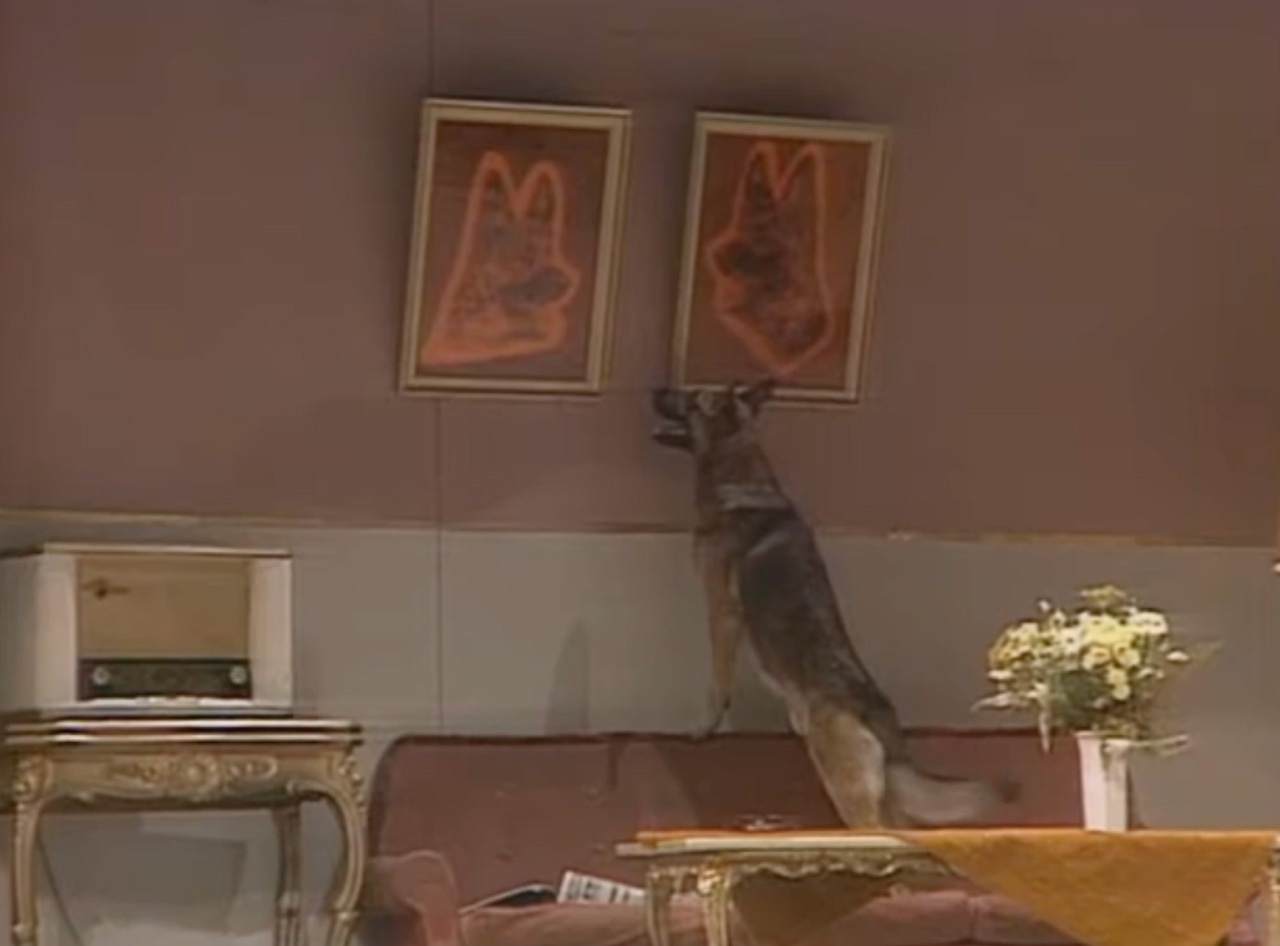
Wim T. Schippers, “Going to the Dogs,” 1986
I won’t get into the plot of the entire play, but the opening as Schippers synopsized it proceeds as follows:
Before the curtain goes up, Hector welcomes the audience and he gives a short exposé [to be clear: in barking].
The first scene takes place in a living room, where Nimrod and Bella Williams worry about the future of their daughter Jane, especially in connection with her new boyfriend Bobby Strabovsky.
There’s a visit from Hector, who has a secret relationship with Bella. For the time being, Jane and Bobby are in an upstairs bedroom.
Watching even the video leaves me speechless. It’s so delightful and funny and very moving – the quixotic daring of it. Barking dialogue and squabbles. Lovely sounds of dogs lapping water from a bowl, peeing on a prop tree as they would a real tree or on the carpet, doing doggy things on stage but also things that any other performer in a play might do. The audience cheers when the phone is answered or one of the performers turns on the television to a wildlife program – or takes a deep, meaningful look at two family portraits hanging above the sofa. In the playbill for Going to the Dogs, each dog has his or her own head shot and bio. For Nimrod Williams, played by Boris Vrolijk: Boris “is stubborn, a slightly hot-tempered type, and reacts bitingly to others in the company. Doesn’t have enough character to become a police dog. His ambitions are rather in the art world.”
Schippers wrote that he had “already written a number of pieces in which involvement with the heart and soul and brain of actors is a condition to bring the script to life, why not then a play in which only dogs appear?” He continued:
However, Going to the Dogs is not just the title for a series of planned behaviors for six shepherd dogs on stage, but also stands for the drama that is about people who have been lured to the theater to experience a stage performance announced under the aforementioned title. Whether you as a visitor enjoy your role remains to be seen; the dogs, their supervisors, all others involved in the spectacle, including me, are at least happy with it.
When I texted her pictures from the Stedelijk of Schippers’s works, an always prescient friend replied with a picture of the poster, hanging in her home, from his Bonner Kunstverein show; it depicted one of the shepherds holding the phone. Schippers’s influence might be subterranean outside of the Netherlands, but it’s far-reaching.
He closed his brief synopsis in the playbill with two questions: Can dogs be happy? Don’t questions always gnaw?
The last seems a fitting epitaph for this marvelous artist, who, with such resigned amusement and lucid purpose, wasn’t afraid to let everything, including art and so many of the dogmas about it, go to the dogs.
Xoxo,
B
Bruce Hainley lives in Houston, Texas. Correctomundo: Selected Writings 2001-2026 was published recently by Clementin Seedorf and CTMS.
Image credit: 1. Courtesy of Foundation Wim T. Schippers and Gallery Hidde van Seggelen; 2. Courtesy of Stedelijk Museum Amsterdam, photo Peter Tijhuis; 3., 4., 5. Courtesy of Foundation Wim T. Schippers and Gallery Hidde van Seggelen